








Thaai targets AS 9100 certification within four months for aerospace
MAX Plan at ₹4,999/yr

Find your next multibaggerBe a Pro Investor
Research stocks and track your picks on the go. Download the app.
Key highlights
- Thaai targets AS 9100 certification within a maximum of four months from December.
- Thaai plans to use existing equipment for larger aerospace parts and add one machine for smaller components.
- Thaai reported about Rs 109 crore of capital work in progress for its wind-segment facility.
- Thaai’s signed arrangement with one wind customer represents Rs 40 crore of service revenue.
powered by IRIS
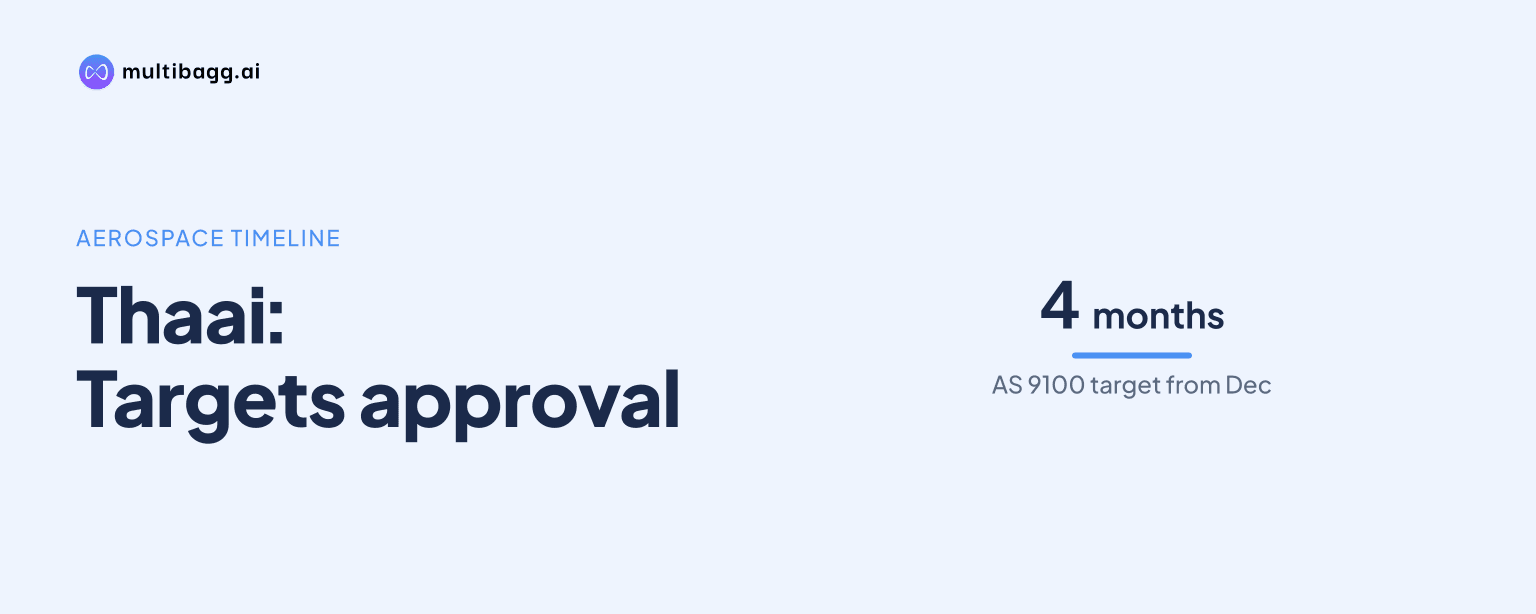
Thaai Casting Limited is targeting AS 9100 certification within a maximum of four months from December to enter aerospace machining, management said, while planning to use existing heavy-machining assets and add one machine for smaller parts. The plan builds on about Rs 109 crore of capital work in progress for a wind-segment facility.
Know Thaai Casting inside out
Results, valuation, peers and who's buying, in one view.
When does Thaai expect AS 9100 certification?
Thaai expects AS 9100 certification within a maximum of four months from December, based on management’s stated target. Management said the certification process was already under way and described it as part of the company’s plan to begin aerospace business. The call did not disclose a certification body, audit date, aerospace customer nomination or order tied to the approval.
Thaai placed the certification within its wider move beyond die casting into gas nitriding, wind-project machining, aerospace and defence. Management said it had identified aerospace-machining opportunities after attending the ZEISS 2026 Conference in Berlin, but this was an assessment of opportunity rather than a disclosed aerospace contract, production schedule or revenue commitment.
What aerospace equipment will Thaai use?
Thaai plans to use existing machines for larger aerospace parts and buy at least one additional machine initially for smaller components. Management said its existing equipment could machine bigger-size parts, but a further machine was required for basic machining of smaller parts. It was still identifying that machine and expected to complete the exercise in 15 to 20 days.
Thaai did not disclose the proposed machine’s cost, supplier, installation date, capacity or expected aerospace revenue. Management said the initial aerospace entry would not require “lots and lots” of machines because the heavy-machining equipment already available could support larger components after certification.
Thaai is also using lower-cost machinery for preparatory work that might otherwise occupy imported equipment. Management said a locally sourced machine from Punjab had been installed for sample trials, while a machine from China had arrived for stock removal or rough machining. The intended mechanism is to free time on imported European machines, including a WFL machine from Austria, for aerospace, defence and other verticals.
How does the wind facility support Thaai’s aerospace plan?
Thaai says the machinery acquired for its wind project is general-purpose equipment that can also be deployed in aerospace, defence and other activities. Management confirmed that about Rs 109 crore of capital work in progress related to the new wind-segment facility, which includes gear-shaping work and is not intended to be limited to one application.
The disclosed wind contract is more defined than the aerospace opportunity. Management said its arrangement with one customer represents Rs 40 crore of service revenue and would use the whole plant capacity under that arrangement. It also said the customer would reduce imports gradually, rather than shift all volume to Thaai immediately.
Thaai is seeking additional availability on its imported machines by assigning some work to the lower-cost equipment. Management said it had recovered five to six days on expensive machines from a 26-day operating period, although it could not commit an incremental revenue number. It said the resulting available hours should contribute additional revenue, without giving an aerospace-specific forecast.
The wind programme is the nearer-term use case for the facility. Management said one part number had been sampled, assembled and approved, with initial revenue expected from December. Another approved WFL-machine sample was expected to gain volume as imports declined, and management expected Thaai’s volume for that part to reach 100% over five months, subject to the customer’s transition.
Got a follow-up? Ask IRIS
What remains unresolved in Thaai’s aerospace and defence entry?
Thaai’s aerospace plan remains dependent on completing AS 9100 certification and selecting, buying and installing the planned smaller-parts machine. Management had not finalised the machine at the time of the call and did not disclose its purchase value. Certification by itself does not demonstrate customer qualification, component approval or recurring aerospace revenue.
Defence approvals are also pending separately. In response to a question on 27 parts listed for defence trials, management said Thaai had supplied all required parts but was awaiting a visit from a five-cluster inspection team. Management said the team had yet to inspect the facility and did not provide a final approval date or a defence-revenue forecast.
Thaai said the current year’s revenue came entirely from automotive business, limiting the immediate financial contribution from aerospace or defence. Management guided for an Earnings Before Interest, Taxes, Depreciation and Amortisation, or EBITDA, margin of 22% to 25%, including automotive and non-automotive revenue. It attributed the H1 EBITDA decline to raw-material costs and said automotive growth affects the overall margin mix.
Conclusion
Thaai’s disclosed aerospace strategy is a capacity-extension plan rather than a disclosed aerospace order: obtain AS 9100 certification within four months from December, deploy heavy machinery acquired for wind work, and add one machine for smaller parts. The Rs 109 crore wind-facility investment and Rs 40 crore service-revenue arrangement provide an operating base, but neither is an aerospace revenue commitment.
The next milestones are the certification outcome, management’s planned selection of the additional aerospace machine within 15 to 20 days, and the pending five-cluster defence inspection. Management also expects initial wind revenue from December for one part number and said the wider new vertical would begin contributing from the first quarter of the next year.

