








Thaai expects December wind revenue as imports are phased out
MAX Plan at ₹4,999/yr

Find your next multibaggerBe a Pro Investor
Research stocks and track your picks on the go. Download the app.
Key highlights
- Thaai expects initial revenue from an assembly-approved wind part from December.
- Thaai expects 100% of assigned volume for another approved wind part over five months.
- Thaai said the installed STARRAG machine will be handed over in December after a one-month delay.
- Thaai reported an around Rs 800 crore automotive-only order book with a normal completion period of up to five years.
powered by IRIS
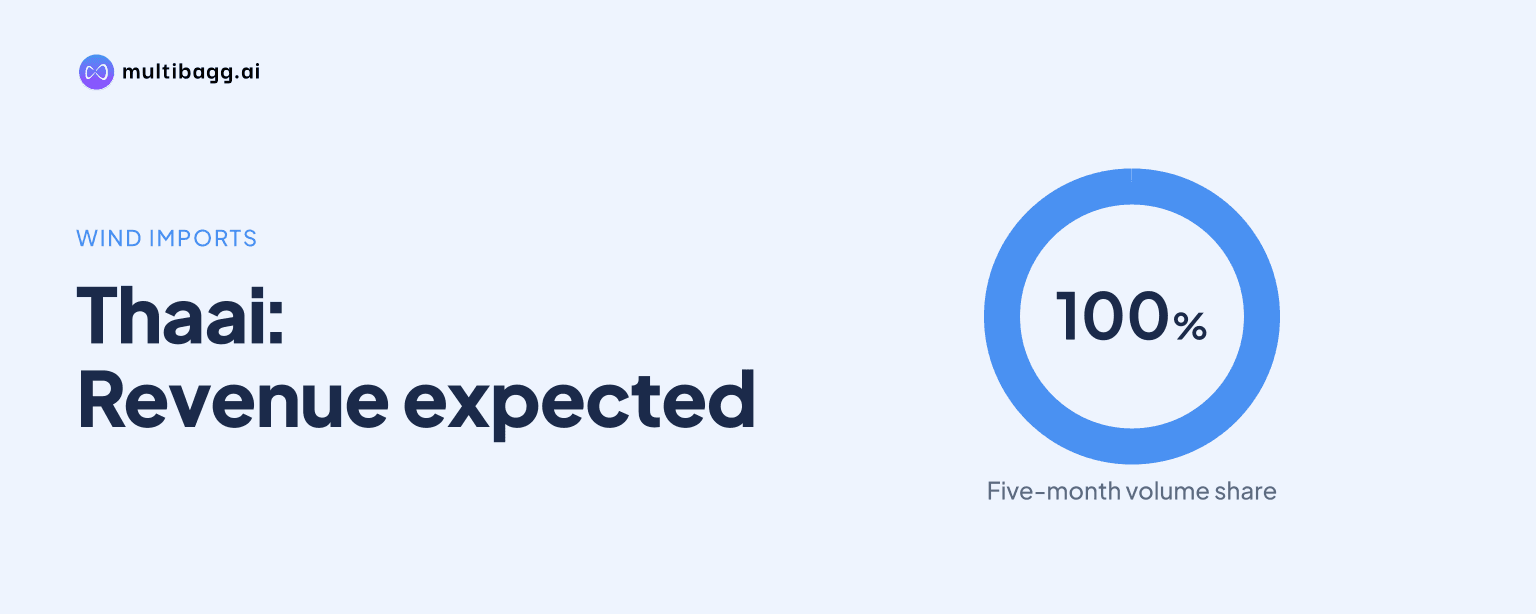
Thaai Casting Limited expects initial revenue from one assembly-approved wind-gearbox part from December, while management said the assigned volume for another approved part should become fully Thaai’s over five months as imports are reduced. The larger STARRAG-machine programme is one month behind its prior handover timing and is now due for handover in December.
Know Thaai Casting inside out
Results, valuation, peers and who's buying, in one view.
When will Thaai start earning wind-gearbox revenue?
Thaai expects initial revenue from one approved wind-gearbox part from December. Management said it had submitted a sample for one part number, the customer had assembled it, and the assembly had received approval. That approval is the disclosed basis for a limited first revenue contribution before the wider wind programme reaches its intended volume.
The December start applies to one part number rather than the whole wind opportunity. In the same discussion, management separated this component from the other part number associated with the STARRAG machine, saying the latter would generate the major revenue. The two production streams therefore have different levels of readiness and ramp timing.
How will Thaai replace imported wind-component volumes?
Thaai said the customer would reduce imports from the next month for another approved part number and allocate volume to Thaai. Management said samples for that component had been made, submitted and approved. It expects 100% of the assigned volume to become Thaai’s over five months, rather than transferring all production at once.
This is a phased import-substitution plan, not a disclosed revenue total. Management said the contract currently represents 50% to 55% import substitution, with value still being imported for the same requirement. It said a later phase could involve investment for the same customer or work in other heavy-engineering sectors, but did not commit to an additional value or timetable.
The immediate disclosed change is a sourcing-volume shift after sample approval. Management said the machine used for the other part number had an approved sample and would support the next-month import reduction. Thaai did not disclose unit volumes, the price per part, or the monthly revenue contribution during the five-month transition.
Why is the STARRAG wind programme delayed?
Thaai said the STARRAG machine was completely installed but had not been handed over because the supplier’s application team faced visa-related delays while stuck in China. Handover had been expected in the current month but was pushed by one month to December. Management said the supplier was working to complete the process before its group chief executive’s factory visit.
The STARRAG equipment is intended primarily to machine the planetary carrier used in a wind turbine’s main gearbox. Management said the major revenue from the other wind part number would follow this programme. Its statement that the programme remained on track was qualified by the acknowledged delay in commercial readiness and the December handover requirement.
The timing differs from the schedule an investor cited from Thaai’s annual report: wind-gearbox sampling during September to October 2026 and commercial revenue in the fourth quarter of FY27. Management said the larger programme was slightly delayed, even as the earlier approved component would begin generating initial revenue from December. The transcript does not provide a revised quarter for full STARRAG-linked revenue.
Got a follow-up? Ask IRIS
What is the scale of Thaai’s wider new-vertical plan?
Thaai reported an overall order book of around Rs 800 crore, which management said was solely for automotive business and normally runs for as long as five years from booking. It separately said new-vertical revenue would start from the first quarter onward. The wind project is therefore being introduced alongside, rather than in place of, the automotive order base.
Management did not forecast a consolidated margin change from the new wind work. When asked whether service revenue from the new project would change the outlook, it said margins could remain in the 22% to 25% range because automotive business was also increasing. This was management’s indicated range, not a formal earnings forecast or a disclosure of wind-project profitability.
Thaai said wind and aerospace could lead top-level revenue over the next three to five years. Aerospace remains at an earlier stage: management said it was pursuing AS 9100 certification and targeted completion within a maximum of four months from December. The company also said 27 defence parts submitted for trial were awaiting an inspection visit.
How does the wind ramp fit Thaai’s production strategy?
Thaai’s stated strategy is not to limit its higher-cost wind-machining equipment to one customer. Management said it could add lower-cost machines for other customers, freeing capacity on the higher-cost equipment. It estimated that it had already recovered five to six days of availability from a 26-day operating period, but did not quantify the revenue effect of that capacity.
The company had referred to Rs 40 crore of revenue from an existing single-customer agreement and said future revenue from added gear-shaping capacity could exceed that contract. Management did not commit to the incremental amount or timing because it was first measuring available machine hours. The December wind revenue start is consequently a production-ramp milestone rather than confirmation of the full potential revenue opportunity.
Conclusion
Thaai has moved one wind component beyond sampling and assembly approval, creating a stated path to initial December revenue and a five-month transition to full assigned volume as imports are reduced. The larger STARRAG-linked programme is at a later readiness stage: installation is complete, but the December handover delay means its major revenue contribution has not yet begun.
The next disclosed milestones are the STARRAG supplier’s December handover, the next-month reduction in imported volume for the other approved part, and management’s target of full assigned-volume transfer over five months. Investors can also watch for the planned AS 9100 certification within four months from December and any clarification of the revised commercial timing for the larger wind part number.

