










Thomas Scott (India) Ltd. own-brand revenue reached Rs 91.2 crore
Key highlights
- TSIL own-brand revenue rose from Rs 34.8 crore in FY24 to Rs 91.2 crore in FY26.
- TSIL reported Rs 52.1 crore of own-brand revenue in H1-FY27.
- Own-brand SKUs increased from 7,430 in FY24 to 38,755 in H1-FY27.
- TSIL lists five Bengaluru retail outlets and 12 distribution centres.
powered by IRIS
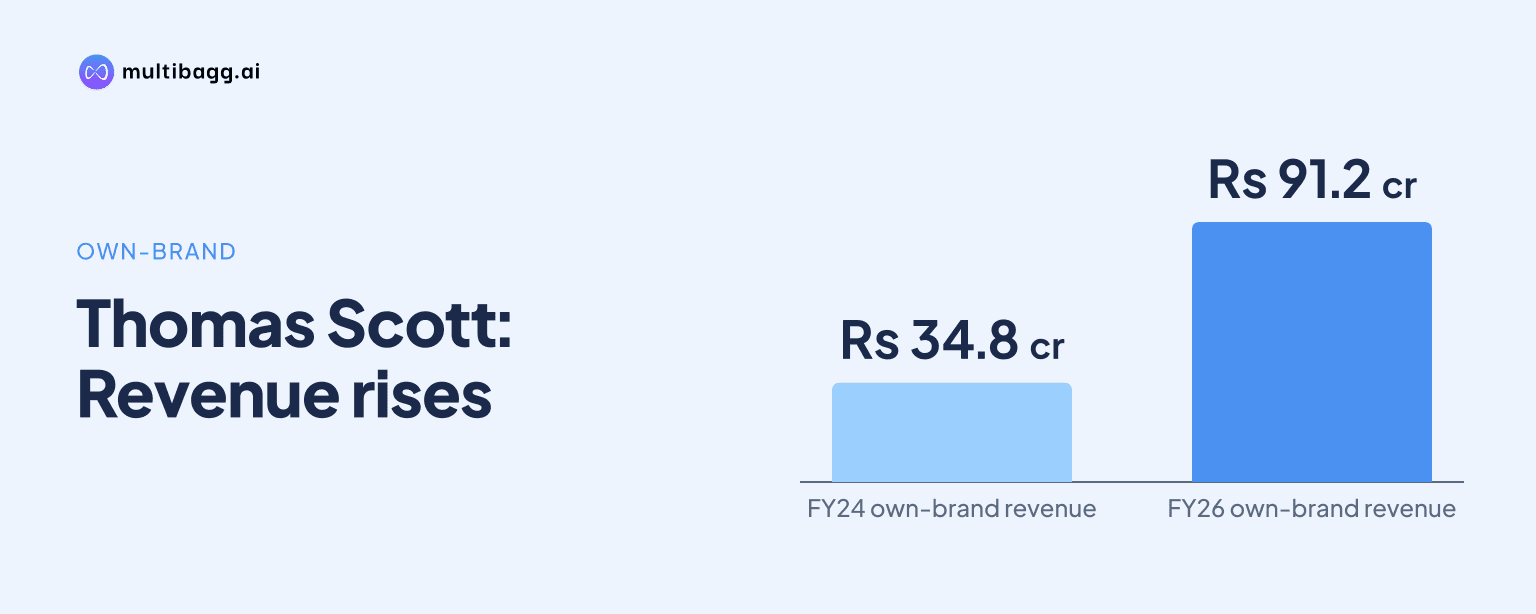
Thomas Scott (India) Ltd. increased own-brand revenue from Rs 34.8 crore in FY24 to Rs 91.2 crore in FY26, a rise of about 162%, as it moved its flagship menswear label toward an online-first smart-casuals model. The business also expanded its own-brand stock-keeping units (SKUs) to 29,994 in FY26.
Know Thomas Scott India inside out
Results, valuation, peers and who's buying, in one view.
How did TSIL's own-brand revenue change?
TSIL's own-brand revenue increased in each of the three full years presented, rising from Rs 34.8 crore in FY24 to Rs 56.2 crore in FY25 and Rs 91.2 crore in FY26. The FY25 increase was about 61%, followed by about 62% growth in FY26, based on the revenue series disclosed in the presentation.
TSIL reported Rs 52.1 crore of own-brand revenue in H1-FY27. This partial-period figure equalled about 57% of FY26 own-brand revenue and about 93% of FY25 revenue, but it does not establish a full-year FY27 outcome because the presentation gives no second-half result or FY27 own-brand revenue target.
What is TSIL's online-first own-brand model?
TSIL says its own brand is moving toward an online-first smart-casual menswear line aimed at a newer and younger clientele, ranging from everyday basics to occasion-led apparel. Its FY26 product offering included categories displayed on its website, such as shirts, T-shirts, plus-size apparel, jeans, bottoms, winterwear, blazers and bags.
TSIL's process starts with data collection from Myntra and other e-commerce marketplaces, followed by trend analysis, base-inventory design and launches through applicable sales channels. It then tracks sales to replenish high-demand styles and uses pricing actions or offline channels to liquidate slow-moving stock; own-brand SKUs rose from 29,994 in FY26 to 38,755 in H1-FY27.
Where does TSIL sell its own-brand products?
TSIL sells its own-brand products through its website and e-commerce platforms including Myntra, AJIO, Flipkart and Amazon, alongside five retail outlets in Bengaluru. The presentation identifies the Bengaluru locations as Uttarahali Hobli, Yelahanka New Town, Vidyaranyapura, Koramangala and Gopalan Mall.
TSIL's presentation provides individual product prices but no channel-level revenue split for the Rs 91.2 crore recorded in FY26. A Flipkart listing showed a regular-fit casual shirt at Rs 1,049, while Myntra showed trousers at Rs 999; the company does not state how much revenue came from each marketplace, its own website or the five Bengaluru outlets.
Got a follow-up? Ask IRIS
How does TSIL's own brand compare with its other businesses?
TSIL's own brand remained smaller than its licensed and other brands business in every reported period, although both business-to-consumer (B2C) streams expanded. Licensed and other brands revenue grew from Rs 44.2 crore in FY24 to Rs 148.4 crore in FY26, compared with own-brand revenue growth from Rs 34.8 crore to Rs 91.2 crore.
TSIL's own brand represented about 38% of combined B2C revenue in FY26, down from about 44% in FY24 because licensed and other brands increased faster across the two years. Its business-to-business contract manufacturing revenue declined from Rs 11.0 crore in FY24 to Rs 8.0 crore in FY25, before increasing to Rs 15.3 crore in FY26.
What infrastructure supports TSIL's own-brand operations?
TSIL lists four manufacturing units and 12 distribution centres, comprising four owned centres and eight third-party centres. The company says inventory is sent to distribution centres for quicker deliveries and lower returns, supporting its online sales process and the 29,994 own-brand SKUs reported in FY26.
TSIL's fulfilment cost per unit declined from Rs 24 in FY24 to Rs 19 in FY25, remained Rs 19 in FY26 and reached Rs 18 in H1-FY27. The presentation does not quantify the reason for the reduction, but it describes a system in which marketplace data guides inventory decisions and slow-moving stock can be cleared through price strategies or offline sales.
Conclusion
TSIL's disclosed figures show that its own-brand operation expanded revenue by about 162% from FY24 to FY26 while raising its SKU count from 7,430 to 29,994. The model combines digital product launches and marketplace distribution with five Bengaluru retail outlets, while licensed and other brands continued to produce the larger B2C revenue contribution.
The next disclosed measures to watch are FY27 own-brand revenue after the Rs 52.1 crore H1-FY27 result, the productivity of the 38,755 own-brand SKUs reported for H1-FY27 and fulfilment cost per unit after it reached Rs 18. TSIL also says it aims to scale its licensed-brands business by adding brands, but the presentation does not provide an own-brand FY27 revenue target.