










Valiant pitches millisecond isolation for zero-day threats
Key highlights
- Valiant says MouseTrap can trigger a hardwired network disconnect in milliseconds after detecting a probe.
- The presentation cites more than 35,800 vulnerabilities published in H1 2026, up 51% year on year.
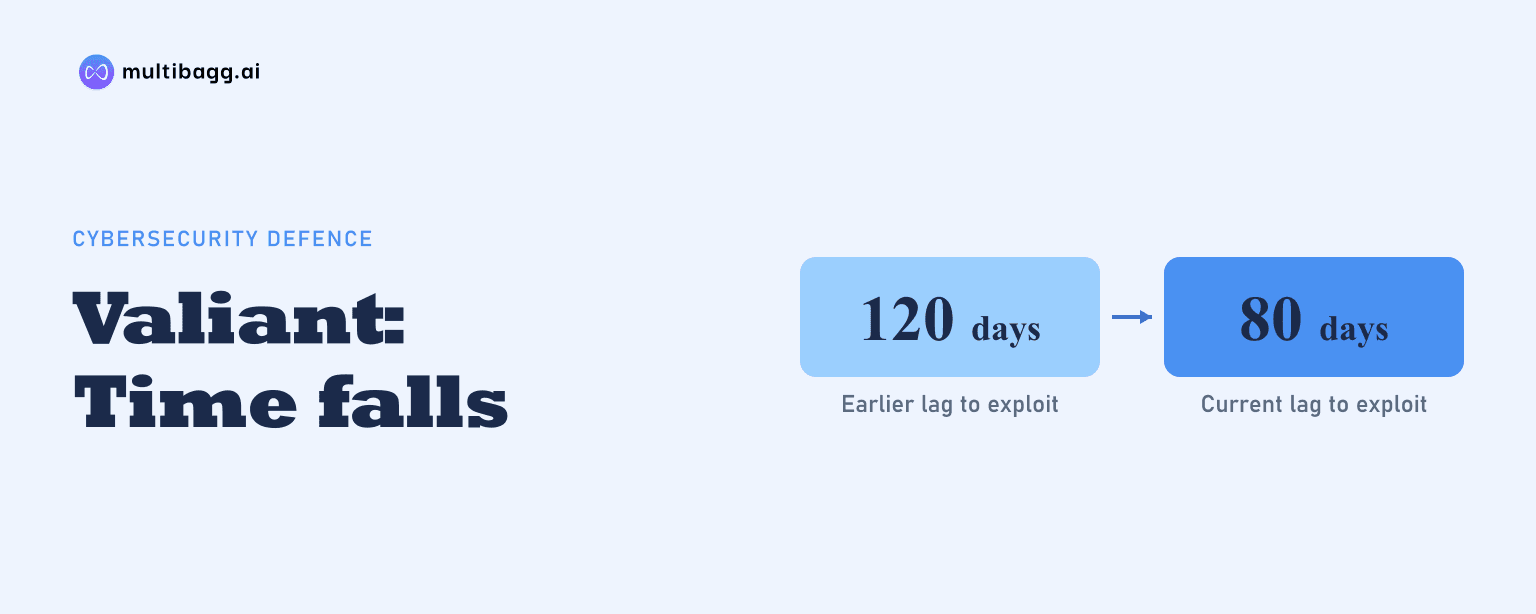
- Valiant cites a reduction in median disclosure-to-exploitation time from 120 days to 80 days.
- Valiant cites successful Cisco ASA 5585 integration in recently concluded defence customer trials.
powered by IRIS
Valiant Communications says its MouseTrap honeypot and hardwired Network Isolation Kill Switch are designed to disconnect a compromised segment in milliseconds after detecting an attacker probe, without prior knowledge of the exploit. The proposition addresses zero-day exposure as the presentation cites more than 35,800 vulnerabilities published in H1 2026, up 51% year on year.
Know Valiant Communications inside out
Results, valuation, peers and who's buying, in one view.
How does Valiant’s MouseTrap and Kill Switch work?
Valiant says its Valiant-Network MouseTrap and Network Isolation Kill Switch form a detection-and-isolation architecture for critical networks. MouseTrap is an intelligent honeypot that can impersonate servers, protection relays, remote terminal units, or RTUs, and supervisory control and data acquisition, or SCADA, nodes. When an attacker probes a simulated asset, Valiant says MouseTrap can issue audio, visual and Network Management System alarms and alerts without requiring prior knowledge of the exploit.
Valiant says MouseTrap triggers the Kill Switch through a hardwired serial link, after which the equipment physically severs the affected network segment in milliseconds. The company describes the disconnect as fail-safe during power loss or control-card failure, and says malware already present in the network cannot intercept, disable or reverse a physical disconnection. This mechanism is the basis for Valiant’s distinction from signature-based firewalls, intrusion prevention systems and endpoint protection products.
Why is Valiant targeting zero-day threats?
Valiant is targeting zero-days because its presentation describes a faster path from vulnerability disclosure to exploitation. It cites more than 35,800 vulnerabilities published in H1 2026, a 51% year-on-year increase, and says nearly one-quarter of newly exploited vulnerabilities were attacked on or before their disclosure date. Valiant’s proposed response is behavioural detection of suspicious probing rather than waiting for a signature update or software patch.
The company says the median time from disclosure to confirmed exploitation fell from 120 days to 80 days. It also cites Google tracking 90 zero-days actively exploited during 2025, with almost half aimed at enterprise and network infrastructure. Valiant further says state-sponsored groups exploited zero-days in edge and access appliances for up to seven weeks in 2026 before a fix became available, supporting its stated case for a hardware isolation mechanism.
Which networks does Valiant’s isolation architecture address?
Valiant positions the combined MouseTrap and Kill Switch architecture for operational technology, or OT, and critical-infrastructure networks, including power utilities, defence, banking and data centres. The company says endpoint agents may not be deployable in these environments and downtime may not be an option. MouseTrap’s ability to emulate protection relays, RTUs and SCADA nodes links the product directly to utility and industrial-control network settings.
The presentation cites 62% of artificial-intelligence-driven attacks as targeting critical-infrastructure sectors, led by finance and energy. Valiant also cites an average of 247 days to identify and contain a breach, while incidents lasting more than 200 days are said to cost $5.65 million compared with $4.32 million for those contained sooner. The company does not provide product-specific evidence that MouseTrap or the Kill Switch changes those breach-cost or containment outcomes.
Got a follow-up? Ask IRIS
Can Valiant’s Kill Switch work with existing defences?
Valiant says its Automatic Network Isolation equipment is designed to work with any firewall or intrusion detection system that supports standard Simple Network Management Protocol, or SNMP, dry-contact or serial signalling. The presentation cites successful integration with a Cisco ASA 5585 firewall in recently concluded defence customer trials. Valiant says this design permits deployment as a last line of defence without requiring customers to replace an existing firewall.
The presentation does not name the defence customer, provide a trial date, or disclose performance data from the Cisco ASA 5585 integration. Valiant also lists real-time cyber-attack and ransomware detection systems with audio-visual alerts, alongside network reliability and failover products. These offerings serve different functions from the Kill Switch, which is intended to isolate a network after a threat-confirmation signal or MouseTrap trigger.
What other products support Valiant’s critical-infrastructure strategy?
Valiant’s wider information technology and OT portfolio includes network-attached storage, or NAS, and storage-area network, or SAN, servers with network isolation, quantum-safe authentication and quantum-safe encryption technologies. It also lists electromagnetic-pulse-protected storage systems for critical-infrastructure and defence applications. These storage products are presented as part of Valiant’s secure infrastructure offering rather than as components of the MouseTrap detection process.
The company also sells hardware Data Diodes for secure one-way transfer between isolated networks and Multiprotocol Label Switching, or MPLS, core, edge and access routers supporting legacy E1 interfaces. Valiant says these products address utility, telecom, transportation and industrial applications. It does not disclose revenue, order values, installed-base figures or deployment numbers specifically for MouseTrap or Network Isolation Kill Switch equipment in the presentation.
Conclusion
Valiant’s disclosed zero-day strategy is a hardware-led containment model: MouseTrap identifies probing of simulated critical assets and a serial-linked Kill Switch disconnects the relevant segment in milliseconds. The company supports the rationale with the reported rise to more than 35,800 vulnerabilities in H1 2026 and the cited reduction in median disclosure-to-exploitation time from 120 days to 80 days, while providing no quantified field outcomes for the products.
The next point to watch is commercial execution in the power, defence, banking and data-centre sectors named by Valiant. The company says its equipment completed defence customer trials involving a Cisco ASA 5585 integration and is exploring alliances with global industry leaders to expand distribution and access larger international projects, but it has not disclosed partners, timelines or Kill Switch orders.