










Varroc shifts Italy lighting work from 35.9% loaded plant
Key highlights
- Cambiano is operating at 35.9% capacity load, according to Varroc.
- Varroc plans to transfer selected two-wheeler lighting programs to Targu Mures and Hanoi.
- Lighting solutions represented 16.4% of Varroc’s H1 FY27 revenue.
- Two-wheelers and three-wheelers represented 75% of Varroc’s H1 FY27 revenue.
powered by IRIS
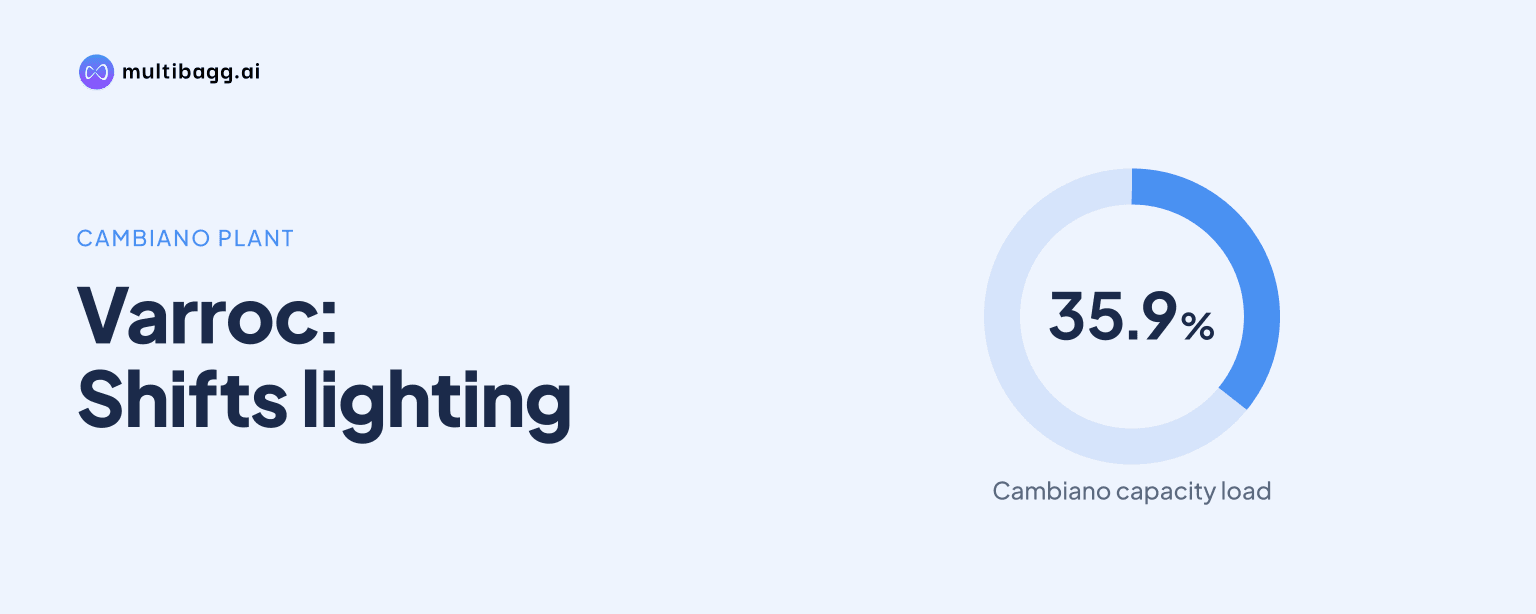
In its Italy two-wheeler lighting restructuring plan, Varroc says it will shift selected programs and equipment from Cambiano, operating at 35.9% capacity load, to Targu Mures and Hanoi, aiming to exit recurring Italian manufacturing costs after the transition.
Know Varroc Engineering inside out
Results, valuation, peers and who's buying, in one view.
Why is Varroc moving Italy two-wheeler lighting production?
Varroc is moving selected manufacturing work because the Cambiano plant is operating at 35.9% capacity load. The presentation identifies high fixed-cost absorption at sub-scale volumes, a fragmented overseas manufacturing footprint and capital tied up in what Varroc describes as a structurally inefficient Italian site.
The plan concerns Italy two-wheeler lighting manufacturing, not every activity in Italy. Varroc’s location map lists Italy as an exterior-lighting manufacturing location and as a research and development location for lighting and connectivity. The restructuring page says the aim is to preserve customer programs and technology while relocating manufacturing to Romania and Vietnam.
Varroc says customer relationships will remain within its network during the transfer of selected programs and equipment. Its delivery-protection mechanisms are safety stock and phased industrialisation, rather than an immediate single-step production move from Cambiano to the receiving plants.
The affected product and vehicle categories are material within Varroc’s H1 FY27 revenue mix. Two-wheelers and three-wheelers accounted for 75% of revenue, compared with 25% for four-wheelers, while lighting solutions accounted for 16.4% of revenue by product group, behind body parts at 34.0% and ICE powertrain at 22.9%.
Which plants will receive Varroc’s Cambiano programs?
Varroc plans to transfer selected Cambiano programs and equipment to Targu Mures in Romania and Hanoi in Vietnam. Both countries already have exterior-lighting production in Varroc’s network, matching the manufacturing activity identified for the Italy site.
Romania has the broader listed production mix of the three locations. It has electronics, exterior-lighting and interior-lighting production, while Vietnam has electronics and exterior lighting. Italy is listed only for exterior-lighting production, so the proposed transfer would place the work in facilities with both lighting and electronics operations.
Varroc characterises this configuration as a shift from sub-scale manufacturing to a lean, low-cost global operating model. The stated utilisation mechanism is to fill existing capacity in Romania and Vietnam instead of continuing to carry the fixed-cost burden of a Cambiano plant loaded at 35.9%.
The transfer remains subject to execution risk rather than being presented as a completed consolidation. Varroc identifies one-time restructuring cash cost and transfer risk as an execution gate, while safety stock and phased industrialisation are the specific measures disclosed to protect customer deliveries through the production change.
Got a follow-up? Ask IRIS
What financial outcome does Varroc expect from the transfer?
Varroc expects lower conversion cost, improved gross margin and better fixed-cost absorption from transferring work to Romania and Vietnam. It also targets higher sustainable earnings before interest, tax, depreciation and amortisation, or EBITDA, profit before tax, or PBT, and cash generation, but gives no numerical savings or margin target.
The financial comparison is primarily between the current Cambiano cost structure and the intended receiving-plant model. Cambiano’s 35.9% capacity load is associated with high fixed-cost absorption and recurring Italy manufacturing costs, whereas Varroc expects increased use of existing Romanian and Vietnamese capacity and an exit from recurring Italy manufacturing costs after transition.
Varroc identifies four mechanisms behind the target outcome: lower-cost production locations, higher utilisation at existing plants, removal of recurring site costs and avoidance of sustaining capital expenditure, or capex. The presentation also says cash could be redirected to what management calls higher-return growth platforms and that return on capital employed, or ROCE, could improve.
These are management targets, not reported financial outcomes. Varroc does not disclose the one-time restructuring cash cost, expected annual savings, potential impairment or asset write-down, completion date, or the amount of gross-margin and ROCE improvement expected from the transfer.
The plan changes an overseas footprint within a business still concentrated in India. India represented 87% of H1 FY27 revenue and overseas markets represented 13%, while lighting solutions represented 16.4% of group revenue. The presentation does not disclose how much of that lighting revenue is produced at Cambiano or will be transferred to Romania and Vietnam.
Conclusion
Varroc’s proposal is a manufacturing consolidation centred on Cambiano’s 35.9% capacity load. Selected two-wheeler lighting programs and equipment would move to Targu Mures and Hanoi, both of which already make exterior lighting, while Varroc seeks to retain customer programs, technology and relationships within its network.
What to watch next is the execution of phased industrialisation, including the use of safety stock to protect deliveries, and disclosure of the one-time cash cost and financial effects. Varroc has not set out a timetable, savings target or quantified margin benefit, leaving the transition’s cost, pace and eventual plant-utilisation outcome unresolved.