










Varroc Engineering Q2 Revenue Rises 33.6% to ₹2,948 Crore
Key highlights
- Varroc Engineering reported Q2 FY27 revenue of ₹2,948 crore, up 33.6% year on year.
- Consolidated EBITDA margin improved to 8.9% from 8.5% in Q1 FY27 but was below 9.1% a year earlier.
- India business EBITDA margin was 10.3% in Q2 FY27, compared with 10.6% in Q1 FY27 and 11.5% in Q2 FY26.
- First-half FY27 vehicle volumes rose 19.5% for two-wheelers, 30.5% for three-wheelers, 21% for passenger vehicles and 24.7% for commercial vehicles.
powered by IRIS
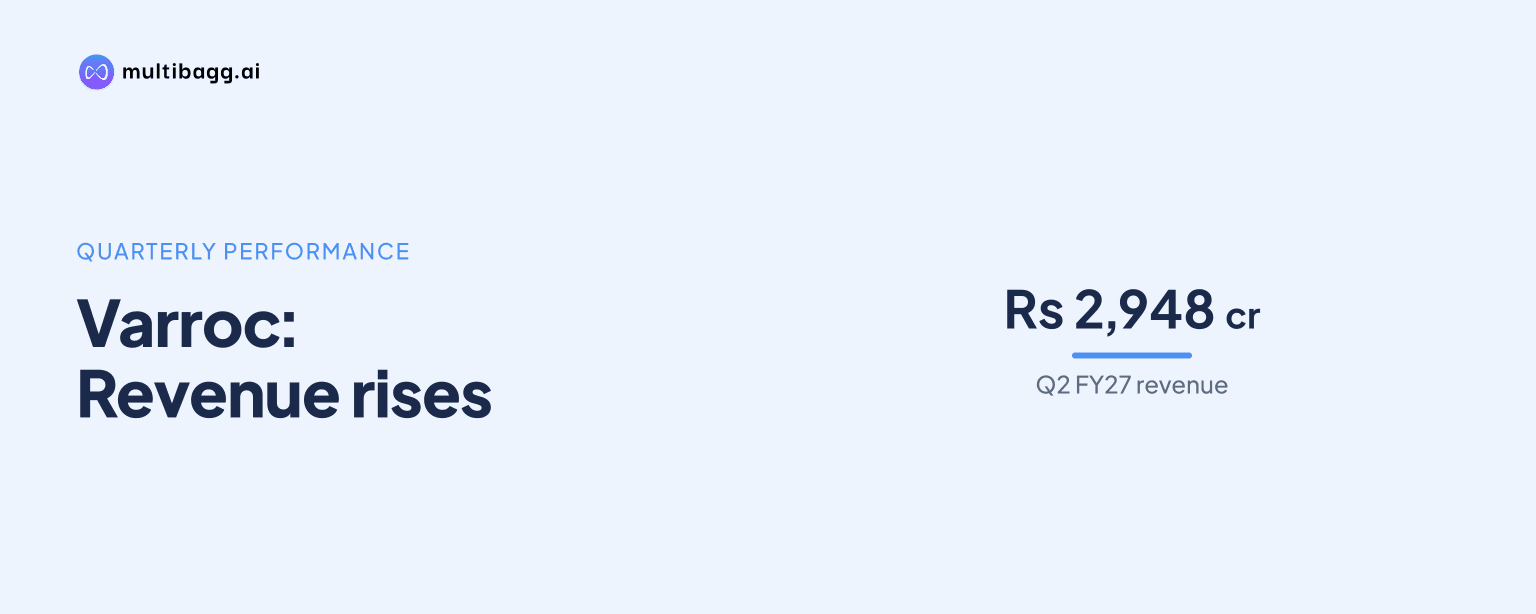
Varroc Engineering Limited reported Q2 FY27 revenue of ₹2,948 crore, up 33.6% year on year and 11.9% sequentially, supported by strong vehicle-industry volumes. Consolidated EBITDA margin improved to 8.9% from 8.5% in the preceding quarter, although it remained below the 9.1% reported a year earlier.
Know Varroc Engineering inside out
Results, valuation, peers and who's buying, in one view.
What did Varroc Engineering report in Q2 FY27?
Varroc Engineering reported consolidated revenue of ₹2,948 crore for the quarter ended September 30, 2026. The revenue figure was 33.6% higher than the corresponding quarter of the previous year and 11.9% above the preceding quarter. Management described the quarter as one of strong growth amid continued momentum in Indian automotive production volumes.
Consolidated EBITDA was ₹261.1 crore, translating into an EBITDA margin of 8.9%. This was a 40 basis point sequential improvement from 8.5% in Q1 FY27, but was 20 basis points below the 9.1% margin reported in Q2 FY26. The company also reported profit before tax margin of 4.7%, compared with 4.1% cited during the earnings call.
The quarter took place against a backdrop of resilient domestic demand despite elevated crude prices and supply-chain concerns linked to the war, according to management. Auto-component suppliers such as Varroc Engineering are closely tied to vehicle production, making industry-volume trends an important factor behind quarterly sales growth.
Why did automotive demand support the quarter?
The broader automobile market recorded robust growth during the first half of FY27, according to management. Two-wheeler volumes rose 19.5% year on year, three-wheeler volumes increased 30.5%, passenger-vehicle volumes grew 21%, and commercial-vehicle volumes were up 24.7%. These categories are relevant to Varroc Engineering because its operations supply automotive components, including lighting products.
The company said India operations grew 29.5% year on year in Q2 FY27. Management also referred to new lighting-business wins during the quarter, including a four-wheeler lighting programme in India and two-wheeler lighting business. The call did not disclose the value, customer name, production start date, or expected revenue contribution from these awards.
Vehicle volumes can affect component makers through both original-equipment production schedules and model launches. In Varroc Engineering's case, the combination of stronger industry volumes and newly won business formed the basis of management's commentary on growth. However, the company did not provide revenue guidance for the rest of FY27.
Got a follow-up? Ask IRIS
Why was Varroc Engineering's India margin lower year on year?
Management said the India business EBITDA margin was 10.3% in Q2 FY27, compared with 10.6% in Q1 FY27 and 11.5% a year earlier. It attributed the year-on-year and sequential softness in India margins primarily to under-recovery of VAR-related costs from customers.
The company characterised the recovery issue as a short-term phenomenon. Its consolidated margin nevertheless improved quarter on quarter, rising to 8.9% from 8.5%. The difference between the India-business margin and the consolidated margin indicates that performance across the group's operations did not move uniformly, though the call did not provide a detailed business-wise reconciliation.
Management said that, if macroeconomic conditions remain broadly as they are and do not worsen, the India business should be able to return to last year's EBITDA-margin levels by the end of FY27. This was framed as management commentary rather than formal guidance. The statement remains dependent on operating conditions and customer cost recoveries.
What does the quarter mean for investors and industry operations?
For investors, the results show that Varroc Engineering converted strong automotive demand into double-digit revenue growth, while profitability improved from the immediately preceding quarter. The remaining gap with the prior-year EBITDA margin keeps attention on inflation, cost-recovery arrangements and the pace at which customer reimbursements are received.
The company said capital expenditure would keep debt broadly steady during the current year. This means expansion spending and financing levels remain relevant monitoring points alongside order execution. The earnings call also referred to EV growth and restructuring as elements supporting expansion, but did not disclose financial targets, investment amounts, or a timetable for their contribution.
Varroc Engineering's shares closed at ₹795.50 on November 6, 2026, up ₹5.90, or 0.75%, for the day, based on the delayed price quoted with the earnings-call material. A single-day movement does not establish how the market assessed the results, but it provides the reported trading reference following the November 4 conference call.
Conclusion
Varroc Engineering delivered 33.6% year-on-year revenue growth in Q2 FY27, reaching ₹2,948 crore as automotive industry volumes remained strong. EBITDA margin improved sequentially to 8.9%, while India-business margin pressure from delayed VAR-related cost recoveries kept consolidated profitability below the year-earlier level.
The next issues to watch are the recovery of India EBITDA margin toward last year's level by the end of FY27, as indicated by management, and execution of the new two-wheeler and four-wheeler lighting wins. Investors will also monitor whether planned capital expenditure keeps debt broadly steady as stated by the company.