










Videocon Industries Reports Dhoot Bankruptcy After NCLT Order
Key highlights
- Videocon Industries reported an NCLT Mumbai order dated November 5, 2026, declaring Venugopal Nandlal Dhoot bankrupt.
- SBI's proceedings concern Rs 12,668.06 crore in credit facilities backed by Dhoot's personal guarantees.
- Creditors had rejected a Rs 600 crore repayment proposal linked to a proposed Siliguri real estate project.
- The bankruptcy trustee must submit a preliminary report within 90 days and quarterly progress reports thereafter.
powered by IRIS
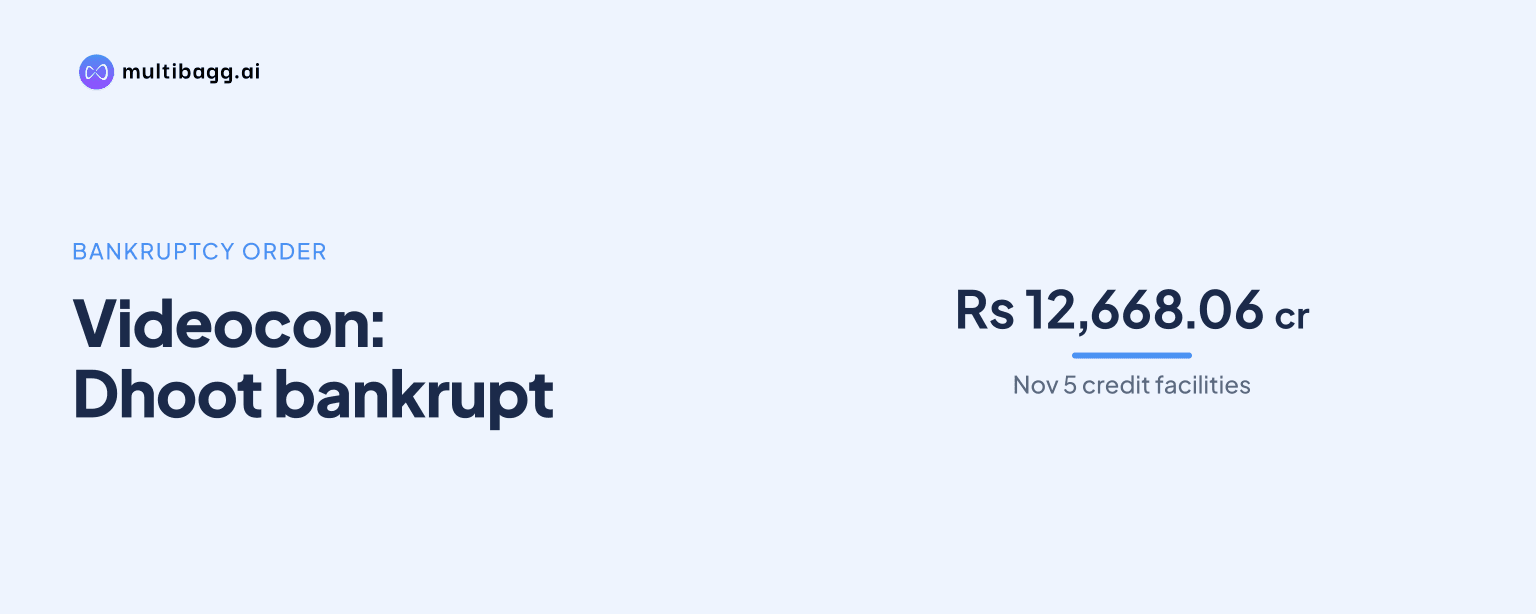
Videocon Industries Limited reported that the National Company Law Tribunal, Mumbai declared former promoter Venugopal Nandlal Dhoot bankrupt on November 5, 2026, in State Bank of India proceedings concerning Rs 12,668.06 crore in credit facilities backed by his personal guarantees. The order followed the failure of Dhoot's personal insolvency resolution process and repayment plan.
Know Videocon Industries inside out
Results, valuation, peers and who's buying, in one view.
What did Videocon Industries report in its November 24 filing?
Videocon Industries reported the November 5 order of the National Company Law Tribunal, Mumbai Bench, declaring Dhoot bankrupt. The filing concerns its former promoter and director, rather than a new corporate insolvency proceeding against Videocon Industries itself.
The proceedings were initiated on a petition filed by State Bank of India, or SBI. Dhoot had provided personal guarantees for credit facilities obtained by Videocon Industries and Videocon Telecommunications Limited. The filing places the tribunal order in the context of the financial distress that had affected Videocon Group entities and led to corporate insolvency resolution proceedings against Videocon Industries in June 2018.
The bankruptcy declaration is a formal stage in the personal insolvency process. It follows the failure of the resolution process and a repayment proposal, according to the information disclosed. The order has implications for Dhoot's personal estate and his eligibility for certain corporate positions, subject to applicable legal provisions and any appeal.
Why did the NCLT declare Venugopal Dhoot bankrupt?
The NCLT declared Dhoot bankrupt after SBI pursued its claim based on personal guarantees provided for group borrowing. The credit facilities involved totalled Rs 12,668.06 crore and were extended by SBI and its erstwhile associate banks.
The relevant loan accounts defaulted after Videocon Group entities encountered financial distress. SBI's former associate banks mentioned in the proceedings include State Bank of Hyderabad, State Bank of Mysore, State Bank of Travancore, State Bank of Bikaner and Jaipur, and State Bank of Patiala.
Creditors had earlier rejected a Rs 600 crore repayment proposal from Dhoot. The proposal was backed by a proposed real estate project in Siliguri, while the admitted dues were Rs 12,668.06 crore. The rejection of that plan meant the personal insolvency process did not result in an approved repayment arrangement.
Got a follow-up? Ask IRIS
What happens after the bankruptcy order?
The order places Dhoot's estate under the control of a bankruptcy trustee, who will manage the bankruptcy process and invite claims from creditors. The tribunal has directed that the estate be vested in the trustee for distribution in accordance with the process applicable to the case.
The trustee is required to submit a preliminary report to the NCLT and the Committee of Creditors within 90 days. The trustee must also provide progress reports within 15 days after the end of every quarter, with copies served on Dhoot.
For creditors, the next stage is the submission and verification of claims within the bankruptcy process. The filing and the reported order do not state the eventual amount that creditors may recover. Recovery will depend on the estate administered by the trustee and claims admitted during the process.
The order also does not disclose a fresh operational change at Videocon Industries. Its immediate legal effect is on the personal insolvency proceedings involving Dhoot as guarantor, while the earlier corporate insolvency process provides the background to the loan defaults.
Why does the order matter to lenders and investors?
The order matters because it moves a large personal-guarantee default into bankruptcy administration after the repayment plan failed. The Rs 12,668.06 crore amount illustrates the scale of the facilities for which Dhoot was a guarantor and the gap between the admitted dues and the rejected Rs 600 crore proposal.
For SBI and other creditors associated with the facilities, the trustee-led process creates a defined route for lodging claims and receiving reports on progress. But the declaration itself does not establish a final recovery amount, and the filing does not provide a timetable for completion of distributions.
For investors following Videocon Industries, the disclosure is relevant to the history of the group’s debt distress and the continuing resolution of related obligations. It should not be read as a disclosure of a new financial result, a new operating plan, or a stated change in the company's corporate insolvency process.
The case also highlights the separate role of personal guarantees in corporate lending. While the underlying facilities were taken by companies, the proceedings reported by Videocon Industries concern the guarantor's personal insolvency after the relevant resolution and repayment route did not succeed.
Conclusion
Videocon Industries has disclosed that the NCLT Mumbai Bench declared its former promoter, Venugopal Nandlal Dhoot, bankrupt on November 5 following SBI's petition over personal guarantees linked to Rs 12,668.06 crore in credit facilities. The ruling follows the rejection of a Rs 600 crore repayment proposal and transfers the handling of Dhoot's estate to a bankruptcy trustee.
The next disclosed milestones are procedural: the trustee's preliminary report is due within 90 days, followed by quarterly progress reports. Investors and creditors will watch claim invitations, the admission of claims, trustee updates, and any legal developments under the applicable bankruptcy process.