










Zydus plans March Saroglitazar launch, $100m annual spend
Key highlights
- Zydus expects a March US launch for Saroglitazar after a November goal date.
- Zydus forecasts annual Saroglitazar commercial spending of about $100 million.
- Specialty products represented 16% of Zydus US revenue, up about 550 basis points sequentially.
- North America revenue was Rs 3,310 crore, up 21% year on year and 7% quarter on quarter.
powered by IRIS
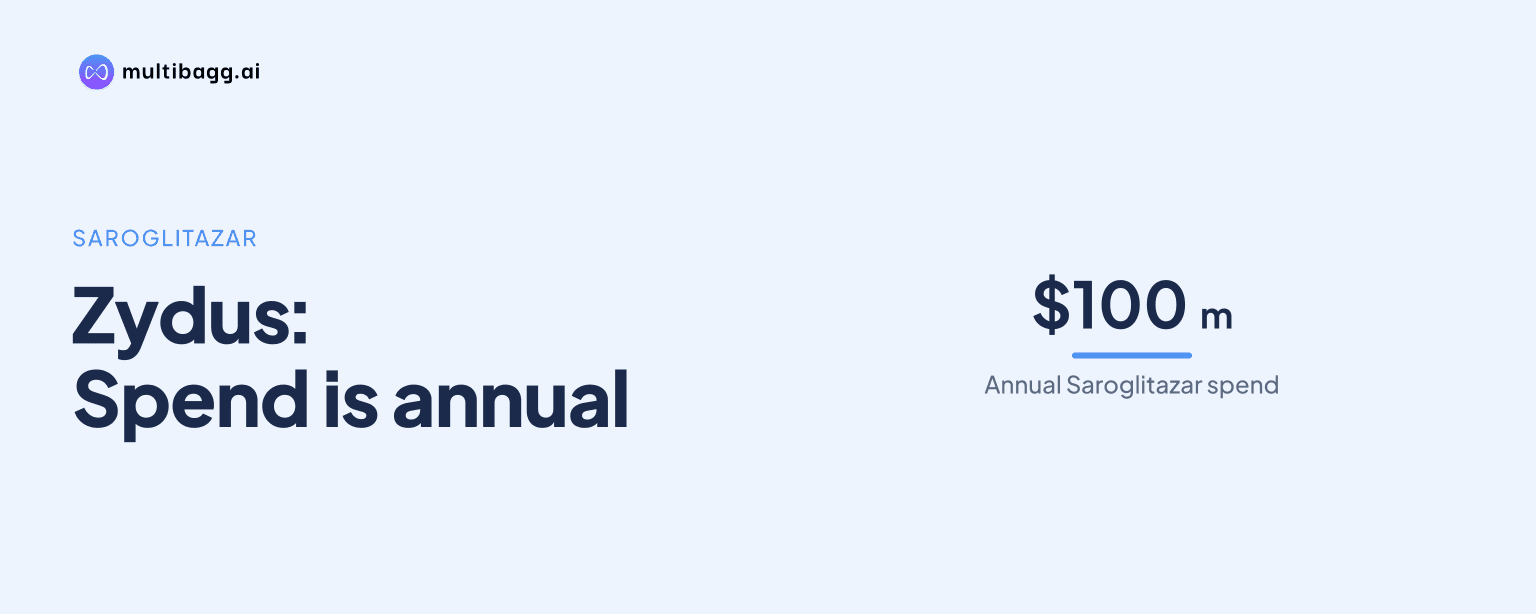
Zydus expects to launch Saroglitazar in the US in March and forecasts annual commercial spending of about $100 million, after a November goal date and continued investment in sales and front-end teams. Management said spending should rise over the next two quarters as it prepares the market entry.
Know Zydus Lifesciences inside out
Results, valuation, peers and who's buying, in one view.
Why is Zydus planning a March Saroglitazar launch?
Zydus is planning a March launch because management said a December market entry would not make commercial sense at the year-end. November remains the current goal date for Saroglitazar, but Dr. Sharvil Patel said Zydus's current expectation is a March launch. The timing therefore allows for an interval between the stated regulatory goal date and commercial introduction.
Management said it had answered regulatory queries as they arose and had cleared most of them. Patel said approval by the goal date remained possible if everything went right and no further last-minute queries emerged. When an analyst asked whether the queries were mainly related to labelling, Patel answered yes.
Saroglitazar has also produced clinical updates in two indications. Zydus presented a Phase III analysis in primary biliary cholangitis, or PBC, at the American College of Gastroenterology 2026 annual meeting, reporting biochemical-response benefits versus placebo in US and non-US patient subgroups. The company said these patients had an inadequate response or intolerance to ursodeoxycholic acid, or UDCA.
How much will Zydus spend on Saroglitazar commercialisation?
Zydus expects annual commercial spending of about $100 million for Saroglitazar. Management confirmed that the figure refers to commercial expenditure, including pre-launch costs, after an analyst cited an existing spend of about Rs 115 crore to Rs 120 crore. The source did not provide a quarterly breakdown of the $100 million estimate.
The cost is expected to increase over the next two quarters. Patel said Zydus had continued commercialisation investment from the prior quarter into the current quarter and would keep investing through the next quarter and the one after that. He identified hiring of sales field-force personnel and other front-end teams as elements of the planned build-out.
Zydus separated Saroglitazar commercialisation from its wider cost base. Excluding research and development, or R&D, and Saroglitazar commercialisation costs, management expects other expenses of Rs 2,000 crore to Rs 2,050 crore. It also maintained full-year guidance for an earnings before interest, tax, depreciation and amortisation, or EBITDA, margin of 24% in FY27.
Got a follow-up? Ask IRIS
How does Saroglitazar fit Zydus's US business strategy?
Saroglitazar is part of Zydus's stated effort to move its US business beyond generics into specialty products and biologics. Specialty products accounted for 16% of US revenue during the quarter, up about 550 basis points sequentially. A basis point is one-hundredth of a percentage point, making the reported change equivalent to 5.5 percentage points.
North America, comprising the United States and Canada, reported revenue of Rs 3,310 crore in the quarter, up 21% year on year and 7% quarter on quarter. Management attributed the increase to volume growth in the base business and further scale-up of US specialty operations. It specifically cited the addition of Rolvedon after the Assertio Holdings acquisition.
The US generics business filed four abbreviated new drug applications, or ANDAs, received 12 approvals and launched five new products in the quarter. Zydus also launched the first generic riociguat tablets in October 2026. Management said the October launch would contribute in the following quarter rather than the reported quarter.
What other US products and costs could shape Zydus's outlook?
Zydus continues to guide for single-digit US revenue growth on a constant-currency basis in FY27, measured against what management described as the high FY26 base. Management said the impact of mirabegron competition was already factored into that view. It did not provide FY28 guidance, saying it could offer a clearer indication closer to year-end.
The company expects a generic palbociclib launch in September or October 2027, rather than an earlier launch. Separately, the US Food and Drug Administration accepted for review a biologics licence application for a Keytruda biosimilar developed with Formycon. Zydus said the arrangement with Formycon is a profit-share structure, while any launch timing depends on patent litigation.
Wholly owned US subsidiary Sentynl Therapeutics also entered a licensing agreement with Mereo Biopharma for alvelestat, an asset being prepared for Phase III development in alpha-1 antitrypsin deficiency-associated lung disease. Management said Rolvedon was profitable from day one. It expects depreciation and amortisation to remain around the current run rate through September 2027, with a marginal increase as capital work in progress is capitalised.
Conclusion
Zydus is preparing a March US launch of Saroglitazar while establishing the sales and front-end capabilities required for commercial entry. Management's $100 million annual commercial-spending estimate puts the launch investment alongside a US business where specialty products represented 16% of revenue and North America revenue reached Rs 3,310 crore in the quarter.
The next milestones are the November Saroglitazar goal date, any further regulatory queries, and management's planned March launch. Investors will also be able to assess whether spending rises as expected over the next two quarters, while the September or October 2027 palbociclib estimate and unresolved Keytruda biosimilar patent litigation remain later US portfolio events.