










Andhra Cements Limited Can File NCLT Petition After BSE Letter
Key highlights
- BSE issued a no-adverse-observation letter for Andhra Cements on November 5, 2026.
- Andhra Cements disclosed receipt of the BSE letter on November 6, 2026.
- Eligible minority shareholders are proposed to receive 29 Sagar Cements shares for every 98 Andhra Cements shares.
- The proposed scheme must be filed with NCLT within six months of November 5, 2026.
powered by IRIS
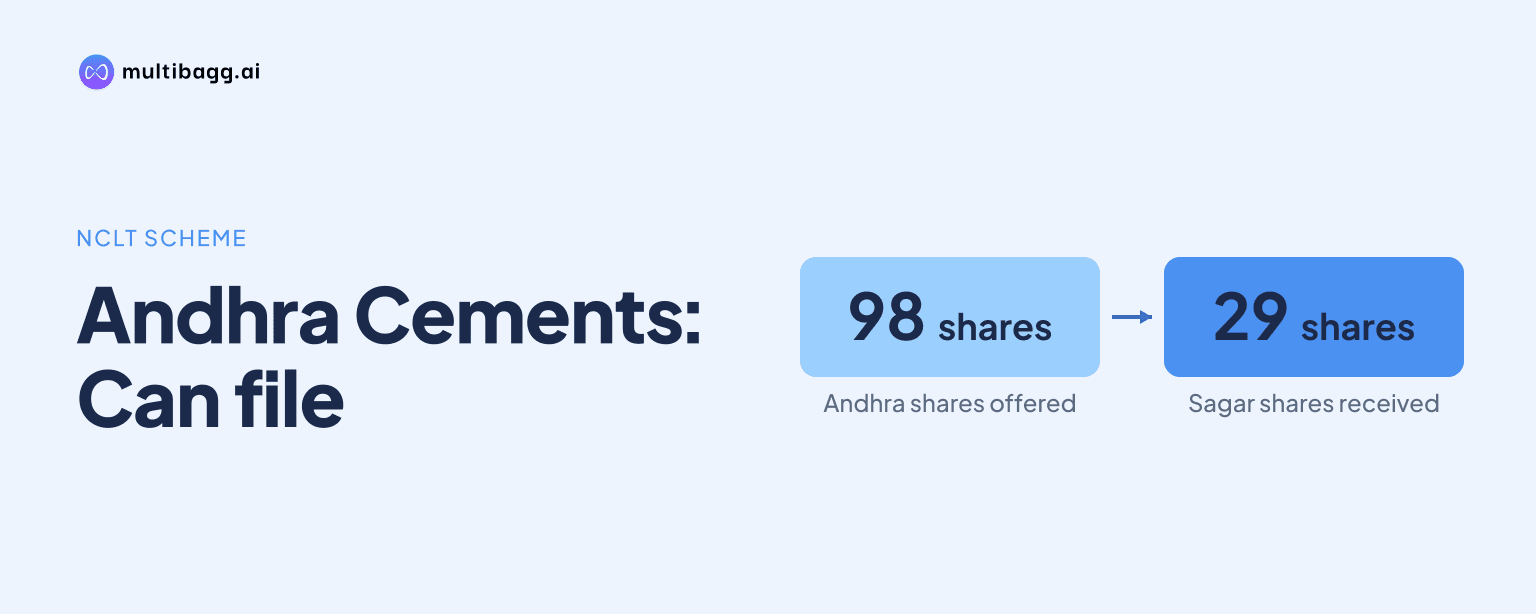
Andhra Cements Limited can file its proposed amalgamation petition with the National Company Law Tribunal after BSE issued a no-adverse-observation letter on November 5, 2026, provided the scheme is submitted within six months. The all-share proposal offers eligible minority shareholders 29 shares of Sagar Cements Limited for every 98 shares held in Andhra Cements.
Know Sagar Cements inside out
Results, valuation, peers and who's buying, in one view.
What did BSE allow Andhra Cements to do?
BSE allowed Andhra Cements to take its proposed scheme of amalgamation with Sagar Cements to the NCLT filing stage. The exchange issued its observation letter with no adverse observations on November 5, 2026, clearing a necessary step before the companies can seek the tribunal's consideration of the scheme.
Andhra Cements disclosed receipt of the letter on November 6, 2026, under Regulation 30 of the Securities and Exchange Board of India Listing Obligations and Disclosure Requirements Regulations, 2015. The disclosure identifies Andhra Cements as the transferor company and Sagar Cements as the transferee company under Sections 230 to 232 of the Companies Act, 2013.
The observation letter has a defined validity period. Andhra Cements must submit the scheme to the NCLT within six months from November 5, 2026. If it does not file within that period, the disclosed condition indicates that the exchange letter would no longer remain valid for this purpose.
Does BSE's letter approve the Andhra Cements merger?
No, BSE's letter does not approve, sanction or complete the proposed amalgamation. It states that the exchange has no adverse observations for taking the draft scheme to the NCLT, with its review limited to relevant listing, delisting and continuous-listing considerations.
The merger remains subject to the process and conditions set out for a tribunal-led scheme of amalgamation. These include the incorporation of SEBI and stock-exchange observations in the NCLT petition, as well as placing those observations before the tribunal. The transaction is also conditional on lender no-objection certificates, creditor-related compliance where applicable, shareholder disclosures and NCLT approval.
This distinction is important for investors because an observation letter is a procedural clearance rather than a final corporate-action approval. The disclosed information does not state that the tribunal has admitted, heard or approved the petition, nor does it set out a completion date for the transaction.
What are the key terms of the proposed share swap?
The disclosed share-exchange ratio is 29 equity shares of Sagar Cements for every 98 equity shares of Andhra Cements held by eligible minority shareholders. This makes the transaction an all-share amalgamation rather than a cash acquisition based on the information provided.
The ratio is a central term for eligible minority investors because it defines the number of Sagar Cements shares proposed in exchange for their Andhra Cements holdings if the scheme receives all required approvals. The source does not provide a valuation analysis, an implied price, or a record date for determining eligible shareholders.
The scheme was considered and approved by the boards on June 5, 2026, according to the disclosed secretarial audit material for Sagar Cements. The BSE letter therefore advances a process that had already been initiated at the board level, but it does not replace approvals required from other stakeholders.
Got a follow-up? Ask IRIS
What happens after the NCLT filing?
After the NCLT filing, Andhra Cements must ensure that the petition incorporates the comments and observations received from SEBI and the stock exchanges. BSE has stated that a petition is filed after such comments or observations on the draft scheme have been processed and communicated.
The NCLT process is intended to assess the scheme under the Companies Act framework. The disclosed conditions also refer to lender approvals, creditor compliance where applicable, complaint handling and shareholder disclosures. These requirements mean that the BSE letter is one stage in a wider approval sequence rather than the final step.
For Sagar Cements, the transaction concerns the proposed merger of its subsidiary, Andhra Cements, into the company. The source does not disclose any immediate change to cement production, plant operations, customer arrangements or employee terms resulting from BSE's letter. It also does not provide financial effects from the proposed amalgamation.
How does the filing clearance matter for investors and the cement business?
The filing clearance matters because it allows the companies to move the scheme from the stock-exchange observation stage to the tribunal stage, subject to the six-month deadline. For Andhra Cements shareholders covered by the scheme, the disclosed ratio provides the stated basis on which their holdings would be exchanged if the amalgamation is sanctioned and implemented.
For investors in both companies, the next material disclosures would concern the NCLT application, the treatment of regulatory observations, required stakeholder approvals and any tribunal directions. No share-price movement, financial forecast or merger-completion timetable is contained in the supplied disclosure, so these cannot be assessed from the available information.
The broader context is that a listed-company amalgamation requires both market-regulatory review and statutory approval. BSE's no-adverse-observation position addresses matters connected with listing rules, while the NCLT process addresses the scheme under the Companies Act. The two stages serve different functions and neither should be treated as a substitute for the other.
Conclusion
BSE's November 5, 2026 letter enables Andhra Cements to file its proposed merger scheme with the NCLT, while making clear that no final approval has yet been granted. The disclosed 29-for-98 all-share ratio sets the proposed consideration for eligible minority shareholders, and the letter moves the board-approved plan into the next formal stage.
The immediate point to watch is whether Andhra Cements files the scheme with the NCLT within six months of November 5, 2026. Subsequent disclosures on lender and creditor conditions, shareholder-related steps, regulatory observations and the NCLT's decision will determine the progress of the amalgamation.