










Digit’s Q2 service ratio reaches 99.8% on higher claims
Key highlights
- Digit’s Q2 2027 combined insurance service ratio was 99.8%, up from 94.9% in Q2 2026.
- Digit’s Q2 2027 claims ratio rose to 62.4% from 48.2% a year earlier.
- Digit reported Rs 63 crore of flood losses in Q2 2027, versus Rs 10 crore in Q2 2026.
- Digit’s Q2 2027 insurance service result declined to Rs 43 crore from Rs 162 crore.
powered by IRIS
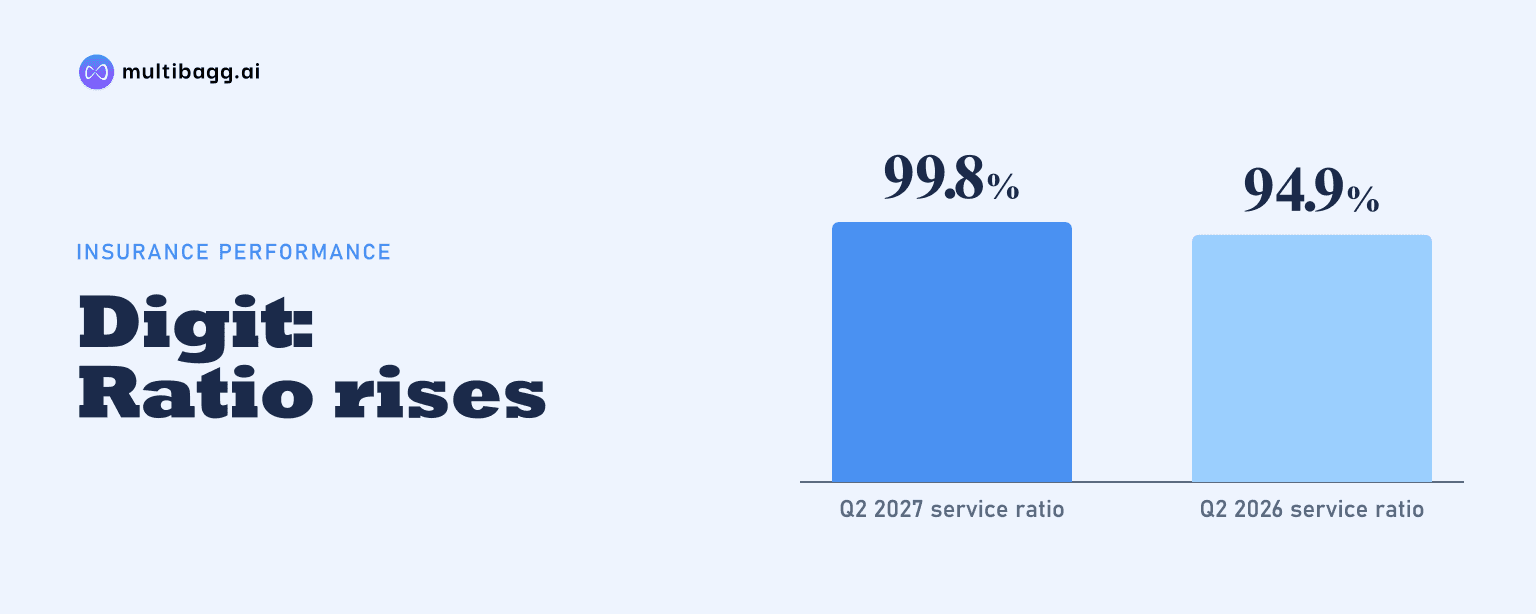
Digit reported a combined insurance service ratio of 99.8% in Q2 2027, versus 94.9% a year earlier, as the reported claims ratio rose to 62.4% from 48.2% and flood losses were Rs 63 crore. The expense, reinsurance and other expense ratio declined to 37.4% from 46.7%, partly offsetting the higher claims ratio.
Know Go Digit General Insurance inside out
Results, valuation, peers and who's buying, in one view.
Why did Digit’s service ratio reach 99.8%?
Digit’s combined insurance service ratio reached 99.8% in Q2 2027 because the 14.2-percentage-point increase in its claims ratio was larger than the 9.3-point reduction in its expense, reinsurance and other expense ratio. The ratio was 94.9% in Q2 2026 and 97.3% for FY 2026, before rising to 98.4% in H1 2027.
Digit defines the combined insurance service ratio as insurance service expenses, net expense or income from reinsurance contracts, and other expenses or income, divided by insurance revenue. In Q2 2027, the presentation shows a 62.4% claims ratio and a 37.4% expense, reinsurance and other expense ratio, compared with 48.2% and 46.7%, respectively, in Q2 2026.
How much did flood losses affect Digit’s Q2 2027 ratio?
Flood losses added 2.4 percentage points to Digit’s Q2 2027 combined insurance service ratio, which was 97.4% excluding flood losses and 99.8% on a reported basis. In Q2 2026, the corresponding difference was 0.4 percentage points, with a 94.5% ratio excluding flood losses and a 94.9% reported ratio.
Digit reported flood losses of Rs 63 crore in Q2 2027, compared with Rs 10 crore in Q2 2026 and Rs 30 crore in FY 2026. Its profit before tax excluding mark-to-market, or MTM, movements and flood losses was Rs 341 crore in Q2 2027, below Rs 380 crore a year earlier; the H1 2027 measure was Rs 660 crore versus Rs 700 crore in H1 2026.
What changed in Digit’s claims and operating expenses?
Digit’s reported claims ratio rose to 62.4% in Q2 2027 from 48.2% in Q2 2026, while its claims expense increased to Rs 16.98 crore from Rs 12.89 crore. The presentation defines the claims ratio as claims cost divided by insurance revenue under the Insurance Regulatory and Development Authority of India circular dated July 8, 2026, and says it is a gross ratio excluding reinsurance effects.
In the Ind AS financial statements, Digit reported Q2 2027 insurance revenue of Rs 27.20 crore and insurance service expense of Rs 26.08 crore. Acquisition cost increased to Rs 7.20 crore from Rs 6.58 crore, while expenses related to the insurance business rose to Rs 1.90 crore from Rs 1.84 crore; the reported expense ratio moved to 33.5% from 31.5%.
For H1 2027, Digit’s claims expense was Rs 32.79 crore, compared with Rs 27.40 crore in H1 2026, and its reported claims ratio rose to 60.9% from 53.2%. The combined operating ratio, which adds the claims and expense ratios before reinsurance and other items, increased to 94.1% from 83.9% over the same half-year periods.
Got a follow-up? Ask IRIS
Did lower reinsurance costs offset Digit’s higher claims costs?
Lower reinsurance costs partly offset Digit’s higher claims costs, but did not prevent its insurance service result from declining to Rs 43 crore in Q2 2027 from Rs 162 crore in Q2 2026. Net expense from reinsurance contracts fell to Rs 70 crore from Rs 382 crore, while claims expense increased by Rs 4.09 crore.
Other income and expense was a Rs 36 crore expense in Q2 2027, compared with a Rs 25 crore expense a year earlier. The reported combined operating ratio of 95.9% was therefore lower than the 99.8% combined insurance service ratio, because the latter also incorporates reinsurance and other items under Digit’s disclosed calculation.
For H1 2027, net reinsurance expense declined to Rs 1.59 crore from Rs 5.46 crore in H1 2026, while the insurance service result fell to Rs 1.57 crore from Rs 2.86 crore. The half-year expense ratio was 33.3%, compared with 30.7%, alongside a 7.7-percentage-point increase in the claims ratio.
How did the ratio movement affect Digit’s reported profit and capital measures?
Digit reported Q2 2027 profit before tax of Rs 1.90 crore under Ind AS, down from Rs 2.76 crore in Q2 2026, while profit after tax decreased to Rs 1.42 crore from Rs 2.07 crore. Investment income including MTM rose to Rs 3.68 crore from Rs 3.06 crore, while insurance finance expense increased to Rs 1.71 crore from Rs 1.52 crore.
For H1 2027, Digit reported profit before tax of Rs 6.96 crore and profit after tax of Rs 5.21 crore, compared with Rs 7.19 crore and Rs 5.38 crore in H1 2026. Return on average equity, which Digit calculates using profit after tax excluding MTM and Indian Generally Accepted Accounting Principles net worth, was 4.4% in Q2 2027 and 9.6% in H1 2027, versus 6.5% and 12.4% in the prior-year periods; the presentation says these figures are not annualised.
Digit’s Ind AS net worth was Rs 81.37 crore in H1 2027, compared with Rs 76.20 crore in H1 2026, and its solvency ratio was 2.40 versus 2.26. Its net retention ratio increased to 84.3% in Q2 2027 from 79.1% in Q2 2026 and was 80.4% in H1 2027, compared with 71.9% a year earlier.
Conclusion
Digit’s Q2 2027 ratio movement reflects a higher claims ratio and Rs 63 crore of flood losses, despite a lower expense, reinsurance and other expense ratio. The reported combined insurance service ratio increased by 4.9 percentage points year on year to 99.8%, while the ratio excluding flood losses also rose by 2.9 points to 97.4%.
The unresolved issue in the presentation is whether claims costs and flood-related effects will moderate after H1 2027, when the claims ratio was 60.9% and the flood-adjusted combined insurance service ratio was 97.2%. Digit also reported an H1 2027 net retention ratio of 80.4% and net reinsurance expense of Rs 1.59 crore, making the balance between retained risk, claims costs and reinsurance expense a disclosed measure to watch.