










DTL FY26 loss reflects ₹4.57 crore tax and cash outflow
Key highlights
- DTL reported a ₹2.8 crore consolidated FY26 loss after a ₹4.57 crore tax charge.
- FY26 cash flow from operations was negative ₹9.5 crore after ₹13.2 crore of net working-capital outflows.
- DTL reported ₹45.1 crore of consolidated FY26 trade receivables, versus ₹16.1 crore on the standalone FY25 balance sheet.
- DTL drew ₹27.1 crore of net borrowings in FY26 and paid ₹14.4 crore to retiring partners.
powered by IRIS
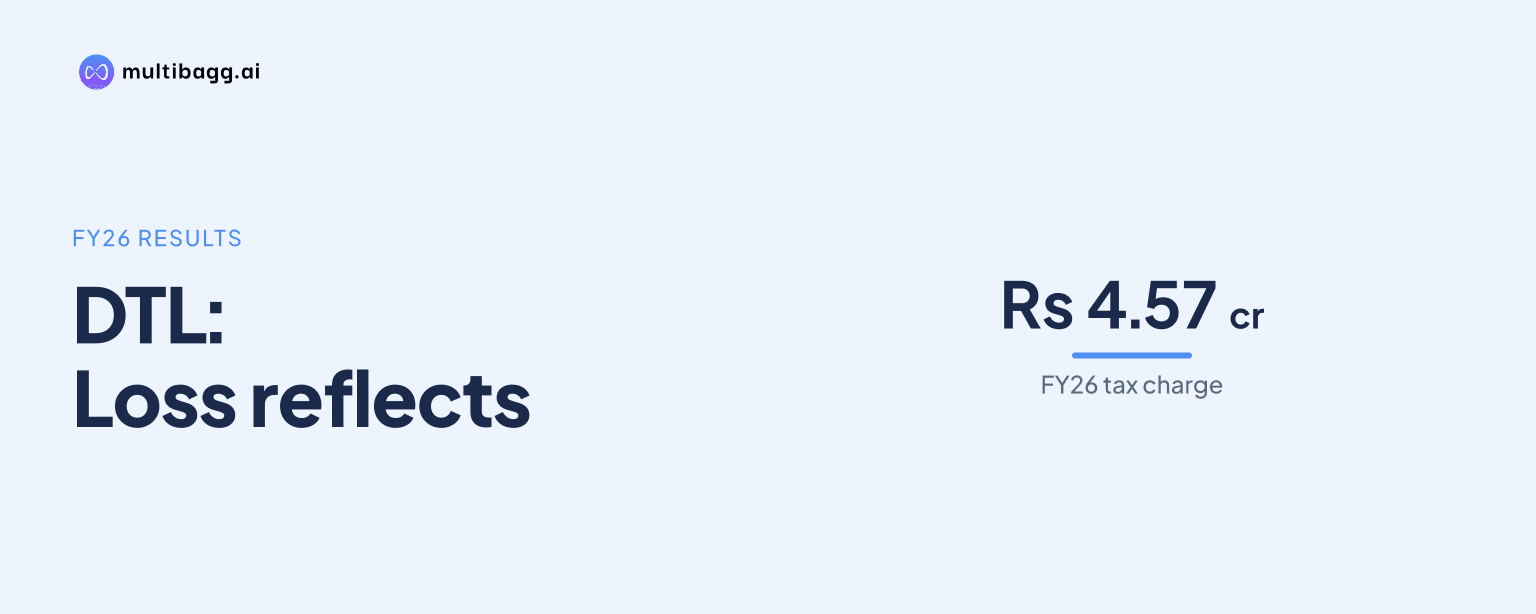
Diensten Tech Limited recorded a ₹2.8 crore consolidated FY26 loss because its ₹4.57 crore tax charge exceeded ₹1.8 crore of profit before tax, while cash flow from operations was negative ₹9.5 crore. DTL generated ₹9.8 crore of EBITDA, but net working-capital changes of ₹13.2 crore and taxes paid of ₹5.5 crore absorbed operating cash.
Know Diensten Tech inside out
Results, valuation, peers and who's buying, in one view.
Why did DTL report a FY26 loss despite positive EBITDA?
DTL reported a consolidated FY26 loss because the ₹4.57 crore tax charge was greater than its ₹1.8 crore profit before tax. Revenue from operations was ₹162.8 crore and other income was ₹1.5 crore, taking total income to ₹164.3 crore. Employee benefits expense of ₹132.0 crore, other expenses of ₹21.7 crore and exceptional items of ₹0.7 crore resulted in EBITDA of ₹9.8 crore and an EBITDA margin of 5.9%.
Depreciation and amortisation of ₹3.2 crore and finance costs of ₹4.8 crore reduced EBITDA to ₹1.8 crore of profit before tax. The presentation says ₹4.33 crore of the ₹4.57 crore consolidated tax charge was current tax in Ushta Te Consultancy Services LLP, arising from the LLP's reconstitution. This left DTL with a consolidated loss after tax of ₹2.8 crore and diluted earnings per share of negative ₹3.31.
The ₹0.7 crore consolidated exceptional item relates to leave encashment and gratuity effects arising from the New Labour Code. FY26 was DTL's first year of consolidating Ushta Te, and the company therefore did not present FY25 consolidated income-statement comparatives. The reported ₹4.6 crore tax-expense line is rounded, while the accompanying tax-charge note states ₹4.57 crore.
How did DTL's standalone profit change in FY26?
DTL's standalone business moved to a ₹0.4 crore profit after tax in FY26 from a ₹2.1 crore loss in FY25. Standalone revenue from operations rose to ₹139.4 crore in FY26 from ₹64.9 crore in FY25 and ₹41.0 crore in FY24. Standalone EBITDA increased to ₹7.9 crore from ₹2.3 crore, while the EBITDA margin rose to 5.7% from 3.6%.
Standalone profit before tax reached ₹0.6 crore in FY26, compared with losses of ₹2.9 crore in FY25 and ₹3.8 crore in FY24. Finance costs increased to ₹4.6 crore from ₹3.0 crore, and depreciation and amortisation rose to ₹2.6 crore from ₹2.2 crore. The standalone tax expense was ₹0.2 crore, compared with a net tax credit of ₹0.7 crore in FY25.
The FY26 standalone and consolidated results differed because DTL added Ushta Te to the consolidated accounts and recorded the related tax charge. Consolidated EBITDA of ₹9.8 crore was ₹1.9 crore above standalone EBITDA of ₹7.9 crore, but consolidated profit after tax was a ₹2.8 crore loss against a standalone ₹0.4 crore profit. DTL identifies the Ushta Te reconstitution tax as the reason positive consolidated profit before tax did not become a profit after tax.
What caused DTL's negative operating cash flow in FY26?
DTL's FY26 operating cash flow was negative chiefly because ₹13.2 crore of net working-capital changes and ₹5.5 crore of taxes paid exceeded operating profit before working-capital changes. That operating-profit measure was ₹9.2 crore in FY26, up from ₹1.6 crore in FY25, but cash flow from operations worsened to negative ₹9.5 crore from negative ₹1.0 crore.
The working-capital outflow rose by ₹11.6 crore between FY25 and FY26, and taxes paid increased by ₹4.5 crore. The cash-flow statement reports ₹5.5 crore of tax payments, which is ₹0.93 crore above the stated ₹4.57 crore consolidated tax charge; the annexure does not provide a reconciliation. Comparability also needs care because DTL says FY26 was its first year of Ushta Te consolidation.
Got a follow-up? Ask IRIS
How did DTL's receivables, borrowings and cash change in FY26?
DTL reported consolidated FY26 trade receivables of ₹45.1 crore, compared with ₹16.1 crore on the standalone FY25 balance sheet. Total assets rose to ₹107.0 crore from ₹58.4 crore, and current assets increased to ₹53.5 crore from ₹28.2 crore. Since FY25 is standalone and FY26 is consolidated, these are reported changes rather than like-for-like group comparisons.
Non-current borrowings were ₹41.3 crore in consolidated FY26, compared with ₹23.0 crore in standalone FY25, while current borrowings rose to ₹20.7 crore from ₹9.2 crore. Trade payables increased to ₹14.7 crore from ₹3.5 crore, and total equity was ₹21.0 crore versus ₹19.0 crore. These balance-sheet figures accompanied ₹27.1 crore of net borrowings drawn in FY26.
DTL's balance sheet reports FY26 cash and cash equivalents of ₹5.6 crore, while the cash-flow statement reports closing cash and cash equivalents of ₹1.4 crore after a ₹9.0 crore net cash decrease. The supplied annexure does not explain the ₹4.2 crore difference. It is therefore an unresolved presentation difference rather than an amount that can be reconciled from the disclosed figures.
How did financing affect DTL's FY26 cash movements?
DTL generated ₹7.2 crore of financing cash flow in FY26, but it did not offset negative operating and investing cash flows. Net borrowings drawn contributed ₹27.1 crore, while interest and lease payments used ₹5.5 crore and payments to retiring partners used ₹14.4 crore. No equity issuance was reported in FY26, compared with ₹19.3 crore of net equity issued in FY25.
Investing cash flow was negative ₹6.7 crore in FY26, compared with negative ₹9.0 crore in FY25. Capital expenditure and intangibles used ₹0.4 crore, down from ₹9.7 crore, while other investing items used ₹6.4 crore after generating ₹0.7 crore in FY25. Goodwill was ₹23.4 crore in FY26 compared with ₹8.0 crore in standalone FY25, alongside DTL's first-year consolidation of Ushta Te.
Conclusion
DTL's FY26 accounts show that reported operating profitability did not translate into consolidated net profit or operating cash generation. EBITDA of ₹9.8 crore and profit before tax of ₹1.8 crore were outweighed by the ₹4.57 crore tax charge, while working-capital movements and tax payments led to negative ₹9.5 crore of operating cash flow.
The next disclosures can clarify whether the ₹45.1 crore receivables balance converts into cash and whether further borrowing is needed after ₹27.1 crore of FY26 net borrowings drawn. Investors can also watch for an explanation of the difference between the ₹5.6 crore balance-sheet cash figure and the ₹1.4 crore closing-cash figure in the cash-flow statement.