










Foods & Inns reports 1,714 certified farmers, 50% lower chemicals
Key highlights
- F&I reported 1,714 certified farmers as of April 2024, including 1,456 mango farmers.
- F&I said its sustainable-agriculture programme reduced chemical use by 50%.
- F&I’s agronomists visit participating farmers monthly for technical assistance.
- F&I plans to certify more than 1,500 additional farmers across more than 2,000 hectares within five years.
powered by IRIS
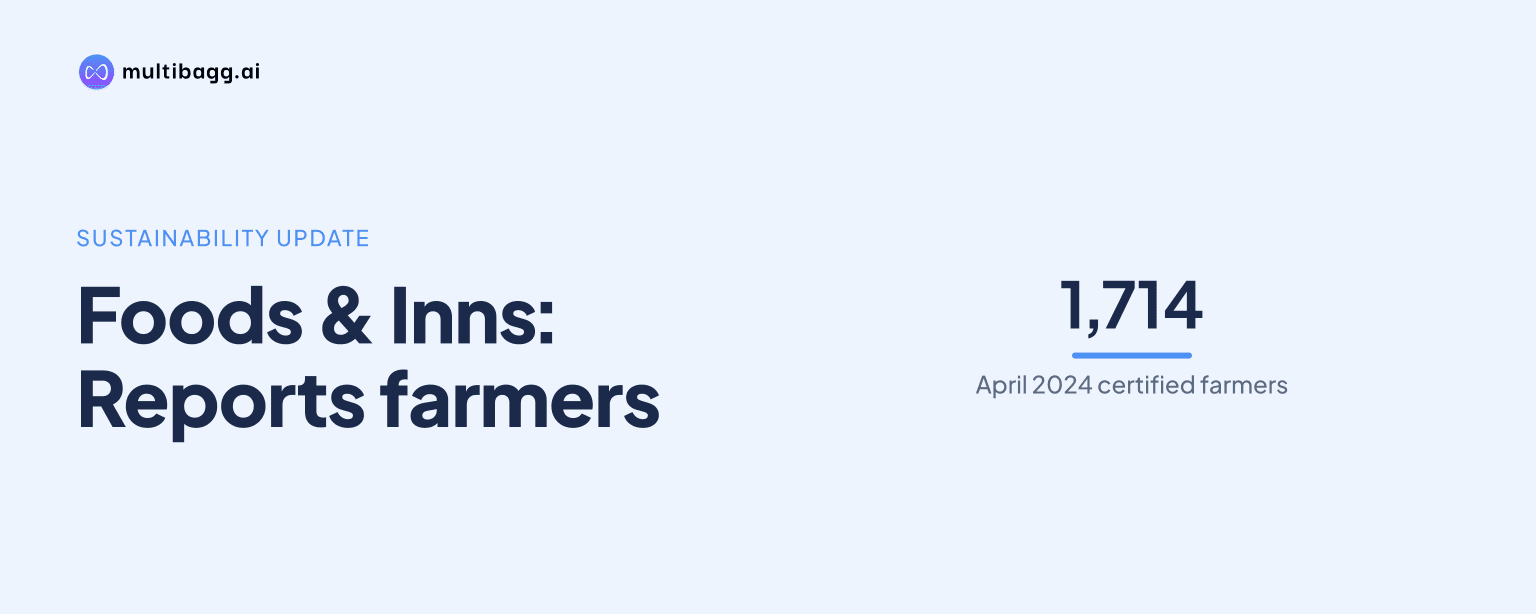
F&I reported 1,714 certified farmers as of April 2024 and said its sustainable-agriculture programme reduced chemical use by 50%; its certification data show 1,456 mango growers, 45 guava growers and 213 tomato growers. The programme started in 2011, and the 1,714 total does not mean more than 1,700 certified mango farmers.
Know Foods & Inns inside out
Results, valuation, peers and who's buying, in one view.
How many farmers has F&I certified?
F&I reported 1,714 certified farmers as of April 2024, comprising 1,456 mango farmers, 45 guava farmers and 213 tomato farmers. The mango total combines 167 certified farmers in Western India with 1,289 in Southern India. The aggregate certification count therefore covers three crops rather than mango alone.
The 167 western mango, 1,289 southern mango and 45 western guava farmers were reported under the Sustainable Agriculture Initiative (SAI) and Rainforest Alliance platforms. The 213 tomato farmers were certified under the Unilever Sustainable Agriculture Code 2017. F&I says it has run customised sustainable-sourcing projects for international customers and worked with the Netherlands-based IDH Sustainable Trade Initiative in about 10 villages in Ratnagiri and Konkan.
How did F&I say it reduced chemical use?
F&I said the programme reduced chemical use by 50%, linking the outcome to improved soil health and lower expenditure on farm inputs. The presentation does not disclose a baseline year, chemical quantity, measurement method or the number of farmers covered by the 50% calculation. It is therefore a company-reported programme impact rather than a calculation detailed in the presentation.
The stated operating methods include integrated pest management (IPM), soil management, water conservation, pesticide management and monitoring carbon emissions. F&I said regular demonstrations, training and personal assistance improved soil physical properties, reduced pest and insect attacks, and increased produce quality and quantity. The presentation does not quantify changes in yield, income or pest incidence.
F&I says its agronomists visit farmers monthly to provide technical assistance and solutions, while agricultural scientists also visit farms to introduce modern farming practices. For the last 10 years, it has provided agricultural equipment. The company also lists mobile toilets, personal protective equipment kits, mango storage and transport crates, and water drums as hygiene and safety support.
What is F&I’s sustainable sourcing model?
F&I’s model combines farmer certification, technical support and a commitment to buy back 100% of produce from farmers in the programme. The company says the buyback commitment is intended to improve yield and product quality while establishing a sustainable value chain among smallholder farmers. It also refers to ethical sourcing standards and fair-price value, but does not disclose prices paid or a comparison with conventional procurement.
The sourcing design includes farmer collaboration, collective feedback and direct procurement of farm inputs through Farmer Producer Companies. F&I says it is setting up collection centres so farmers can supply raw materials directly in exchange for fair prices. The presentation does not state how many collection centres are operating or planned, or the share of procurement moving through them.
Intercropping is a further income mechanism disclosed by F&I. It says it has provided training and materials for black pepper, lemongrass, citronella and turmeric, which farmers can sell in the open market throughout the year. The presentation says participation by small-scale female farmers has been beneficial, but gives no count of women farmers or income data from the four intercrops.
Got a follow-up? Ask IRIS
What partnerships support F&I’s programme?
F&I has partnered with Biospheres, a French company, on pilot projects covering soil rejuvenation and biodiversity. The company describes Biospheres as supporting regenerative agriculture and improvement of the soil ecosystem. F&I does not disclose quantified results from the pilot projects or a timetable for wider implementation.
F&I has also partnered with AXA Climate’s French and Indian teams to study the effects of climate change over the next 25 years on agricultural produce in specific areas. The programme’s disclosed scope includes climate impact, crop traceability, soil and water conservation, pesticide management, and human and workplace rights. The presentation does not identify the study areas or provide a publication date for findings.
F&I’s earlier work with IDH focused on responsible mango sourcing in Ratnagiri and Konkan, covering about 10 villages. It also says it completed sustainable-sourcing projects with European Union clients and located specialty produce for a large fast-moving consumer goods business through smallholder farmers. The company does not name the customer or disclose volumes sourced through those projects.
What is F&I planning over the next five years?
F&I plans to cover and certify more than 1,500 additional farmers over the next five years across more than 2,000 hectares under the SAI and Rainforest Alliance platform. Management has also committed to procure 100% sustainable certified produce from farmers in the programme. These are forward plans rather than reported certification or procurement volumes as of April 2024.
The planned geography includes Ratnagiri, Raigad, Sindhudurg, Nashik, Ahmednagar and Jalgaon in Maharashtra; Dharwad, Hangal and Belgaum in Karnataka; Valsad in Gujarat; and Kapada, Annamaya and Chittoor in Andhra Pradesh. The programme is also intended to expand beyond fruit into okra, green chilli, beetroot, butternut squash and zucchini.
The five-year target would add more than 1,500 farmers to the 1,714 certified farmers reported in April 2024. F&I does not specify how many new certifications will be mango growers or how certifications will be split by crop and region. It also does not disclose annual farmer or hectare targets within the five-year period.
Conclusion
F&I’s presentation reports 1,714 certified farmers as of April 2024, of whom 1,456 were mango farmers and 258 were guava or tomato farmers. The company attributes its reported 50% reduction in chemical use to training, agronomist support, IPM, soil management and related farm interventions, while leaving the calculation’s baseline and measurement method undisclosed.
The next disclosed milestone is management’s five-year plan to certify more than 1,500 additional farmers across more than 2,000 hectares and procure 100% sustainable certified produce from programme participants. Progress will depend on expansion through the listed locations, the addition of five vegetable crops, and further disclosure from the Biospheres pilots and AXA Climate study.