










GNG raises FY27 revenue guidance to 40%, PAT margin by 150 bp
Key highlights
- GNG raised FY27 revenue-growth guidance to 40% from 30%.
- GNG now targets a 150-basis-point PAT-margin expansion, up from 100 basis points.
- Q2 FY27 laptop ASP was about Rs 31,000 versus about Rs 28,000 in the corresponding quarter.
- GNG assumes a FY27 tax rate of 14% to 16%, versus about 10.6% in FY26.
powered by IRIS
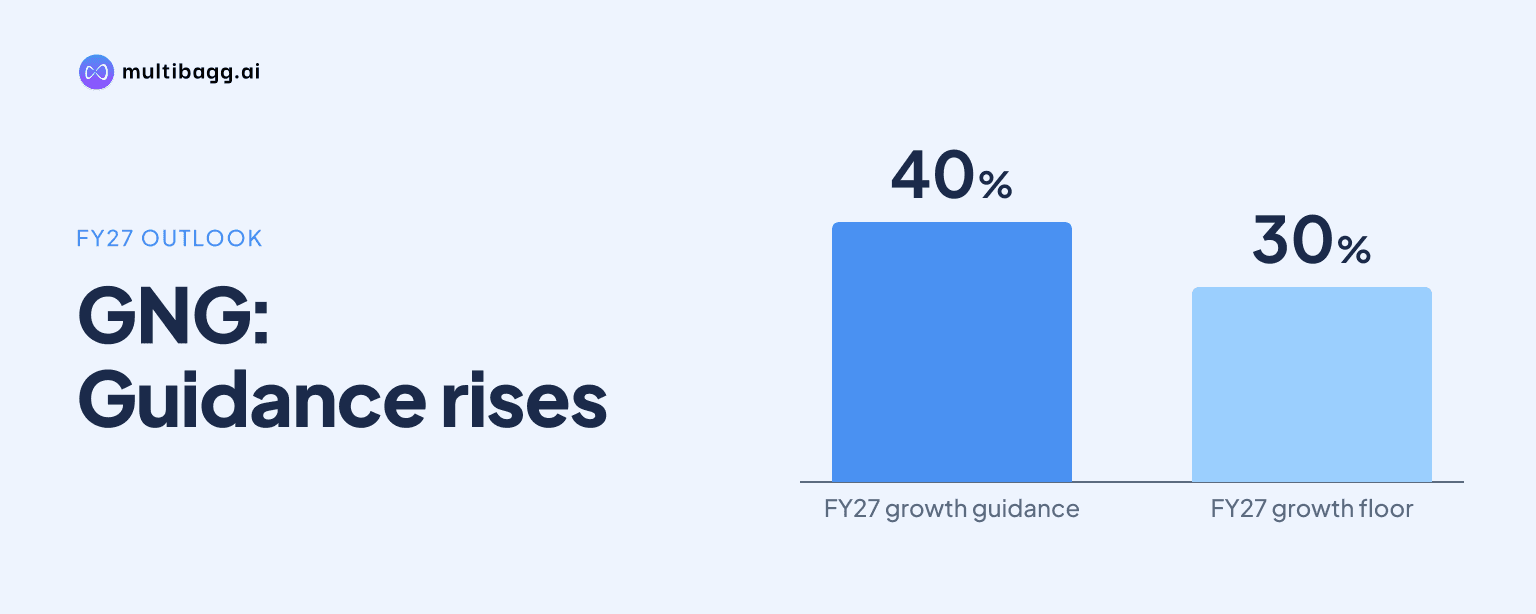
In FY27, GNG has raised revenue-growth guidance to 40% and targets a 150-basis-point expansion in profit after tax (PAT) margin over FY26. The revenue target is up from 30%, while the margin target is 50 basis points above prior guidance, despite management assuming a 14% to 16% full-year tax rate.
Know GNG Electronics inside out
Results, valuation, peers and who's buying, in one view.
What is GNG’s revised FY27 guidance?
GNG’s revised FY27 guidance is 40% revenue growth over the previous financial year and a 150-basis-point, or 1.5-percentage-point, increase in PAT margin over FY26. Management had previously guided for 30% top-line growth and a 100-basis-point PAT-margin increase, so the revenue-growth outlook rose by 10 percentage points and the margin-expansion target increased by 50 basis points.
An analyst cited GNG’s FY26 net margin at 7%, and management confirmed that the 1.5-percentage-point target is measured over the prior year’s result. On that basis, the implied FY27 PAT margin would be about 8.5%. Management said this could be below the approximately 9% net margin cited for Q2 FY27 because the proportion of business between the first and second half differs.
What drove GNG to raise its FY27 revenue outlook?
GNG raised its outlook after processing about 2,25,000 units in Q2 FY27 and about 3,74,000 units in H1 FY27. Management said Q2 volume grew 30%, while H1 growth included nearly 25% volume growth and about 11% better realization, indicating that the higher full-year target depends on both unit volumes and pricing.
Laptops represent 78% to 80% of GNG revenue, making their selling prices material to the guidance increase. Q2 FY27 laptop average selling price (ASP) was about Rs 31,000, against about Rs 28,000 in the corresponding quarter, while other products rose to about Rs 19,500 from about Rs 18,000. Management said future realization will also depend on product configuration and mix.
How does GNG expect to expand PAT margin?
GNG expects margin expansion to come primarily from improved realization, brand development and the price difference between new and refurbished computers. Management illustrated a new computer rising from Rs 100 to Rs 180 and a refurbished device rising from Rs 30 to Rs 54, widening the absolute customer saving from Rs 70 to Rs 126.
Management said that wider saving could let GNG price refurbished devices at a higher share of a new computer’s price while retaining customer value. It also cited the Electronics Bazaar warranty of one to three years and greater brand recognition as supports for better realization. These are management expectations rather than a commitment to a specified future ASP increase.
GNG said Q2 FY27 margin rose by about 400 to 500 basis points, of which about 125 to 150 basis points resulted from strategic inventory purchased before prices rose. Management attributed the larger share of improvement to pricing and realization, and said it expects similar benefits from inventory already procured in coming quarters.
Got a follow-up? Ask IRIS
Is the higher FY27 tax rate included in GNG’s target?
Yes, GNG said its 150-basis-point PAT-margin expansion target already includes a 14% to 16% FY27 tax-rate assumption. The H1 FY27 tax rate was about 18%, compared with about 10.6% for FY26, and management said the 14% to 16% range is appropriate for assessing the full year.
Management linked the higher tax rate to a better-performing India business during the first six months, when key partner relationships gained traction. It expects both Indian and international operations to grow, but did not disclose a revenue or profit split by geography. The PAT guidance therefore does not rely on repeating FY26’s lower tax rate.
What operating plans support GNG’s FY27 target?
GNG plans to retain elevated inventory for at least the next two quarters, according to management, to serve customers needing large quantities and to capture the benefit of current supply conditions. Receivables remained in the 40- to 45-day range, while net debt was about Rs 427 crore at the end of Q2 FY27, up from about Rs 406 crore at the end of the previous quarter. Management expects a similar debt level for the full year.
GNG is also increasing its operating capacity and commercial coverage before growth materialises. Total headcount reached 2,811 in September 2026 from 2,420, while sales and marketing headcount rose to 233 from 196 in one quarter. At the end of Q2 FY27, GNG supplied 55 countries against 49 at the end of Q1, had 5,542 customer touchpoints against 5,130, and had 820 suppliers against 773.
Management said elevated inventory would probably not remain necessary for the next three to four quarters, although it considered such inventory beneficial for at least the next two quarters. Its longer-term expectation is around 90 days of projected sales inventory once conditions reach a new normal, which management placed about two years away. Management also said sourcing costs are rising with a lag as companies extend leases and defer device purchases.
Conclusion
GNG’s upgraded FY27 outlook combines a 40% revenue-growth target with a 150-basis-point PAT-margin expansion despite a planned 14% to 16% tax rate. The company’s Q2 FY27 operating evidence included 30% volume growth, laptop ASP of about Rs 31,000 and a 400- to 500-basis-point margin increase, with 125 to 150 basis points attributed to strategic inventory.
The next disclosures to watch are whether inventory continues supporting realization over the next two quarters, whether net debt stays near Rs 427 crore as management expects, and whether inventory moves toward the stated 90-day longer-term level. The FY27 result will also depend on second-half business mix, which management said can differ from the approximately 9% Q2 FY27 net-margin run rate.