








Gold prices fall nearly 29% as Indian buyers stagger purchases
MAX Plan at ₹4,999/yr

Find your next multibaggerBe a Pro Investor
Research stocks and track your picks on the go. Download the app.
Key highlights
- Gold prices in India have fallen nearly 29%, from about ₹1.81 lakh to ₹1.29 lakh per 10 grams.
- 99.9% purity gold fell ₹5,200 to ₹1,29,300 per 10 grams in New Delhi on November 20.
- Gold was about 31% below its high in dollars but about 25% lower in rupees.
- 24-carat gold fell 3.6% from ₹1,34,418 on November 17 to ₹1,29,531 on November 19.
powered by IRIS
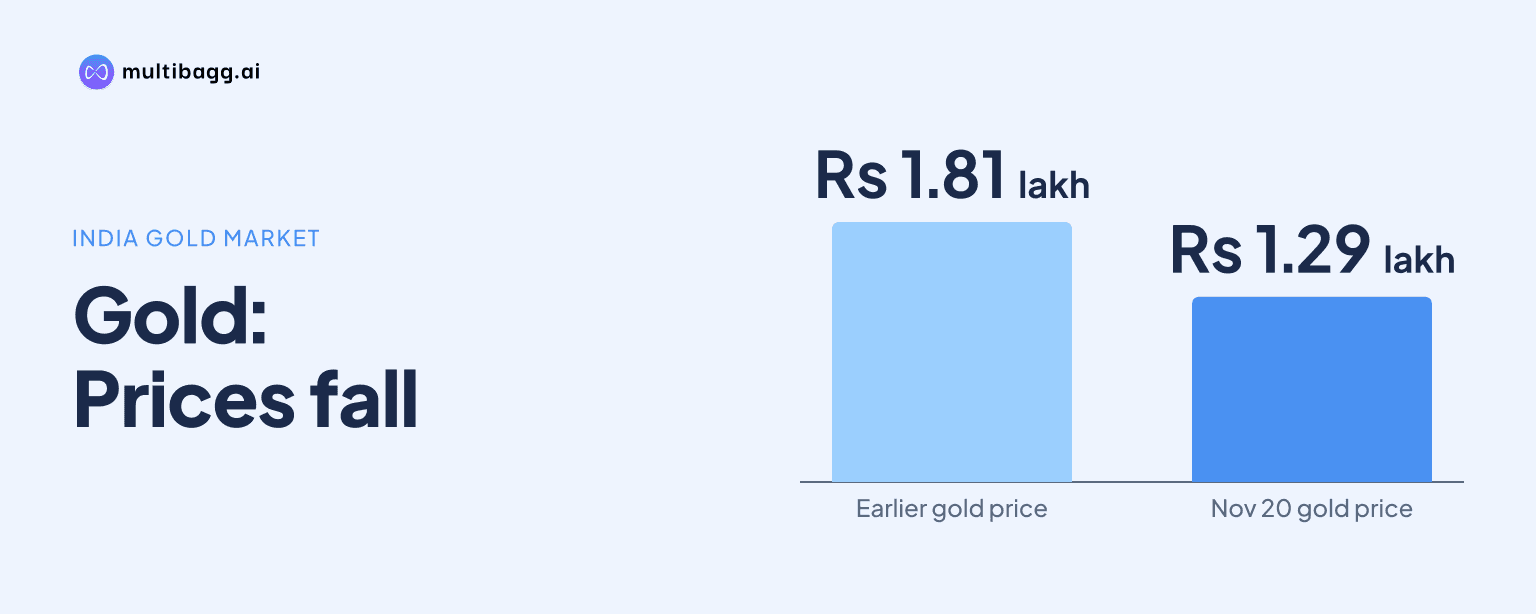
Gold prices in India have fallen nearly 29%, from about ₹1.81 lakh to ₹1.29 lakh per 10 grams, as a stronger US dollar, higher bond yields and expectations of US rate hikes pressure bullion. The correction has brought relief to some buyers, but experts advise investors to spread purchases over time.
Why have Gold prices fallen so sharply?
Gold has fallen as the stronger US dollar, rising bond yields, profit booking and expectations of higher US interest rates have reduced its appeal. Gold does not generate regular interest income, so higher yields can make interest-bearing assets relatively more attractive to investors.
International prices dropped below $3,500 an ounce on November 25. In the domestic market, 99.9% purity gold fell by ₹5,200 to ₹1,29,300 per 10 grams in New Delhi on November 20, extending a nine-session losing streak, according to India Bullion and Jewellers Association-reported market data and local traders.
How does the Gold correction affect Indian investors?
Gold affects Indian investors differently depending on when they bought, their holding period and the role of bullion in their portfolio. Those who bought closer to the recent peak, including through gold and silver funds, face lower market values, while long-term investors may review whether their allocation still matches their financial goals and risk tolerance.
The domestic fall has been smaller than the dollar decline, with the context indicating a drop of about 25% in rupees versus about 31% in dollars from the high. This difference matters because Indian prices reflect global bullion rates, the rupee-dollar exchange rate, import costs, taxes and domestic demand. A weaker rupee can cushion a global decline for domestic holders, while a stronger rupee can amplify it.
Got a follow-up? Ask IRIS
Should Indian buyers purchase Gold after the decline?
Indian buyers should consider staggered purchases rather than committing a large lump sum after the correction. Experts note that further declines cannot be ruled out, so a lower price does not by itself confirm that gold has reached a bottom or that a quick recovery will follow.
The price fall may offer relief to jewellery buyers and bring back households that had postponed purchases during the earlier rally. Yet affordability remains a concern because prices are still considerably higher than a year earlier. Some investors are using lump-sum purchases or systematic investments to manage volatility, while gold ETFs have continued to receive significant inflows despite the correction.
What does falling Gold mean for lenders and the economy?
Falling Gold prices raise pressure on gold-loan lenders because collateral values decline and loan-to-value limits can be breached. Gold finance companies have issued legal auction notices in some cases, while the Reserve Bank of India has alerted non-banking finance companies to increased scrutiny of gold loans amid the price decline.
The effects on the wider economy are mixed. India imports most of its gold, so lower international prices could reduce the import bill and ease pressure on the current account deficit. However, greater demand and higher import volumes could offset some of that benefit. Households holding gold as savings see the market value of those holdings decline, while jewellers and bullion traders can face inventory-related challenges if stocks were acquired at higher rates.
Conclusion
The nearly 29% fall in Gold prices has changed the calculation for Indian consumers, investors and lenders, but it has not removed uncertainty. Buyers may benefit from lower rates than at the recent peak, while existing holders, gold-linked fund investors and gold-loan providers face the effects of reduced collateral and portfolio values.
The next signals to watch are US economic data, the Federal Reserve policy outlook, bond yields, the US dollar and the rupee-dollar exchange rate. These factors will influence whether domestic prices extend their correction or find support, while RBI scrutiny of gold loans remains relevant for non-banking finance companies and gold-finance firms.

