










GlaxoSmithKline Pharmaceuticals Launches BLENREP in India
Key highlights
- GSK India launched CDSCO-approved BLENREP for adults with multiple myeloma after at least 1 prior therapy.
- DREAMM-7 showed median progression-free survival of 36.6 months for BLENREP.
- GSK India reported September-quarter revenue of ₹1,180 crore, up 21% year on year.
- GSK India's September-quarter profit after tax was ₹335 crore, up 31% year on year.
powered by IRIS
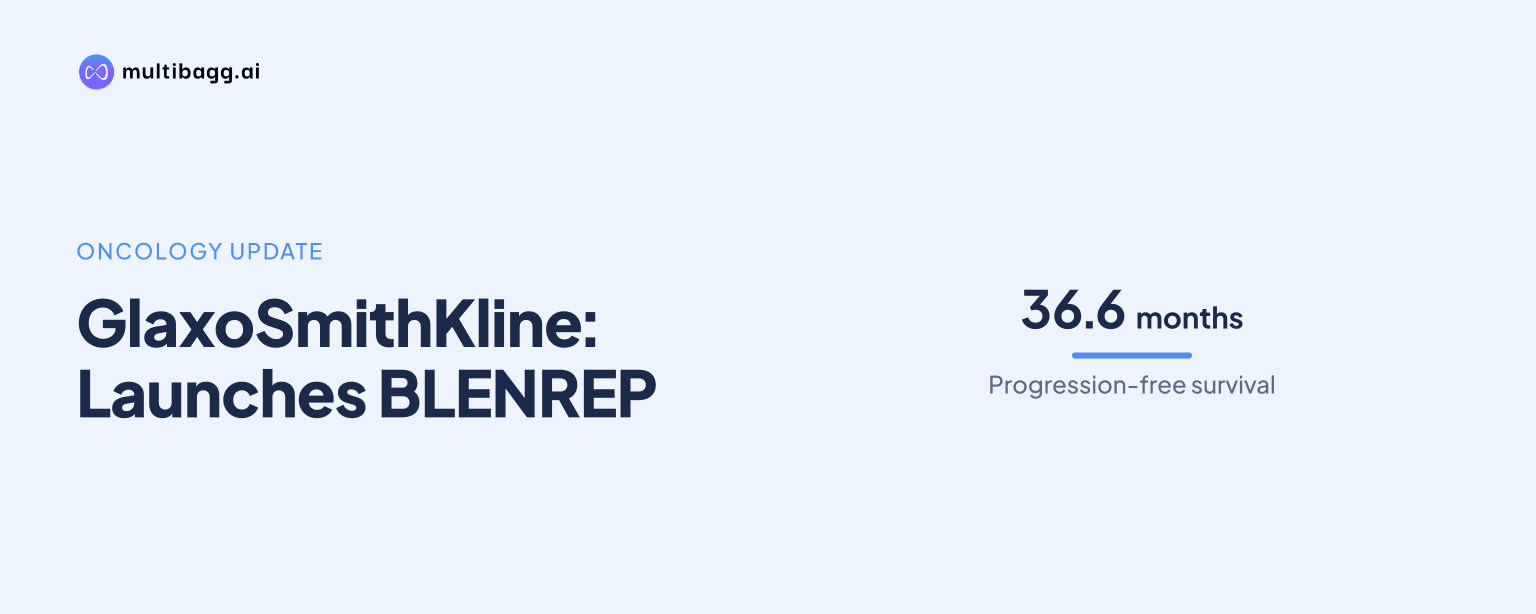
GlaxoSmithKline Pharmaceuticals Limited has launched CDSCO-approved BLENREP in India for adults with relapsed or refractory multiple myeloma who have received at least one prior therapy, with DREAMM-7 reporting median progression-free survival of 36.6 months. The launch expands GSK India's presence in specialised cancer care and marks its entry into haemato-oncology.
Know Glaxosmithkline Pharmaceuticals inside out
Results, valuation, peers and who's buying, in one view.
What has GSK India launched in India?
GSK India has launched BLENREP, or belantamab mafodotin, after receiving market authorisation in India. The therapy is an anti-BCMA antibody-drug conjugate, known as an ADC, and is indicated for adults with relapsed or refractory multiple myeloma who have received at least one earlier therapy.
The 24 November filing identifies the launch as the key development. It follows the company's earlier disclosures that it had received market authorisation and was preparing to introduce BLENREP in the country. GSK India had previously said its launch plans would be announced at an appropriate time; the current filing confirms the product's India launch.
The approved use is specific to patients whose disease has relapsed or is refractory after prior treatment. The filing does not disclose BLENREP's India price, reimbursement arrangements, expected sales contribution, distribution coverage or patient-enrolment details. Those factors will be relevant to the therapy's commercial reach but cannot be assessed from the disclosed information.
Which patients is BLENREP approved for?
BLENREP is approved for adult patients with relapsed or refractory multiple myeloma who have received at least one prior therapy. Multiple myeloma is a blood cancer affecting plasma cells, and the company describes it as the third most common blood cancer globally.
GSK India has positioned the launch as a move into haemato-oncology, extending its existing oncology presence. In its results communication for the quarter ended 30 September 2026, the company had said it would foray into haemato-oncology through BLENREP. That disclosure also described the medicine as an anti-BCMA ADC.
The filing does not quantify the number of Indian patients who may receive the treatment. Separate market commentary included in the available context cited an addressable population of around 8,000 to 10,000 patients for the approved second-line indication, but this is not a figure contained in the launch filing itself. It should therefore be treated as external market context rather than company guidance attached to the announcement.
What clinical evidence was cited for BLENREP?
The filing highlights DREAMM-7, which showed median progression-free survival of 36.6 months. Progression-free survival measures the period during which patients live without their disease worsening, making it a key efficacy measure in oncology studies.
The disclosed 36.6-month figure provides clinical context for the India launch, but the filing does not provide further DREAMM-7 trial details such as patient numbers, comparator outcomes, safety results or the treatment regimen assessed. Investors and patients should avoid drawing comparisons that are not stated in the filing.
The launch occurs while GSK India is increasing attention on specialty medicines and oncology. The company had said its parent was conducting more than 30 India-linked global trials, including 12 to 13 ADC products. This broader development activity provides context for why an ADC launch is significant for the Indian business, though it does not establish approvals or launch timings for other assets.
Got a follow-up? Ask IRIS
How does the BLENREP launch fit GSK India's business?
BLENREP fits GSK India's stated plan to build its oncology and specialty portfolio alongside its established general medicines and vaccines businesses. Before the launch, management had indicated that a dedicated oncology field team of about 50 personnel had been established and that BLENREP was expected in the December quarter of FY27.
The company reported revenue of ₹1,180 crore for the quarter ended September 2026, up 21% year on year, and profit after tax of ₹335 crore, up 31%. Its reported operating profit for the September 2026 quarter was ₹402 crore, with operating margin of 33.97%. These financial results predate the launch and should not be attributed to BLENREP.
GSK India previously stated that its innovative portfolio had supported growth, with Shingrix sales doubling year on year and oncology medicines Jemperli and Zejula gaining momentum after their first full year in the market. BLENREP adds a new therapeutic segment rather than providing an update on the sales of those existing products.
For investors, the announcement is primarily a portfolio-development event. No immediate share-price movement, sales forecast, margin guidance or revenue target for BLENREP was disclosed in the filing. The commercial importance of the launch will depend on execution, access and uptake, none of which are quantified in the announcement.
Why does the launch matter for India's oncology market?
The launch matters because it makes a CDSCO-approved anti-BCMA ADC available in India for a defined group of adults with previously treated multiple myeloma. It adds another specialised therapy to GSK India's oncology offering and formally establishes the company's presence in haemato-oncology.
India's oncology market is increasingly shaped by specialised medicines, clinical-development activity and the ability of companies to build focused commercial infrastructure. GSK India's previously disclosed oncology team and India-linked trial activity indicate that the company has been preparing for a broader specialist-medicine strategy. However, the filing does not state whether BLENREP will be available nationwide from launch or identify participating hospitals and treatment centres.
For patients and clinicians, the filing confirms the indicated use and regulatory approval status. Decisions on treatment remain clinical matters, while practical access can depend on hospital availability, physician assessment and treatment cost. The filing does not provide information on patient-support programmes or availability arrangements.
Conclusion
GSK India has launched CDSCO-approved BLENREP for adults in India with relapsed or refractory multiple myeloma after at least one prior therapy. The filing's main clinical evidence point is DREAMM-7's 36.6-month median progression-free survival, while the launch extends the company's oncology operations into haemato-oncology.
The next disclosures to watch are BLENREP's pricing, availability, commercial rollout and any quantified contribution to GSK India's specialty portfolio. The company has not provided these details in the filing, so the immediate significance is the confirmation of the launch and approved patient indication rather than a measurable financial impact.