










Gufic expects inventory to fall to Rs 325-330 crore by March
Key highlights
- Gufic expects inventory to decline from about Rs 370 crore to Rs 325-330 crore by March 2027.
- Gufic said it added Rs 40-50 crore of inventory to protect supply continuity during the U.S. and Iran war.
- Gufic's debtor days declined to 100 from about 108 in the previous quarter.
- Q2 FY 2026-27 revenue rose to Rs 288.4 crore from Rs 230.4 crore in Q2 FY 2025-26.
powered by IRIS
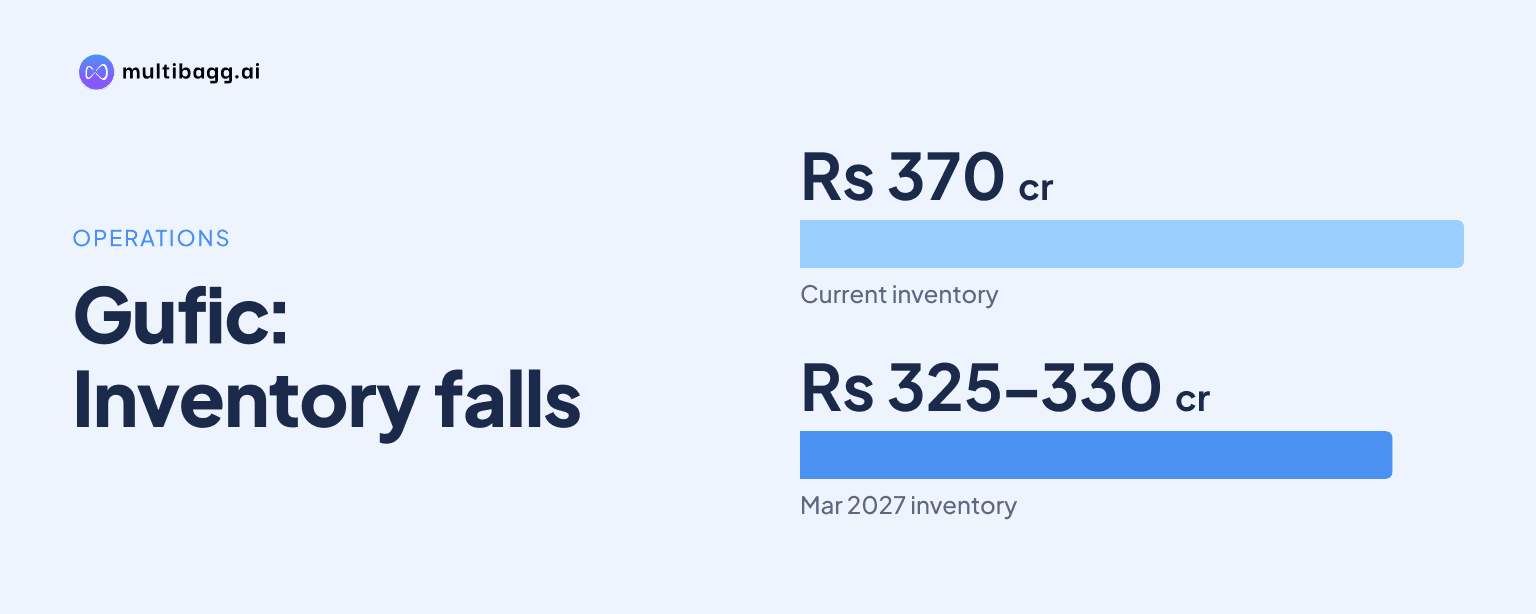
Gufic expects inventory of about Rs 370 crore to decline to Rs 325-330 crore by March 2027, after deliberately adding Rs 40-50 crore of buffer stock to protect supply continuity during the U.S. and Iran war. Management also cited validation batches for regulated markets as a temporary contributor to working-capital needs.
Know Gufic BioSciences inside out
Results, valuation, peers and who's buying, in one view.
Why did Gufic build inventory to about Rs 370 crore?
Gufic said it built an extra Rs 40-50 crore of inventory to avoid supply-chain disruption during the U.S. and Iran war. Management described the resulting Rs 370 crore inventory position as the current peak and said the company was reviewing conditions one quarter at a time because supply availability and input prices remained unsettled.
The stock build also reflects the operating requirements of regulated markets. Gufic said approved vendors, raw materials and packaging materials must be secured before products can be supplied into these markets. Management cited shortages of prefilled syringes, or PFSs, and vials during the period, which reinforced its decision to carry more inventory.
Gufic said inventory built in March 2026 helped it preserve gross margins during the first quarter. However, imported active pharmaceutical ingredient, or API, costs increased following rupee depreciation, while domestic and international transportation costs also rose. Management said these factors reduced the earnings before interest, tax, depreciation and amortisation, or EBITDA, margin to 17.23% in Q2 FY 2026-27 from 18.1% in the preceding period it cited.
How does Gufic plan to lower inventory by March 2027?
Gufic expects inventory to decline by about Rs 40-45 crore, from about Rs 370 crore to Rs 325-330 crore, by March 2027. Management expects some liquidation after a series of audits and does not expect to sustain the present conflict-related buffer once supply conditions normalise.
The planned reduction does not mean that all validation-related inventory will disappear. Management said the company could continue to hold some such stock for the next three to four quarters as products progress through regulated-market requirements. It said this inventory should be below the present level, which includes the separate Rs 40-50 crore supply-chain buffer.
For contract manufacturing organisation, or CMO, projects, Gufic said customers provide raw materials and packaging materials and own the abbreviated new drug applications, or ANDAs. Gufic must manufacture and hold engineering and exhibit batches until an inspection or goal date, and commercial sales can begin only after product approval. That approval process creates a period in which manufactured batches remain in inventory.
Why did Gufic borrow more even as debtor days fell?
Gufic said higher working-capital requirements increased borrowings even though debtor days declined to 100 from about 108 in the previous quarter. Receivables rose in value because Q2 FY 2026-27 revenue increased to Rs 288.4 crore from Rs 230.4 crore in Q2 FY 2025-26, rather than because debtor-day discipline weakened.
The comparison shows why lower collection days did not fully offset the cash requirement. Quarterly revenue rose by Rs 58 crore year on year, while the deliberate inventory buffer alone added Rs 40-50 crore of stock. Management therefore identified inventory and the increase in sales-linked receivables as the main reasons for the higher working-capital borrowing.
Gufic also said it had not taken a long-term loan during the preceding year. Management said annual capital expenditure of Rs 20-30 crore, including spending on semaglutide, liposomal and depot infrastructure, had been funded through internal accruals. It cited these investments, alongside inventory, as the principal demands on cash flow.
Got a follow-up? Ask IRIS
What could keep Gufic's validation inventory elevated?
Gufic said validation inventory could remain for three to four quarters because batches for U.S. projects must be produced before approval. The company said this is particularly relevant for CMO work, where stock cannot be sold until the customer-owned product receives approval following the relevant inspection or goal date.
At Indore, Gufic plans to introduce at least four additional molecules between November and March 2027, while four to six molecules are under consideration. Management said the final two molecules were still subject to technical discussions. The additions are intended to qualify more production lines following the U.S. Food and Drug Administration pre-approval inspection.
Management said Indore was EBITDA-margin breakeven in Q2 FY 2026-27 and made a positive contribution in the quarter. It expects the site to cover interest and depreciation in Q4. Management also said Europe could be entered by September 2027 through a site addition, while the timing of U.S. commercial supply depends on certificates and customer readiness.
How does inventory relate to Gufic's revenue and margin targets?
Gufic reported first-half FY 2026-27 revenue of Rs 549.2 crore, compared with Rs 457.3 crore in the first half of FY 2025-26. EBITDA rose to Rs 96.9 crore from Rs 71.1 crore, and the EBITDA margin increased to 17.64% from 15.455%. The first-half margin improvement contrasts with the Q2 margin pressure from API and transport costs.
Management said domestic sales represented about 48-49% of first-half revenue, exports about 25-26%, and CMO business about 19-20%, with APIs, tenders and other activities making up the remainder. It also said 65-70% of current revenue came from regulated markets, where approved inputs, inspection requirements and validation batches are integral to supply continuity.
Management targets annual revenue growth of 15-20% and said EBITDA margin could reach about 18.5% next year if international revenue expands. It also stated a near-future EBITDA-margin target of 22-25%, while identifying research and development, registrations, CMO and contract development and manufacturing organisation, or CDMO, investments as continuing costs. These are management targets rather than reported forecasts.
Conclusion
Gufic's inventory build is principally a management-led working-capital measure: about Rs 370 crore of stock includes a Rs 40-50 crore supply buffer as well as validation batches that cannot be sold before regulatory milestones. Debtor days improved by about eight days to 100, but revenue growth to Rs 288.4 crore and the larger stock position still increased cash requirements and borrowings.
The next developments to watch are management's March 2027 inventory target of Rs 325-330 crore, the planned addition of at least four Indore molecules between November and March 2027, and supply conditions after Q3 and Q4. Management also expects a European site addition by September 2027, while U.S. commercial timing remains dependent on certificates and customer preparedness.