










Gujarat Energy secures 4 million tonnes of LNG from ADNOC
Key highlights
- Gujarat Energy signed a 10-year LNG Sales and Purchase Agreement with ADNOC on November 6, 2026.
- The agreement allows Gujarat Energy to procure up to 4.0 million tonnes of LNG from 2028.
- The transaction is the first disclosed purchase of molecules from XRG's international gas portfolio.
- The Gujarat Energy deal is ADNOC's fifth LNG supply agreement in India.
powered by IRIS
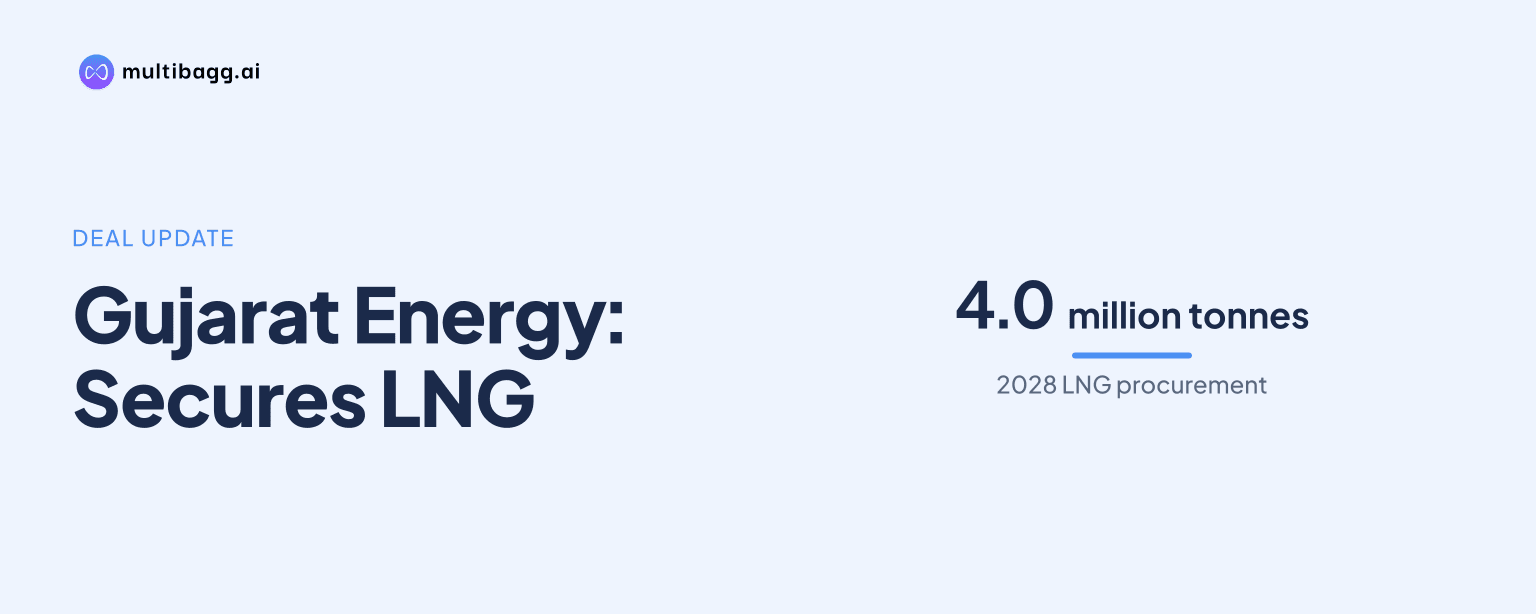
Gujarat Energy Limited has secured up to 4.0 million tonnes of liquefied natural gas from Abu Dhabi National Oil Company under a 10-year agreement beginning in 2028. The deal gives Gujarat Energy a long-term LNG procurement arrangement and marks the first purchase of molecules from XRG's international portfolio.
Know Gujarat Energy inside out
Results, valuation, peers and who's buying, in one view.
What does Gujarat Energy's LNG agreement with ADNOC cover?
Gujarat Energy signed a long-term Sales and Purchase Agreement, or SPA, with Abu Dhabi National Oil Company, known as ADNOC, for up to 4.0 million tonnes of LNG over 10 years. The company announced the agreement on November 6, 2026, while deliveries are scheduled to begin in 2028.
The LNG will be sourced from the international gas portfolio of XRG, ADNOC's international investment company. The stated 4.0 million tonnes is the maximum cumulative volume over the full contract term, rather than an annual supply commitment. Neither Gujarat Energy nor ADNOC disclosed the commercial value, pricing formula, annual allocation, cargo schedule, receiving terminal or final destination of the LNG.
The agreement was concluded through ADNOC's integrated LNG marketing and trading platform. In its announcement, ADNOC said the arrangement links its expanding international portfolio with customers in key markets and is intended to provide India with reliable, flexible and long-term LNG supplies.
When will Gujarat Energy begin receiving LNG from ADNOC?
Gujarat Energy is due to begin receiving LNG under the SPA in 2028, with the supply arrangement running for 10 years. The announcement does not provide a date for the first cargo or a quarterly or annual delivery timetable.
This means the disclosed volume should not be treated as 4.0 million tonnes a year. Spread evenly across the agreement's maximum 10-year term, the total would equate to an indicative average of up to 0.4 million tonnes annually, although the parties have not disclosed an annual delivery profile.
The timing follows Gujarat Energy's separate board approval on November 5, 2026 for long-term LNG sourcing agreements with international suppliers for about 0.8 million tonnes per annum, with tenures of up to 10 years. That disclosure did not identify suppliers or confirm commencement dates, so it does not establish the specific terms of the ADNOC agreement.
Got a follow-up? Ask IRIS
Why is the XRG portfolio sale significant for ADNOC?
The Gujarat Energy agreement is the first disclosed purchase of molecules from XRG's international portfolio. This makes the transaction significant for ADNOC's strategy of marketing LNG from its international holdings to customers outside its traditional supply base.
ADNOC described the deal as its fifth LNG supply agreement in India. Rashid Al Mazrouei, ADNOC's Chief Marketing & Origination Officer for LNG, said the agreement strengthens the company's long-standing energy partnership with India and supports its effort to connect an international LNG portfolio with demand in key markets.
India is an important market for LNG suppliers because imported gas is used across city-gas networks, industrial operations, power generation and other applications. Long-term supply agreements can provide a framework for buyers to plan fuel procurement, although their commercial benefit depends on factors not disclosed in this case, including price linkage, delivery flexibility and regasification arrangements.
The deal also follows ADNOC's other supply commitments with Indian energy companies. The company has been expanding its contracted LNG relationships in the country, while Indian buyers have continued to seek diversified sources of imported gas.
How does the agreement affect Gujarat Energy and India's LNG market?
For Gujarat Energy, the agreement adds a future long-term LNG supply stream from 2028, subject to the contract's undisclosed delivery and commercial terms. The company operates in gas-related businesses, and imported LNG must be regasified before it can be supplied through domestic gas networks or sold to end users.
Gujarat Energy has also approved a regasification agreement for capacity at the Mundra LNG Terminal. This links its broader LNG sourcing plans with the infrastructure required to convert LNG back into natural gas, though the announcement does not state whether ADNOC cargoes will be received at Mundra.
For ADNOC, the contract extends its India LNG customer base and provides an outlet for XRG's international portfolio. The transaction does not disclose a contract value, so investors cannot quantify its direct revenue or margin contribution for either party from the information available.
The wider market impact will depend on actual delivery volumes, LNG prices and India's demand when supplies begin in 2028. The disclosed agreement establishes a supply relationship, but it does not provide enough information to assess its effect on Gujarat Energy's procurement costs or on domestic gas prices.
Conclusion
Gujarat Energy's 10-year agreement with ADNOC covers up to 4.0 million tonnes of LNG from 2028 and creates the first disclosed sale from XRG's international portfolio. The arrangement also represents ADNOC's fifth LNG supply agreement in India, underlining the role of long-term contracts in India's imported-gas supply chain.
The next confirmed milestone is the planned 2028 start of supplies. Investors will need to watch for future disclosures on annual volumes, pricing, receiving infrastructure, the first-cargo schedule and whether the agreement is connected to Gujarat Energy's approved regasification capacity at Mundra LNG Terminal.