










Gujarat Energy Limited Approves 0.8 MTPA LNG Supply Plan
Key highlights
- GEL approved long-term LNG sourcing agreements for about 0.8 MTPA on 5 November 2026.
- The proposed LNG agreements can run for up to 10 years and are linked to Henry Hub pricing.
- GEL also approved regasification capacity booking at the 5 MTPA Mundra LNG Terminal.
- GEL procured 10 LNG cargoes from international suppliers during Q1 FY27.
powered by IRIS
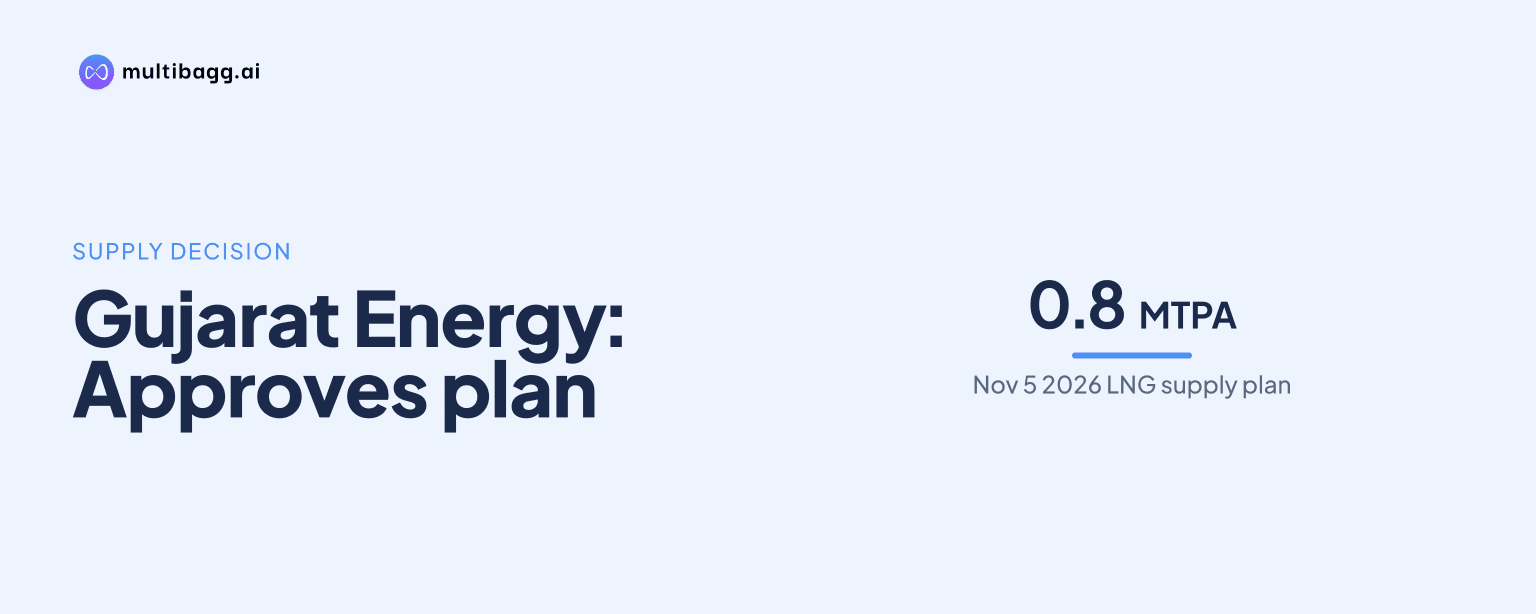
Gujarat Energy Limited approved long-term LNG sourcing agreements for about 0.8 MTPA on 5 November 2026, with tenures of up to 10 years and pricing linked to Henry Hub. The decision is aimed at lowering reliance on spot cargoes while supporting more predictable gas procurement and regasification planning.
Know Gujarat Energy inside out
Results, valuation, peers and who's buying, in one view.
What did GEL approve at its November board meeting?
GEL approved the execution of long-term LNG sourcing agreements with international suppliers for approximately 0.8 million tonnes per annum, or MTPA. The proposed agreements may run for up to 10 years, and their pricing will be linked to Henry Hub, the US natural-gas benchmark.
The board also approved a regasification agreement for capacity at the Mundra LNG Terminal. This links LNG procurement with the infrastructure needed to convert imported liquefied gas back into gaseous form before it is supplied to customers and other users in India.
The meeting was held on 5 November 2026 between 3:00 pm and 4:45 pm. Alongside the strategic approvals, GEL approved unaudited standalone and consolidated financial results for the quarter and half-year ended 30 September 2026. The filing included financial statements, auditors' review reports and disclosures under Regulations 30 and 33 of the SEBI Listing Regulations.
Chairman Shri M K Das said the proposed supply agreements are intended to reduce dependence on spot LNG cargoes and secure reliable, sustainable supplies. The disclosure does not name the suppliers or provide an expected commencement date for the new contracted volumes.
Why is the new LNG sourcing plan important for GEL?
The LNG sourcing plan is important because GEL operates across gas trading and city-gas distribution, making procurement reliability central to its operations. Long-term contracts can provide contracted supply volumes that complement purchases made through short-term and spot markets.
GEL's disclosed business profile states that it has long-term LNG contracts aggregating approximately 2.96 MTPA, including agreements signed in FY26 with QatarEnergy and Uniper Global Commodities for up to 1.36 MTPA. The newly approved 0.8 MTPA agreements add to the company's stated procurement planning, although the filing does not say whether they replace, extend or supplement any existing contracts.
Henry Hub-linked pricing gives the agreements a defined benchmark rather than leaving all procurement exposed to prevailing spot LNG prices. However, the actual cost to GEL will also depend on contract-specific terms, shipping, regasification and other charges, none of which were disclosed in the board announcement.
Got a follow-up? Ask IRIS
How does Mundra terminal capacity support GEL's gas business?
Mundra capacity supports GEL by providing access to LNG storage and regasification infrastructure after cargoes reach India's west coast. GEL's subsidiary, GSPC LNG Limited, owns and operates a 5 MTPA LNG terminal at Mundra in Kutch, Gujarat.
Regasification capacity is operationally relevant because LNG must be converted into gas before it can enter transmission networks and reach industrial, commercial, transport and household consumers. Booking capacity at the terminal may help align contracted LNG deliveries with the company's downstream sales requirements.
GEL has stated that it supplied roughly half of its FY26 trading volume, or 5.3 million standard cubic metres per day out of 10.2 million standard cubic metres per day, to its own city-gas distribution segment. This internal demand linkage means supply arrangements can affect both its trading activity and fuel availability for its distribution network.
During the first quarter of FY27, GEL procured 10 LNG cargoes from various international suppliers. The company did not disclose in the board filing how many cargoes would be covered by the proposed long-term agreements or how they would alter its spot-market procurement mix.
What are the implications for investors and the gas market?
For investors, the announcement sets out a supply-security measure rather than a disclosed near-term revenue or profit forecast. GEL said the arrangements are intended to reduce dependence on spot cargoes, but it did not provide expected procurement savings, capital expenditure, volume ramp-up or financial guidance.
The company operates in a market where Indian buyers are seeking longer-duration LNG arrangements to serve growing demand from city-gas networks, industries, fertiliser plants, refineries and power users. GEL's existing portfolio includes contracts with suppliers such as QatarEnergy and Uniper Global Commodities, reflecting the importance of diversified overseas sourcing for domestic gas marketers.
The reported plan could support steadier operational planning if contracts are executed and LNG volumes are delivered as intended. Still, the announcement leaves unresolved details including supplier names, delivery schedules, annual volume split, contractual flexibility and the precise impact on GEL's consolidated financial performance.
Conclusion
GEL's board approval combines long-term LNG sourcing of about 0.8 MTPA with regasification capacity planning at Mundra. The measures are designed to support gas availability and reduce reliance on spot purchases, while the Henry Hub linkage establishes a stated price reference for the proposed contracts.
The next disclosures to watch are the execution of definitive agreements, the identities of suppliers, delivery start dates and any further information on volumes or pricing mechanics. Investors will also track future financial-result filings for evidence of how the procurement and terminal arrangements affect trading volumes, costs and downstream gas sales.