










Ice Make targets compact cooling for quick-commerce fulfilment
Key highlights
- Ice Make’s IMVC visi coolers operate between 2°C and 8°C.
- Ice Make offers IMVC-300 to IMVC-1100 visi cooler models.
- Ice Make’s cold rooms and storage systems operate from 15°C to minus 40°C.
- Ice Make identifies automated panel manufacturing as a plan to support high-volume project execution.
powered by IRIS
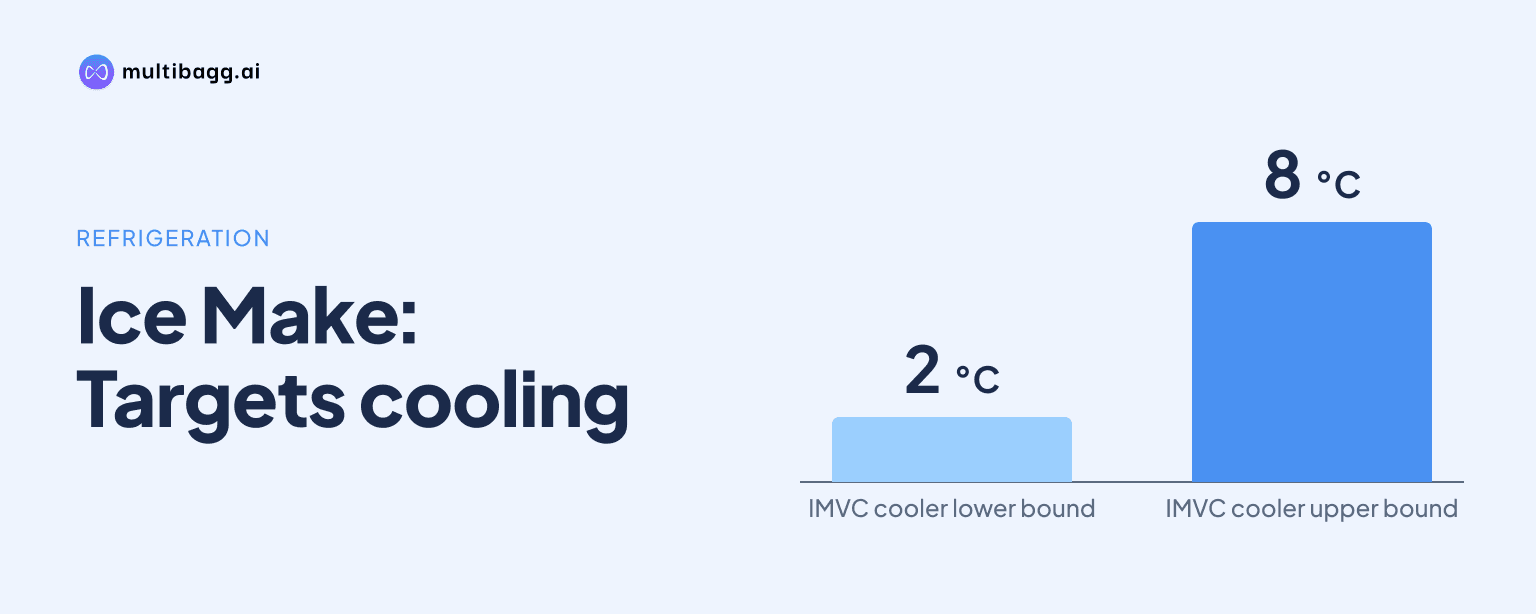
Ice Make is targeting quick-commerce and city-based fulfilment with customized chest freezers, IMVC-300 to IMVC-1100 visi coolers operating at 2°C to 8°C, and continuous sandwich panels. The product mix addresses last-mile storage, retail merchandising and insulated infrastructure, rather than only larger cold-room projects.
Know ICE Make Refrigeration inside out
Results, valuation, peers and who's buying, in one view.
What is Ice Make targeting in quick-commerce fulfilment?
Ice Make is targeting compact, reliable cold-chain equipment for quick commerce, modern food distribution, organized retail and foodservice. Its strategy identifies delivery hubs, institutional kitchens and last-mile fulfilment locations as settings for modular cold rooms and plug-and-play refrigeration solutions. The company says this expansion can build a more balanced customer mix across organized retail, e-grocery platforms and foodservice customers.
The offer combines three distinct product roles: customized chest freezers for temperature-controlled storage, visi coolers for storage and product display, and continuous sandwich panels for insulated construction. This changes the addressable use case from a conventional cold-room project to smaller fulfilment and retail locations requiring equipment, display refrigeration or ready-to-install building components. Ice Make does not disclose quick-commerce sales, order volumes, installation numbers or customer names for these products.
Ice Make’s existing cold rooms and storage systems operate across 15°C to minus 40°C, according to the presentation. That is a wider temperature range than the 2°C to 8°C disclosed for the IMVC visi coolers. The comparison indicates separate product roles: the cold-room range serves chilled and frozen storage, while the visi cooler line is specified for beverages, bakery products and dairy merchandising.
How do Ice Make chest freezers fit dark stores?
Ice Make says its customized chest freezers are designed for compact, temperature-controlled storage at last-mile fulfilment locations and dark stores. The company links the units to rapid order fulfilment and inventory freshness without the need for walk-in access. That places the chest freezer at the order-picking stage of a quick-commerce operation rather than in a customer-facing retail display setting.
The disclosed design features are plug-and-play operation, a durable and compact build, multi-door options, reliable temperature control and energy-efficient operation. Plug-and-play deployment is intended to make the equipment ready to use across food categories, while the compact footprint is relevant where fulfilment sites have limited space. Ice Make does not provide a storage capacity, freezer temperature, electricity-consumption figure or model list for the customized chest freezers.
Ice Make describes the units as bridging last-mile logistics and product-quality requirements in quick commerce. This is a stated product positioning, not a reported operating outcome: the presentation provides no delivery-time measure, spoilage reduction, energy saving or comparison with a walk-in cold room. The company also does not specify whether the freezers are sold individually, supplied through dealers, or included in broader refrigeration installations.
The dark-store proposition sits alongside Ice Make’s stated effort to serve organized retail, e-grocery platforms and foodservice customers. These segments differ from the company’s disclosed commercial-refrigeration applications of hospitality, dairy and frozen foods, although dairy and food remain relevant to both. The presentation says diversification can reduce dependence on individual markets, but it does not provide revenue by customer group or product category.
Got a follow-up? Ask IRIS
What are the specifications of Ice Make visi coolers?
Ice Make’s IMVC visi cooler range runs from IMVC-300 to IMVC-1100 and is intended for beverages, bakery products and dairy in retail and commercial applications. The company says the line combines storage with product visibility, making it suited to merchandising as well as controlled cooling. This distinguishes it from chest freezers, which Ice Make presents as compact storage for fulfilment operations.
Ice Make states that the IMVC units maintain temperatures from 2°C to 8°C. The coolers use 40 mm insulation and hermetic compressors, which the company identifies as mechanisms for temperature control and dependable cooling. The presentation does not disclose the internal volume, dimensions, energy use or cooling capacity of individual models within the IMVC-300 to IMVC-1100 range.
The company also says the visi coolers use GIPP material for their inner and outer construction and are designed to support durability and long-term performance. Their display function is central to the product proposition: controlled cooling is paired with visibility of beverages, bakery products and dairy. Ice Make does not disclose whether product visibility is supported by a particular door configuration, lighting system or merchandising format.
The IMVC line adds a specified retail-display product to Ice Make’s wider commercial-refrigeration platform, which commenced in 1993. Commercial refrigeration is described as using standardized temperature control and insulated materials for hospitality, dairy and frozen foods. The IMVC range provides a more defined 2°C to 8°C band, but the presentation gives no revenue split between visi coolers, cold rooms and other commercial refrigeration products.
How do Ice Make panels broaden its cold-chain offer?
Ice Make’s continuous sandwich panels broaden the offer from cooling appliances to insulated infrastructure for cold storages, cleanrooms, agricultural buildings, retrofits and new construction. The panels are available with pre-painted steel, stainless-steel and aluminium surfaces, with multiple core options. Ice Make says they combine thermal insulation, weather-tight sealing and structural strength for controlled environments.
The panels are offered in cut-to-length formats and as ready-to-install solutions, which Ice Make says can support faster and more efficient project execution. This differs from the chest freezer and visi cooler propositions: those are standalone refrigeration units, while panels are components of a wider construction or cold-storage installation. The source does not state panel thickness, manufacturing capacity, project lead time or the number of installations completed.
Ice Make says selective backward integration and automated panel manufacturing are intended to improve cost control and execution readiness for high-volume projects. These are management-stated strategic mechanisms rather than quantified results. The presentation does not disclose capital expenditure, production automation levels, expected cost savings or a completion schedule for the panel-manufacturing initiative.
The company also identifies solar-powered cold rooms, improved insulation technologies and digital monitoring as development areas. Ice Make says digital monitoring can enable predictive maintenance, reduce downtime and strengthen post-installation service capabilities. No timetable, installed-base figure, solar-product specification or monitoring deployment number is provided, leaving the scale of these initiatives unresolved.
Conclusion
Ice Make is broadening its cooling platform across three connected needs: compact storage for dark stores, display refrigeration for retail, and insulated panels for cold-chain infrastructure. The product distinction is clear in the disclosed specifications and uses, particularly the IMVC range’s 2°C to 8°C operating band versus the 15°C to minus 40°C range of its cold rooms and storage systems.
What to watch next is execution of the company’s stated plan for automated panel manufacturing, selective backward integration, solar-powered cold rooms and digital monitoring. Ice Make has not disclosed a rollout schedule, customer adoption, orders or revenue contribution for quick-commerce products, so future updates on those measures would indicate whether the strategy is becoming material to reported operations.