










Indian Oil Corporation Limited outlook balances value and risks
Key highlights
- Motilal Oswal retained a Neutral rating on IOCL with a Rs 135 target price.
- Motilal Oswal cut FY27 standalone EBITDA estimate to Rs 412 billion from Rs 576 billion.
- IOCL traded at about 6x FY28E consolidated EPS of Rs 21.9 and 0.7x FY28E price to book.
- Panipat, Gujarat and Barauni refinery expansions are targeted for completion in December 2026.
powered by IRIS
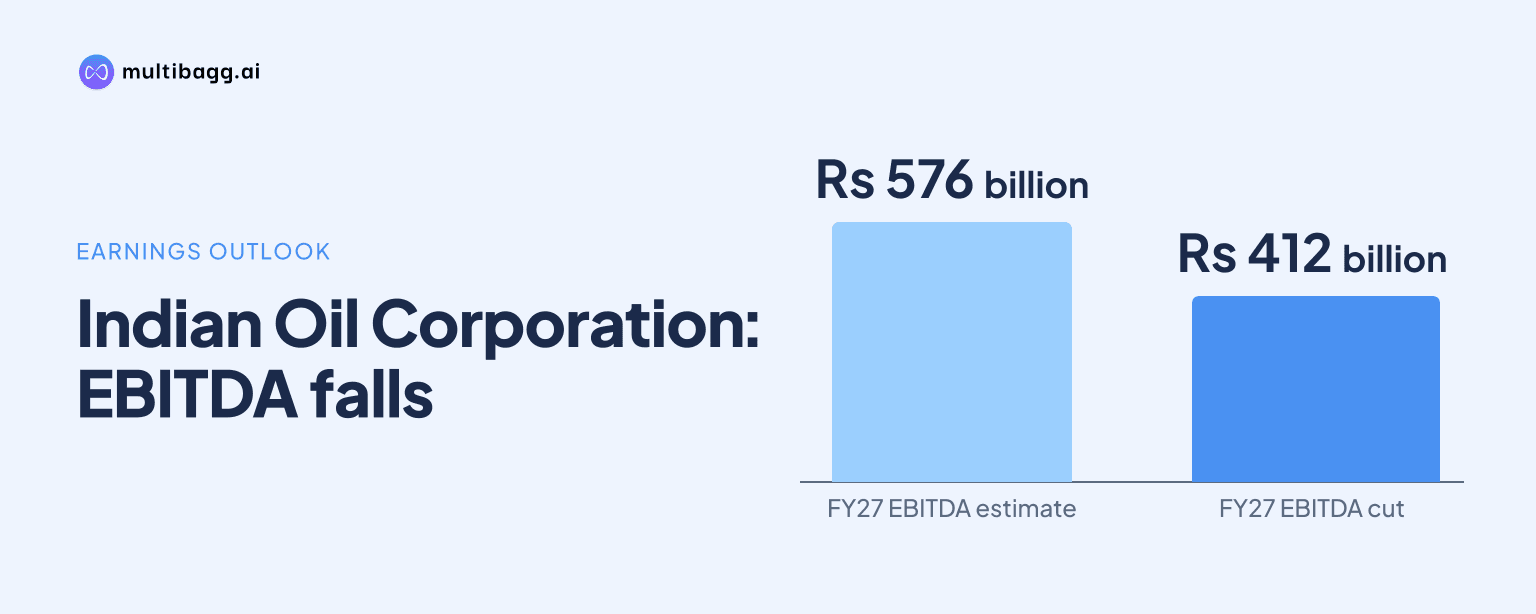
Indian Oil Corporation Limited’s stock outlook combines valuation support with near-term operational pressure: Motilal Oswal retained a Neutral rating and a Rs 135 target after a strong 2QFY27 beat, while cutting its FY27 standalone EBITDA estimate to Rs 412 billion from Rs 576 billion amid weaker expected marketing margins and fuel under-recoveries.
Why is IOCL considered inexpensive on FY28 estimates?
IOCL is considered inexpensive because Motilal Oswal values it at about 6x FY28E consolidated earnings per share of Rs 21.9 and 0.7x FY28E price to book, both below the company’s stated 10-year averages. These measures place the valuation case primarily on expected FY28 earnings rather than on the more uncertain near-term operating environment.
Motilal Oswal’s valuation framework applies a 4.5x multiple to December 2027 EBITDA and adds Rs 39 per share for investments. Even with those inputs, the brokerage retained its Neutral view and set a Rs 135 target. That stance indicates that low valuation multiples alone do not resolve the concerns around marketing margins, regulated-fuel under-recoveries and refinery operations.
Other available broker views are more constructive but still measured. PL Research retained an Accumulate rating while lowering its target to Rs 145 from Rs 163. An analyst poll cited a Buy consensus and a Rs 157.42 average 12-month target, although the available material also describes the projected upside as moderate rather than decisive.
What drove IOCL’s 2QFY27 earnings beat?
IOCL’s 2QFY27 earnings beat was driven by marketing performance that exceeded expectations. The quarterly outcome was stronger than anticipated, but the information available does not establish that the margin strength can be sustained through the rest of FY27.
That distinction is important for investors assessing the quarter. A positive marketing result can lift reported earnings in a period, yet the outlook for marketing margins can change with fuel pricing, crude oil movements and the scale of under-recoveries. Motilal Oswal’s decision to reduce its FY27 standalone EBITDA estimate despite the earnings beat reflects this difference between reported quarterly performance and forward expectations.
The broker reduced its FY27 standalone EBITDA forecast to Rs 412 billion from Rs 576 billion. The estimate cut signals that the firm sees material pressure ahead even after the strong quarter. It also explains why the target price and rating did not move to a more positive position solely because of the 2QFY27 result.
Got a follow-up? Ask IRIS
What could pressure IOCL’s FY27 earnings?
IOCL’s FY27 earnings could be pressured by fuel under-recoveries, uncertain refining margins and planned refinery shutdowns. Brent crude averaged about USD 105 a barrel in October 2026 month to date, increasing under-recoveries on regulated fuels and LPG according to the available context.
Higher under-recoveries can weaken the economics of selling regulated products when input costs rise. The effect on earnings is particularly relevant because the reported quarterly beat was led by marketing performance, while the forward view assumes weaker marketing-margin conditions. Crude-price volatility linked to West Asia was also identified as a challenge for the near-term period.
Refinery operations are another constraint. PL Research expects planned shutdowns to restrict FY27 throughput to around 75 million metric tonnes. Lower throughput can limit operating leverage and make the timing of expansion-project completion more important for the company’s subsequent earnings profile.
PL Research’s consolidated forecasts show a marked difference between FY27E and FY28E, underlining how much the outlook depends on operational normalisation and improved conditions after the current pressure points.
Can IOCL’s refinery expansions improve its growth outlook?
IOCL’s refinery expansions could improve its longer-term growth outlook if the Panipat, Gujarat and Barauni projects are completed on the stated December 2026 schedule. These projects are central to the forward case because they follow a period in which shutdowns are expected to constrain throughput.
The company spent Rs 12,162 crore in the first half of FY27, with refining and marketing receiving the bulk of investment as the projects approached completion. The scale of this expenditure shows that the expansion programme is a significant near-term capital allocation priority, rather than a distant strategic proposal.
Completion alone will not remove all the variables affecting earnings. Refining margins and fuel under-recoveries will remain relevant, and the available material does not quantify the eventual earnings contribution from each expansion. Renewable energy and green hydrogen initiatives were also identified as possible future supports, but no financial contribution or timetable was disclosed.
Conclusion
IOCL presents a valuation-supported but operationally sensitive investment case. The stock’s FY28E valuation metrics, the Rs 135 to Rs 145 fundamental targets and the wider Rs 157.42 average analyst target point to recognised value, but the 2QFY27 beat does not eliminate the risk from marketing-margin pressure, under-recoveries and uncertain refining conditions.
The key event to watch is the targeted December 2026 completion of refinery expansions at Panipat, Gujarat and Barauni. Investors will also need to track Brent-linked under-recoveries, the impact of planned shutdowns on FY27 throughput and whether marketing performance remains strong enough to support estimates that were cut after the quarterly result.