










JK Lakshmi Cement expects Q4 fuel cost at Rs 2.15-2.20
Key highlights
- JK Lakshmi Cement reported Q2 FY2027 fuel cost of Rs 1.82 per 1,000 kcal, up from Rs 1.54.
- Management expects Q3 FY2027 fuel cost around Rs 2 per 1,000 kcal and Q4 cost of Rs 2.15 to Rs 2.20 if conditions persist.
- Management said prices in a recent domestic-coal auction exceeded 200%.
- JK Lakshmi Cement said October pricing was about Rs 10 above the Q2 average.
powered by IRIS
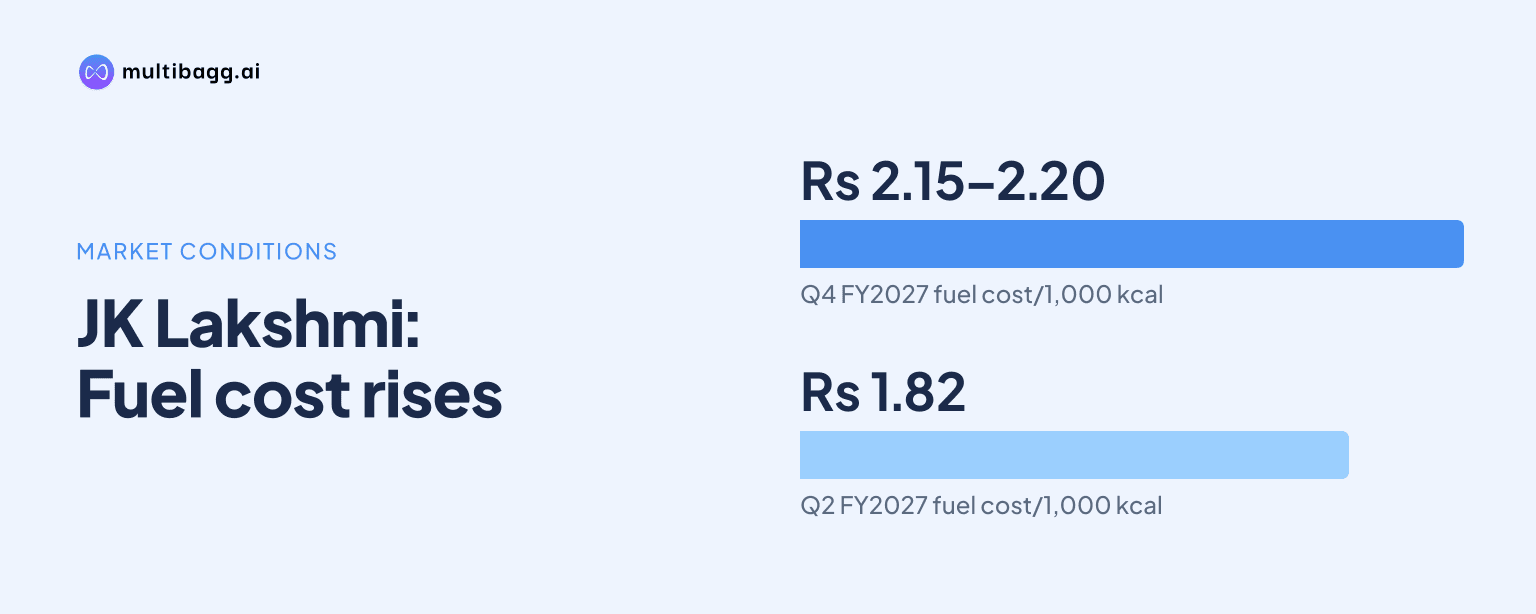
JK Lakshmi Cement Limited expects fuel cost to reach about Rs 2.15 to Rs 2.20 per 1,000 kilocalories (kcal) in Q4 FY2027 if current conditions persist, up from Rs 1.82 in Q2 FY2027. Management said higher coal and petcoke costs, including domestic-coal auction prices exceeding 200%, would limit the benefit from changes in its fuel mix.
Know JK Lakshmi Cement inside out
Results, valuation, peers and who's buying, in one view.
Why does JK Lakshmi Cement expect Q4 fuel costs to rise?
JK Lakshmi Cement expects Q4 FY2027 fuel cost of about Rs 2.15 to Rs 2.20 per 1,000 kcal if prevailing conditions continue. On its November 5, 2026 conference call for the quarter ended September 30, management said fuel markets were too uncertain and volatile to offer a firm Q4 projection, but identified that range as its view under the current market situation.
The immediate pressure is the higher cost of coal and petcoke during the July-September quarter. JK Lakshmi Cement reported Q2 FY2027 fuel cost of Rs 1.82 per 1,000 kcal, compared with Rs 1.54 at the earlier level management cited. The Rs 0.28 increase came during a period of lower monsoon demand and planned shutdowns, which the company schedules in lower-demand months.
Management expects Q3 FY2027 fuel cost to touch about Rs 2 per 1,000 kcal or slightly more before the indicated further increase in Q4. It said geopolitical developments could potentially help fuel conditions settle, but did not provide a quantified assumption for lower coal or petcoke prices. The Q4 range is therefore management's conditional outlook rather than reported cost or formal guidance.
How does JK Lakshmi Cement's Q4 outlook compare with Q2?
JK Lakshmi Cement's indicated Q4 fuel-cost range is Rs 0.33 to Rs 0.38 per 1,000 kcal above its reported Q2 FY2027 cost of Rs 1.82. The sequence from Rs 1.54 to Rs 1.82, then around Rs 2 in Q3 and Rs 2.15 to Rs 2.20 in Q4, indicates that management anticipated continued input-cost inflation after the September quarter.
The distinction between the periods matters because only the Rs 1.82 Q2 figure was reported performance. The Q3 and Q4 numbers were management estimates provided in response to an analyst's question on November 5. Management said costs could move differently if the underlying fuel-market situation changes.
Can fuel-mix changes reduce JK Lakshmi Cement's fuel inflation?
JK Lakshmi Cement said fuel-mix changes at its North plant subsidiary and Udaipur operations have provided some benefit, but cannot fully offset rising fuel prices. Management said it had increased use of domestic coal, while explaining that the pyro process limits the extent of substitution because ash content and sulphur must be managed.
Domestic coal is also becoming more expensive. Management said prices in a recent domestic-coal auction were more than 200%, and described domestic-coal prices as rising sharply as the period progressed. As a result, changing the fuel mix can mitigate costs but does not guarantee that the alternative fuel will remain cheaper than the fuels it replaces.
JK Lakshmi Cement did not disclose the domestic-coal share of its fuel mix, the fuel-mix change at each plant, or the rupee benefit achieved. Its Q4 estimate of Rs 2.15 to Rs 2.20 per 1,000 kcal was stated after management described these mitigation measures, showing that it did not expect the changes to keep costs at Q2's Rs 1.82 level.
Got a follow-up? Ask IRIS
Will cement pricing recover JK Lakshmi Cement's higher fuel costs?
JK Lakshmi Cement expects market pricing to recover part of the higher fuel cost, rather than stating that it will fully recover the increase. Management said prices had not increased through much of July-September because demand was low, although prices started moving up from September, particularly in the non-trade segment.
In October, management said prices increased in both trade and non-trade channels, with a more limited trade-channel increase in some markets. It confirmed that October pricing was about Rs 10 higher than the Q2 average. Management then expected a further Rs 10 increase after Diwali in November and another Rs 10 to Rs 15 around December, subject to demand conditions.
The company linked the pricing outlook to the end of monsoon disruptions in its north, west and part-east markets. Management said Chhattisgarh was inundated by heavy July-September rains and coastal south Gujarat also received substantial rain. It expects demand and prices to improve after Diwali as rains and major festivities recede, while noting that fuel costs remain unpredictable.
What did Q2 conditions mean for JK Lakshmi Cement's earnings?
JK Lakshmi Cement faced higher fuel costs, lower seasonal demand and planned shutdowns in Q2 FY2027. An analyst on the November 5 call described quarterly earnings before interest, tax, depreciation and amortisation, or EBITDA, at roughly Rs 510 to Rs 520 per tonne. Management said the industry had been unable to pass the full rise in fuel costs to customers during the July-September period.
Management said price momentum from late September and October could make up the Q2 shortfall, and responded that it was on track to reach EBITDA above Rs 700 per tonne. It did not specify a period, a fuel-cost assumption or a required price level for that outcome. The result will therefore depend on whether the expected November-December price increases occur while fuel cost approaches the Q4 range of Rs 2.15 to Rs 2.20 per 1,000 kcal.
Conclusion
JK Lakshmi Cement entered the second half of FY2027 with a stated expectation that fuel costs could continue rising from Rs 1.82 per 1,000 kcal in Q2 to Rs 2.15 to Rs 2.20 in Q4. Fuel-mix changes have generated some benefit, but technical limits on domestic-coal usage and higher domestic-coal auction prices constrain their ability to offset coal and petcoke inflation.
The next issue to watch is whether post-Diwali price movements follow management's expectation of about Rs 10 in November and Rs 10 to Rs 15 in December. Management also expects stronger demand in the coming six months after monsoon disruption, but its Q4 fuel-cost outlook remains conditional on how volatile fuel markets develop.