










Karamtara broadens manufacturing network with 2026 launches
Key highlights
- Karamtara began angular wind-tower manufacturing at Tarapur and tubular wind-tower manufacturing at Bhachau in 2025.
- Karamtara commenced solar structures, tracker piles, transmission lattice towers and galvanizing at Bhachau in 2026.
- The Saudi facility under construction is planned for solar products, transmission lattice towers and PEB.
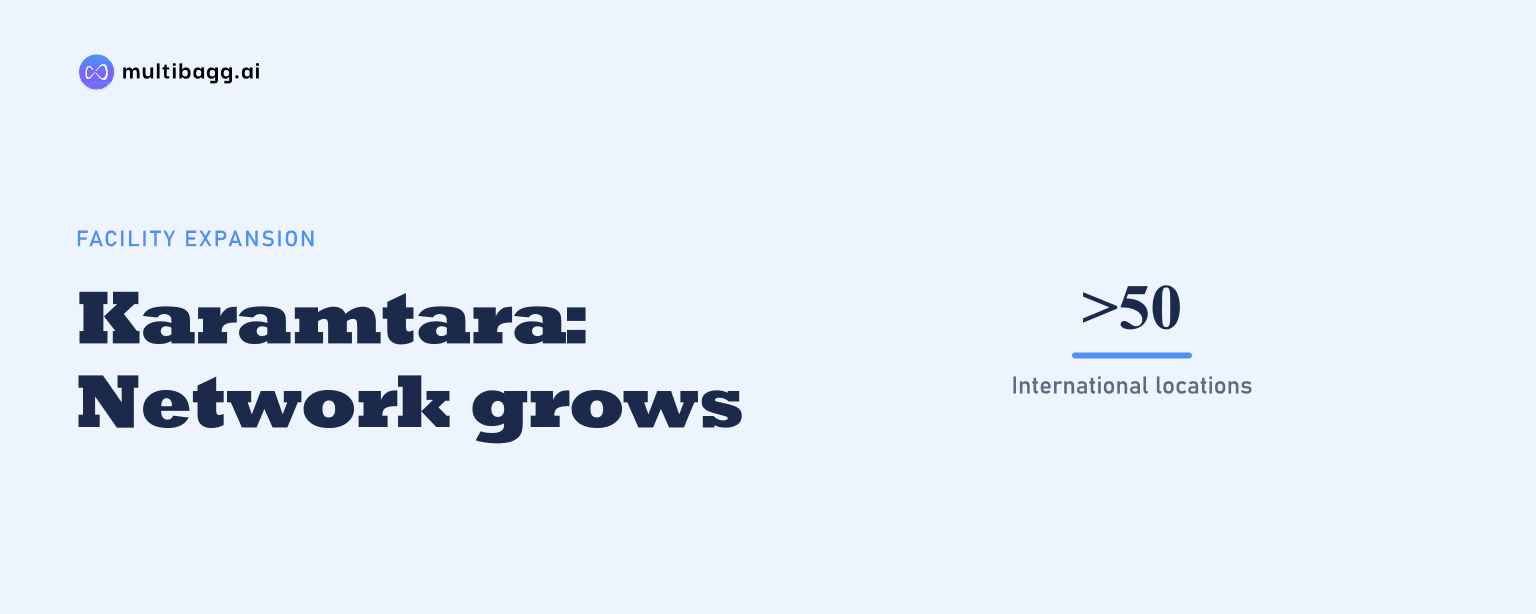
- Karamtara reports a customer-serving track record across more than 50 international locations.
powered by IRIS
Karamtara Engineering broadened its manufacturing network in 2026 by starting solar, transmission and galvanizing operations at Bhachau while advancing a Saudi facility for solar products, transmission lattice towers and prefabricated engineered buildings. The 2025 launch of angular and tubular wind-tower manufacturing provides the clearest evidence of its move beyond established solar products.
Know Karamtara Engineering inside out
Results, valuation, peers and who's buying, in one view.
What products is Karamtara adding to its manufacturing portfolio?
Karamtara is adding wind towers, transmission products, solar stamping parts, prefabricated engineered buildings, or PEB, and battery energy storage systems, or BESS, alongside its solar portfolio. Its existing solar range includes module mounting structures, torque tubes and tracker piles, while its wind range consists of angular towers and tubular towers. The transmission range comprises lattice towers for transmission lines and conductor and insulator fittings.
The product expansion has already included operating wind lines. Karamtara commenced angular wind-tower manufacturing at Tarapur, Maharashtra, and tubular wind-tower manufacturing at Bhachau, Gujarat, in 2025. This differentiates the two sites by wind-tower type, while the presentation does not disclose production capacity for either line.
Karamtara identifies solar stamping parts, PEB and BESS as upcoming products rather than current manufacturing categories. Its fastener portfolio remains an existing business and includes hex screws, hex bolts, carriage bolts, anti-theft nut bolts, threaded rods, U-bolts, foundation bolts and spring washers. The source does not provide sales, capacity or customer-order figures for the upcoming products.
Where does Karamtara make solar, wind and transmission products?
Karamtara operates a multi-site network centred on Tarapur and Bhachau, with additional facilities in Nagpur and Italy and projects under process in Saudi Arabia and Bhachau. Tarapur makes solar tracker piles and piers, solar module mounting structures, lattice transmission towers, angular wind towers, conductor and insulator fittings, structural steel profiles and galvanizing products. It also has a fabrication facility serving transmission-line and angular-tower work.
Bhachau has tubular wind towers, solar torque tubes, solar module mounting structures, solar tracker profiles and piers, lattice transmission towers and galvanizing. In 2026, Karamtara commenced manufacturing there for solar module mounting structures, solar tracker piles, lattice towers for transmission lines and galvanizing. The presentation also says torque-tube manufacturing, begun at Tarapur in 2023, has shifted to Bhachau.
Nagpur is listed as the fasteners location, while the Italian facility makes conductor and insulator fittings and accessories. Karamtara established its Italian presence in 2011 through the incorporation of Karamtara Italy SRL and the acquisition of Isel Ferroserite SRL near Milan. A fabrication facility at Khambhvali, Maharashtra, also commenced in 2026, although the manufacturing-facilities panel labels it as Unit Khumbhavali.
Got a follow-up? Ask IRIS
What is Karamtara building in Saudi Arabia?
Karamtara is constructing a Saudi Arabian facility for solar products, lattice towers for transmission lines and PEB. The project is marked as construction in process, making it a planned multi-product site rather than an operating plant in the supplied presentation. The source does not state a commissioning date, capital expenditure amount or annual capacity for the facility.
The Saudi project follows the 2024 incorporation of Karamtara Renewables Saudi Limited in the Kingdom of Saudi Arabia. PEB is a planned output at the Saudi site and is also listed among Karamtara’s upcoming products. The presentation does not say that commercial PEB manufacturing has started in Saudi Arabia.
Karamtara is pursuing a related Indian project at Bhachau, where a structural steel profiles and PEB facility is listed as under process. Tarapur already has structural steel profile manufacturing, but the source does not disclose whether that facility will supply the Bhachau or Saudi PEB lines. The two projects nevertheless place PEB development in both domestic and Saudi plans.
The Saudi plan sits within Karamtara’s wider international footprint. The company lists subsidiaries in Italy, the United States and Saudi Arabia, and states that it has served customers in more than 50 international locations. It identifies customer presence in the United States, Europe, the Middle East and Latin America, without providing revenue or order data for the Saudi project.
How is Karamtara supporting its new manufacturing lines?
Karamtara says it uses automated equipment, including robotics and Internet of Things, or IoT, sensors, to enhance maintenance, reduce downtime, extend equipment life and improve cost and production efficiencies. The presentation describes these capabilities across its manufacturing network rather than assigning equipment counts or automation levels to Tarapur, Bhachau or another individual plant.
The company also cites in-house design engineering infrastructure using PLS Tower, BOCAD, SolidWorks and AutoCAD software. These tools are relevant to the design and fabrication of lattice transmission towers, angular wind towers, tubular wind towers and PEB. Karamtara does not disclose the number of engineers, software licences or systems deployed.
Its manufacturing model includes rolling mills and galvanizing capacity, which Karamtara presents as backward integration. Tarapur lists structural steel profiles and galvanizing, while Bhachau lists galvanizing and has structural steel profiles under process. The presentation does not quantify internal steel use, galvanizing capacity or cost savings from these capabilities.
Karamtara’s product sequence extends over nearly three decades, beginning with transmission-tower manufacturing at Tarapur in 1998 and 765 kilovolt-class transmission towers in 2010. It added conductor and insulator fittings in 2013, solar mounting structures in 2015, solar piles in 2019 and wind towers in 2025. The 2026 Bhachau additions show the latest step in combining solar, wind and transmission production across the network.
Conclusion
Karamtara’s disclosed manufacturing plan shows a broader steel-engineering footprint than its established solar module mounting structures and tracker components alone. Operating wind-tower lines began in 2025, Bhachau added solar and transmission activities in 2026, and the product roadmap now includes PEB, solar stamping parts and BESS alongside fasteners, fittings and towers.
What to watch next is progress at the Saudi solar, transmission-tower and PEB facility, the Bhachau structural-steel-profiles and PEB project, and the Tarapur solar-stamping-parts line. Karamtara marks these facilities as under process or construction in process, but the presentation does not provide commissioning schedules, capital expenditure, capacities or customer commitments.