








Nisus sees Rs 30,000-40,000 crore AUM through land and UAE credit
MAX Plan at ₹4,999/yr

Find your next multibaggerBe a Pro Investor
Research stocks and track your picks on the go. Download the app.
Key highlights
- Nisus said land banking through NiYAM and its land fund could add at least Rs 10,000 crore of AUM.
- Nisus said industrial and warehousing assets could represent Rs 5,000-10,000 crore of AUM.
- Nisus said India could support Rs 20,000-25,000 crore of AUM across land, warehousing, data centres and credit.
- Nisus reported approximately Rs 330 crore of deployments in Mumbai, Bengaluru and Pune.
powered by IRIS
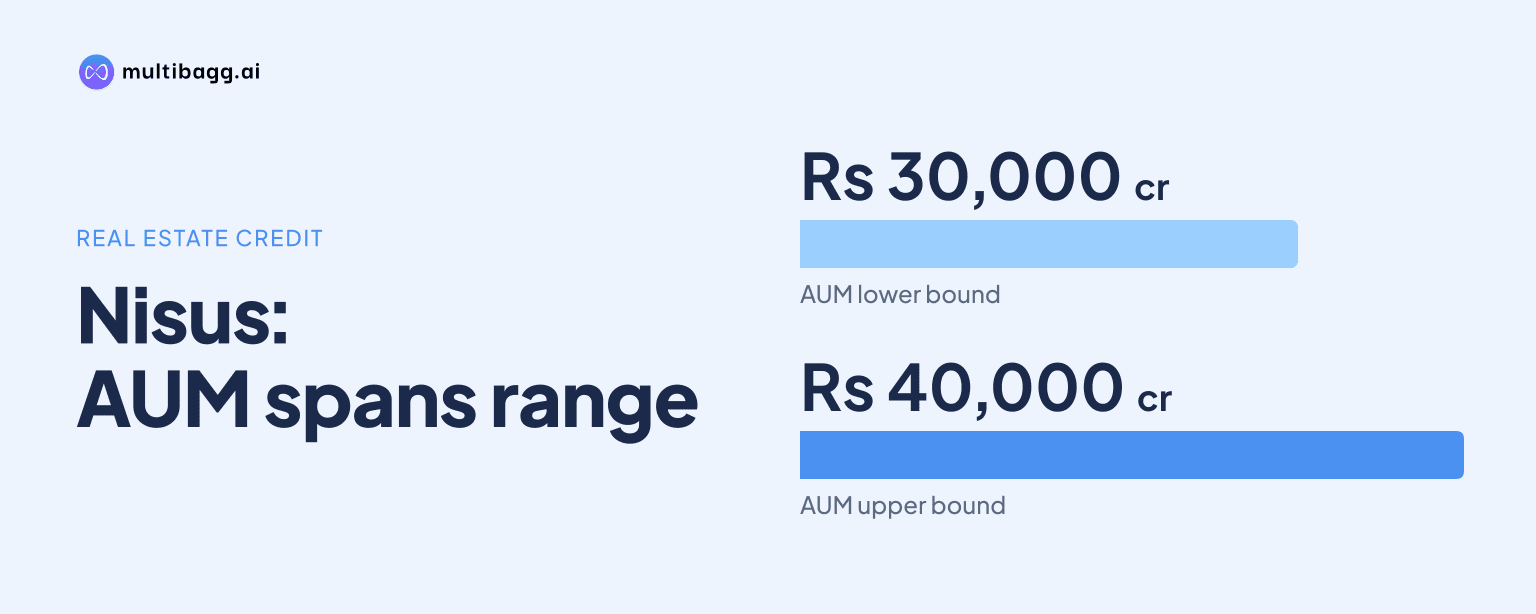
Nisus Finance said in its H1 FY27 earnings call that it sees a route to Rs 30,000-40,000 crore of assets under management over the next decade without conventional infrastructure assets, led by at least Rs 10,000 crore of land banking in India and proposed UAE credit activity. Management described this as a long-term aspiration, not formal guidance.
Know Nisus Finance Services Co inside out
Results, valuation, peers and who's buying, in one view.
How does Nisus plan to reach Rs 30,000-40,000 crore of AUM?
Nisus plans to expand through land banking, industrial and warehousing assets, data centres and credit instead of relying on ports, roads or power projects. Management said the NiYAM fund and its land fund could add at least Rs 10,000 crore of assets under management, or AUM, through land banking for plotting, warehouses and industrial parks.
Management also identified industrial and warehousing assets as a potential Rs 5,000-10,000 crore AUM pool, citing demand for cold storage, industrial warehousing and data centres. It said India alone could support Rs 20,000-25,000 crore across land, warehousing, data centres and credit, although it did not specify whether the individual opportunity estimates overlap.
Nisus linked the India strategy to its Securities and Exchange Board of India-approved alternative investment fund, or AIF, offering, NiYAM, with a stated size of Rs 2,500 crore. Management said the offering had received investor demand and was likely to reach its first closing soon, alongside planned Gujarat International Finance Tec-City offerings and an application for a small and medium real estate investment trust, or SM REIT, licence.
The long-term opportunity map is materially larger than Nisus's stated near-term AUM objective. Management's FY27 planning framework calls for closing AUM of more than Rs 4,000 crore by March 2027, compared with the Rs 2,500 crore current base referred to during the call, while the Rs 30,000-40,000 crore ambition extends over the next decade.
What is Nisus's UAE growth route?
Nisus's UAE route combines acquisitions of ready, pre-leased real estate with a proposed credit fund for local businesses and industries. Management said it had acquired two UAE assets by H1 FY27 and described them as income-generating properties acquired from an institutional seller after price moderation and a market rebound in recent months.
Management said its existing UAE focus on pre-leased assets represents a large opportunity set, while its investments to date are limited relative to that pool. It also said it was examining a UAE credit opportunity because debt can replace equity in more conservative market conditions, and management expects demand from local businesses and industries.
Nisus said institutional capital had become more relevant in the UAE after family-office money withdrew from parts of the market. Management cited the addition of Dubai Islamic Bank to the financing for the two-asset acquisition and said it would seek opportunistic transactions at entry points that preserve investor returns and management fees.
The UAE plan also carries platform-building costs. Management said it was expanding its regional presence with products including tokenisation, adding talent, properties and tools that could create short-term expenses while the products are prepared for launch and growth.
Got a follow-up? Ask IRIS
Why does Nisus say it does not need core infrastructure assets?
Nisus says its land financing model is designed to limit direct land-price exposure because it lends against sites selected by established developers. Management described a partnership structure in which Grade A developers identify land for plotting, warehouses or industrial parks, contribute their own capital and use Nisus debt to complete the acquisition.
The developers have already identified and bought the land but have not paid the full consideration, according to management. Nisus said the developer exits the funding in a short period, making the investment a highly collateralised medium-term transaction rather than direct ownership of undeveloped land.
Nisus reported approximately Rs 330 crore of India deployments in Mumbai, Bengaluru and Pune as of the H1 FY27 call. It also said its investment book had zero delinquencies, zero delays and zero defaults, while stressing that strict underwriting discipline remained important amid an elevated-interest-rate environment.
This mechanism distinguishes the land strategy from long-duration financing of core infrastructure projects. Management's proposed AUM mix combines land-linked credit with asset-management activity in warehousing, industrial parks and data centres, while the UAE component adds pre-leased property acquisitions and the proposed credit fund.
What could affect Nisus's AUM expansion pace?
Nisus said slower residential sales in India could moderate the pace of deployment because a large part of its India investments has been in residential assets. Management said commercial and industrial activity retained reasonable momentum, and it is pivoting new funds towards other asset classes while maintaining caution over how much capital to deploy.
The company is also investing in capacity for its planned SM REIT platform and UAE product development. Management said it was recruiting personnel to manage a large commercial-property investment book in India, while tokenisation and other UAE initiatives may require near-term spending before they contribute to growth.
Management's FY27 planning framework envisages core income of Rs 140-150 crore or more, profit after tax of Rs 60-65 crore or more, and closing AUM above Rs 4,000 crore by March 2027. In a separate response, management said it continued to expect profit after tax in the Rs 65-75 crore range, while describing its near-term stance as conservative because of market volatility and expansion costs.
Conclusion
Nisus's stated long-term route to Rs 30,000-40,000 crore of AUM does not depend on adding a conventional infrastructure vertical. Management instead identified at least Rs 10,000 crore in India land banking, Rs 5,000-10,000 crore in industrial and warehousing assets, broader India credit opportunities, UAE pre-leased real estate and a proposed UAE credit fund.
The next measures of execution are NiYAM's first closing, progress on the SM REIT licence application and developments in the proposed UAE credit fund. Investors can also track whether Nisus advances from the Rs 2,500 crore base cited in the call towards management's March 2027 AUM objective of more than Rs 4,000 crore while retaining the zero-delinquency, zero-delay and zero-default record it reported for H1 FY27.

