










OSEL Targets Five-Digit Phone Distribution Within a Quarter
Key highlights
- OSEL aims to move feature-phone distribution from four digits to five digits within a quarter.
- OSEL reported more than 280 active distributors and around 18,000 to 20,000 retailers in its mobile network.
- OSEL added around 25 distributors from the previous month to the current month.
- OSEL said it sold 21,000 Philips smartphones after a late-August launch, with 57% active in the first two months.
powered by IRIS
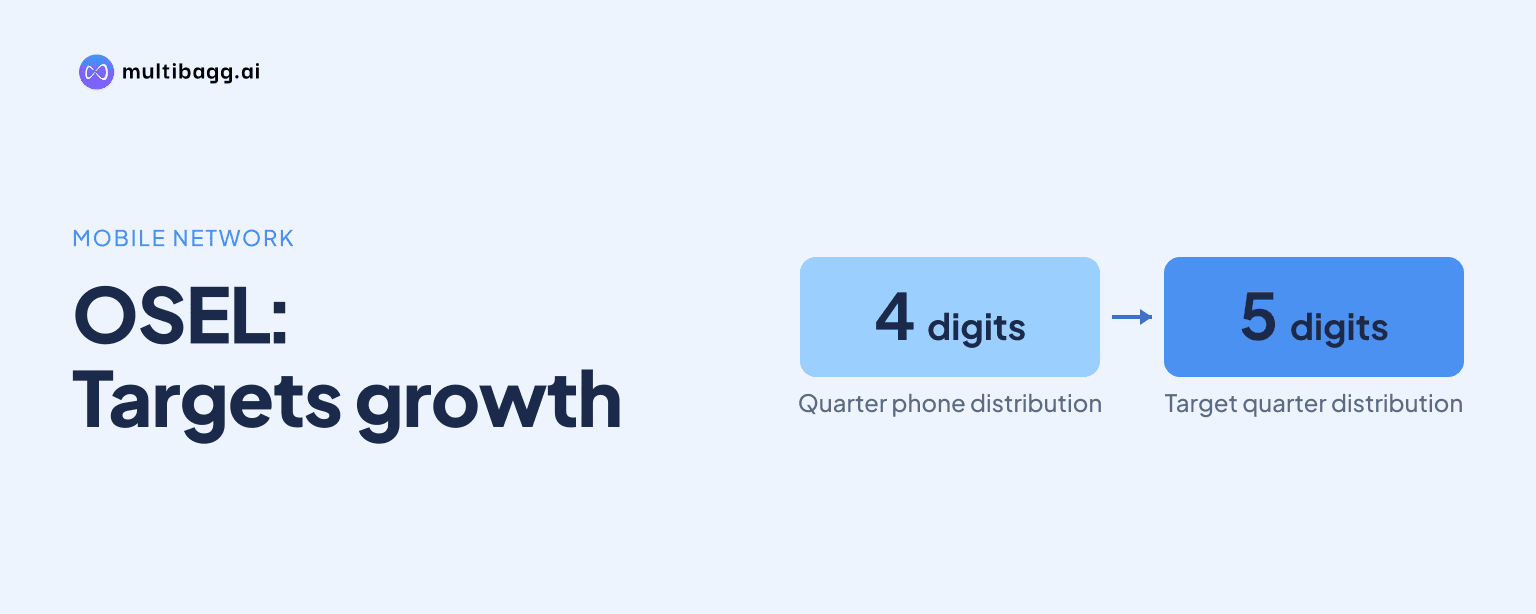
OSEL said it aims to take feature-phone distribution from four digits to five digits within a quarter, building on more than 280 active mobile distributors and reach across roughly 18,000 to 20,000 retailers. OSEL plans to use that feature-phone network to introduce Philips smartphones, initially priced below Rs 20,000.
Know OSEL Devices inside out
Results, valuation, peers and who's buying, in one view.
What is OSEL’s mobile distribution target?
OSEL’s near-term target is to move feature-phone distribution from four digits to five digits in the coming months, which management defined as within a quarter. Management did not say that five digits represented a target for active distributors; it separately disclosed more than 280 active distributors working with OSEL.
OSEL said it had reached around 18,000 to 20,000 retailers through its distributor and retailer network. It also said it had added around 25 distributors from the previous month to the current month, and identified month-on-month growth in active distributors as its main distribution measure.
The figures distinguish distributor onboarding from retail penetration. OSEL said distributors serve many retailers, meaning expansion in the more than 280 active distributors can extend availability beyond the roughly 18,000 to 20,000 retailers already cited. Management’s stated aim is to take the Philips phone range closer to consumers through this network.
How will feature phones expand OSEL’s retail network?
OSEL plans to use feature phones as the first step in expanding retail reach because management said the category has fewer players and requires width of distribution. It described feature phones as a relatively free-flowing business where distribution breadth, rather than immediate smartphone penetration, is the first priority.
OSEL said its memorandum of understanding for Philips phones follows the industry’s usual credit periods and inventory turns. Management said it retained one distributor to create transparency, with terms and conditions to be fulfilled by both sides, and described contracts spanning manufacturing through pickup of products by the distributor.
The distribution strategy also has working-capital implications. OSEL said receivables rose because of sales, including wireless mobile-phone products supplied to dealers and distributors for Diwali sales. Management said recovery was not a challenge, but it did not provide a receivables collection period, inventory level or target date for positive operating cash flow.
Which Philips smartphones will OSEL sell?
OSEL plans to sell Philips smartphones below Rs 20,000 first and subsequently address the Rs 20,000 to Rs 30,000 range. Management said OSEL does not intend to offer phones above Rs 30,000 at this stage because it wants deeper penetration in its initial price bands before moving higher.
The company described the rollout as a different model, different channel, or DMDC, approach. OSEL said it would use separate product models, channels and pricing strategies rather than seek nationwide smartphone distribution at once. Its method is to approach smartphone sales retailer by retailer and use feature-phone outlets as the initial sales base.
Management cited a 47% decline in the sub-Rs 20,000 smartphone segment while saying brands lacked adequate models in that range. OSEL intends to position Philips products in that band before entering the Rs 20,000 to Rs 30,000 segment. This is management’s market-positioning plan, not a forecast of smartphone volumes or market share.
OSEL said it sold 21,000 Philips smartphones after launching in the last week of August. Management said 57% of smartphones sold in the first two months had become active, which it viewed as evidence that phones placed in the channel were reaching consumers. It also said no major phone defects had been reported, without disclosing return or warranty-claim data.
Got a follow-up? Ask IRIS
What could phone expansion mean for OSEL’s product mix?
OSEL said Philips phone margins are lower than margins in its hearing-aid business, although management described phone margins as reasonably good. The lower-margin comparison matters as OSEL seeks five-digit feature-phone distribution and expands smartphones through the same retailer base.
OSEL’s hearing-aid operation includes around 42 Sound for Life clinics acquired by the company. Management said these are multi-brand hearing-aid retail points where OSEL plans to sell its own hearing-aid brand, and expects the channel to add higher-margin sales. It said the clinic footprint covered around eight or nine states and that it intends to add clinics in more states.
The mobile network could ultimately carry products beyond Philips phones. Management said other categories could flow through the retailer and distributor network after it is strengthened, because OSEL would be closer to consumers. It did not name the future categories, provide a revenue target or give a timetable beyond the five-digit feature-phone distribution goal.
How should OSEL’s mobile execution be measured?
OSEL’s reported starting measures are more than 280 active distributors, around 18,000 to 20,000 retailers, and around 25 distributor additions from one month to the next. Those metrics provide measurable markers for progress toward the five-digit feature-phone distribution objective within a quarter.
Smartphone execution requires separate tracking because OSEL said it will select retailers, channels and product assortments under its DMDC plan. The 21,000 smartphones sold since the late-August launch and the reported 57% activation rate are initial indicators, but management did not disclose repeat orders, feature-phone volumes, channel-wise sales or smartphone unit targets.
OSEL also has not quantified the mobile business’s contribution to revenue or its margin relative to the hearing-aid segment. Management said wider distribution remains the central mobile objective, while the roughly 42 Sound for Life clinics are intended to expand higher-margin hearing-aid sales. That leaves the pace of retailer activation and working-capital movement as key disclosed operational issues.
Conclusion
OSEL is pursuing a distribution-led phone strategy: feature phones are intended to move its network from four-digit to five-digit distribution within a quarter, while more than 280 active distributors currently serve roughly 18,000 to 20,000 retailers. The company plans to use those outlets for targeted Philips smartphones below Rs 20,000, before extending into the Rs 20,000 to Rs 30,000 range.
The next measures to watch are monthly additions to the more than 280 active distributors, progress toward the five-digit distribution target, and smartphone sales beyond the 21,000 units reported after the late-August launch. Management’s plan also calls for retailer-by-retailer smartphone placement under DMDC and no phones above Rs 30,000 at the current stage, while receivables rose with Diwali channel sales.