










Purple Style Labs 6M GMV rose 28%, EBITDA loss widened
Key highlights
- PSL's 6M FY27 GMV increased 28% to ₹397 crore from ₹310 crore.
- PSL's 6M FY27 EBITDA loss widened to ₹7 crore from ₹5 crore.
- PSL's 6M FY27 AOV rose to ₹84,000 from ₹69,000.
- PSL's net working capital declined to ₹59 crore from ₹84 crore.
powered by IRIS
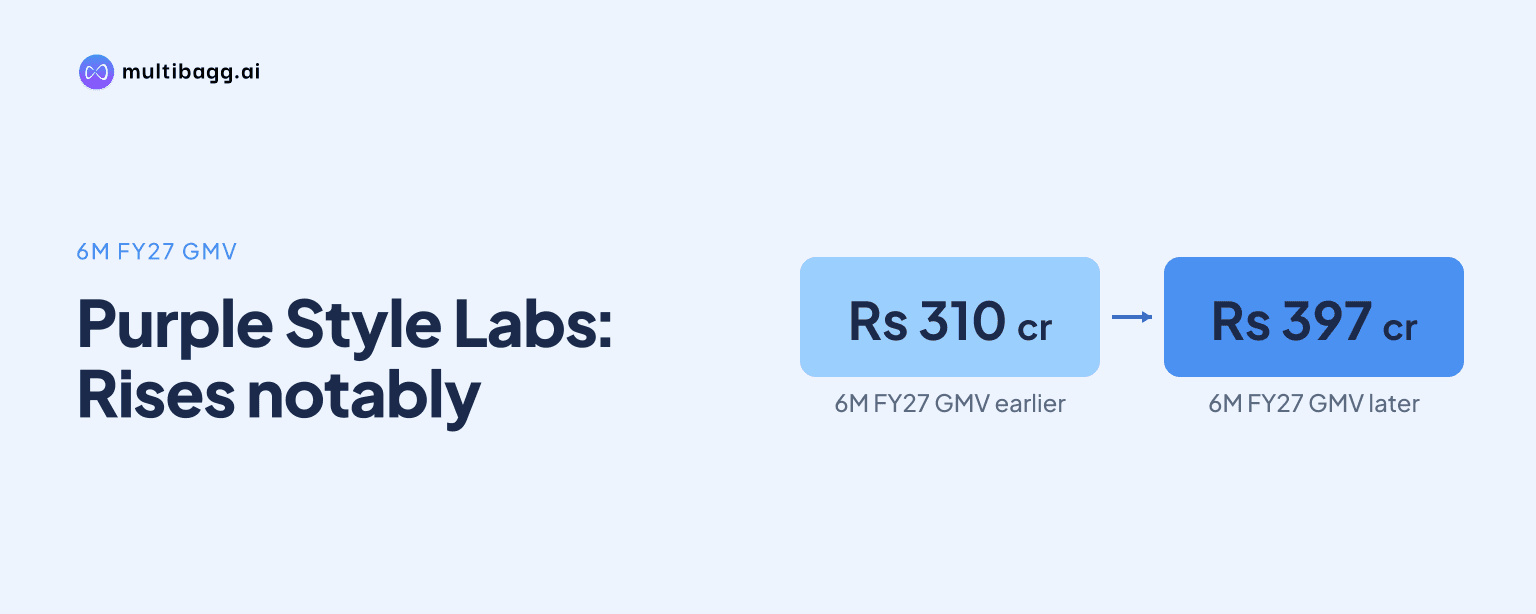
Purple Style Labs reported gross merchandise value, or GMV, of ₹397 crore in 6M FY27, 28% above ₹310 crore in 6M FY26, while its earnings before interest, tax, depreciation and amortisation, or EBITDA, loss widened to ₹7 crore from ₹5 crore. Revenue rose to ₹262 crore and average order value reached ₹84,000.
Know Purple Style Labs inside out
Results, valuation, peers and who's buying, in one view.
What drove PSL's GMV growth in 6M FY27?
PSL's GMV growth was led by higher average order value and increases across major store and international channels. AOV increased to ₹84,000 in 6M FY27 from ₹69,000 in 6M FY26, while total GMV increased by ₹87 crore to ₹397 crore. The company also reported four large-format store openings in FY26, with two locations becoming operational in Q2 FY26 and two in Q1 FY27.
Mumbai stores generated the largest absolute GMV increase, rising ₹28 crore to ₹105 crore in 6M FY27 from ₹77 crore a year earlier. USA omni-channel GMV, which includes online and stores, increased ₹22 crore to ₹64 crore. Delhi stores added ₹13 crore to reach ₹85 crore, while Rest of India stores increased ₹12 crore to ₹51 crore.
The half-year increase was spread across most reported markets, although online-only Rest of the World GMV remained ₹15 crore in both periods. Hyderabad rose to ₹25 crore from ₹21 crore, Ahmedabad reached ₹13 crore from ₹12 crore, and UK omni-channel GMV increased to ₹23 crore from ₹21 crore. Rest of India stores include Bangalore, Kolkata, Surat, Chennai and Indore.
How did PSL's quarterly trading trend develop?
PSL's GMV rose sequentially from ₹193 crore in Q1 FY27 to ₹204 crore in Q2 FY27, while revenue from operations increased from ₹119 crore to ₹142 crore. The second quarter therefore accounted for ₹204 crore of the ₹397 crore reported for 6M FY27. However, AOV declined sequentially to ₹82,000 in Q2 from ₹86,000 in Q1.
Gross profit increased to ₹60 crore in Q2 FY27 from ₹43 crore in Q1 FY27, and the gross-profit margin rose to 42% from 36%. For the six-month period, gross profit increased ₹20 crore year on year to ₹103 crore, with gross-profit margin improving by one percentage point to 39% from 38%.
Revenue growth was lower than GMV growth in absolute terms: revenue from operations rose ₹48 crore to ₹262 crore, compared with the ₹87 crore GMV increase. The presentation reports revenue from operations of ₹214 crore in 6M FY26. It also records customer advances of ₹74 crore in Q2 FY27, compared with ₹49 crore in Q1 FY27.
Got a follow-up? Ask IRIS
Why did PSL's EBITDA loss widen despite higher gross profit?
PSL's EBITDA loss widened because the ₹20 crore increase in gross profit was exceeded by higher salary, logistics and other operating expenses. EBITDA was negative ₹7 crore in 6M FY27, compared with negative ₹5 crore in 6M FY26, and the EBITDA margin moved to negative 3% from negative 2%.
Salary expenses rose ₹15 crore to ₹53 crore, equivalent to 20% of revenue, from ₹38 crore or 18% of revenue in 6M FY26. Logistics costs increased to ₹13 crore from ₹10 crore, while other expenses rose to ₹34 crore from ₹28 crore. Marketing expenditure remained ₹16 crore, but declined as a share of revenue to 6% from 7%.
The quarterly EBITDA result improved within FY27. PSL reported an EBITDA loss of ₹11 crore in Q1 FY27, followed by EBITDA of ₹4 crore in Q2 FY27. Q2 gross profit of ₹60 crore was supported by a 42% margin, while other expenses fell to ₹16 crore from ₹18 crore in Q1, despite salary expenses increasing to ₹28 crore from ₹25 crore.
What changed in PSL's cash flow, working capital and net loss?
PSL's working-capital and cash-flow measures improved year on year, although finance and depreciation charges remained higher. Net working capital fell to ₹59 crore in 6M FY27 from ₹84 crore in 6M FY26, inventory declined to ₹196 crore from ₹208 crore, and operating cash flow improved to negative ₹13 crore from negative ₹50 crore.
Free cash flow was negative ₹19 crore in 6M FY27, compared with negative ₹72 crore a year earlier. PSL states that its FY27 free-cash-flow figure is adjusted for investment and redemption of bank fixed deposits. The company defines net working capital as inventories and trade receivables, less trade payables and customer advances.
Loss before tax narrowed to ₹156 crore in 6M FY27 from ₹179 crore in 6M FY26 because exceptional-item expense fell to ₹11 crore from ₹89 crore. This occurred as finance costs increased to ₹68 crore from ₹42 crore and depreciation and amortisation increased to ₹70 crore from ₹43 crore. The presentation reported no tax expense or credit, leaving loss after tax at ₹156 crore.
At September 2026, PSL reported cash and bank balances of ₹549 crore, up from ₹12 crore at June 2026, while borrowings declined to ₹394 crore from ₹436 crore. Total equity was ₹422 crore at September 2026, compared with negative ₹133 crore at June 2026. The presentation lists an IPO in September 2026 with a ₹680 crore primary raise.
Conclusion
PSL's 6M FY27 results show that GMV, revenue and gross profit increased, with Mumbai stores and USA omni-channel contributing the largest reported GMV additions. AOV rose to ₹84,000, and lower net working capital helped reduce the free-cash-flow deficit to ₹19 crore. Yet the EBITDA loss increased to ₹7 crore as salary, logistics and other operating expenses absorbed the gross-profit gain.
The next disclosed operating measure to watch is whether the ₹4 crore EBITDA reported in Q2 FY27 can be sustained after the ₹11 crore loss in Q1 FY27. Management says its FY26 investment in four large-format stores is intended to produce compounding returns from FY27, while the company still reported 6M FY27 finance costs of ₹68 crore and depreciation and amortisation of ₹70 crore.