










RKFL freight costs curb export profitability in quarter
Key highlights
- RKFL absorbed a net Rs 8-9 crore shipping-cost impact in the current Q2.
- RKFL recorded Rs 6-7 crore of negative export raw-material carry in the current Q2.
- RKFL’s current-Q2 export revenue rose to Rs 424 crore from Rs 277 crore in Q2 FY26.
- Management said RKFL margins improved by 30 to 50 basis points in each of the past couple of quarters.
powered by IRIS
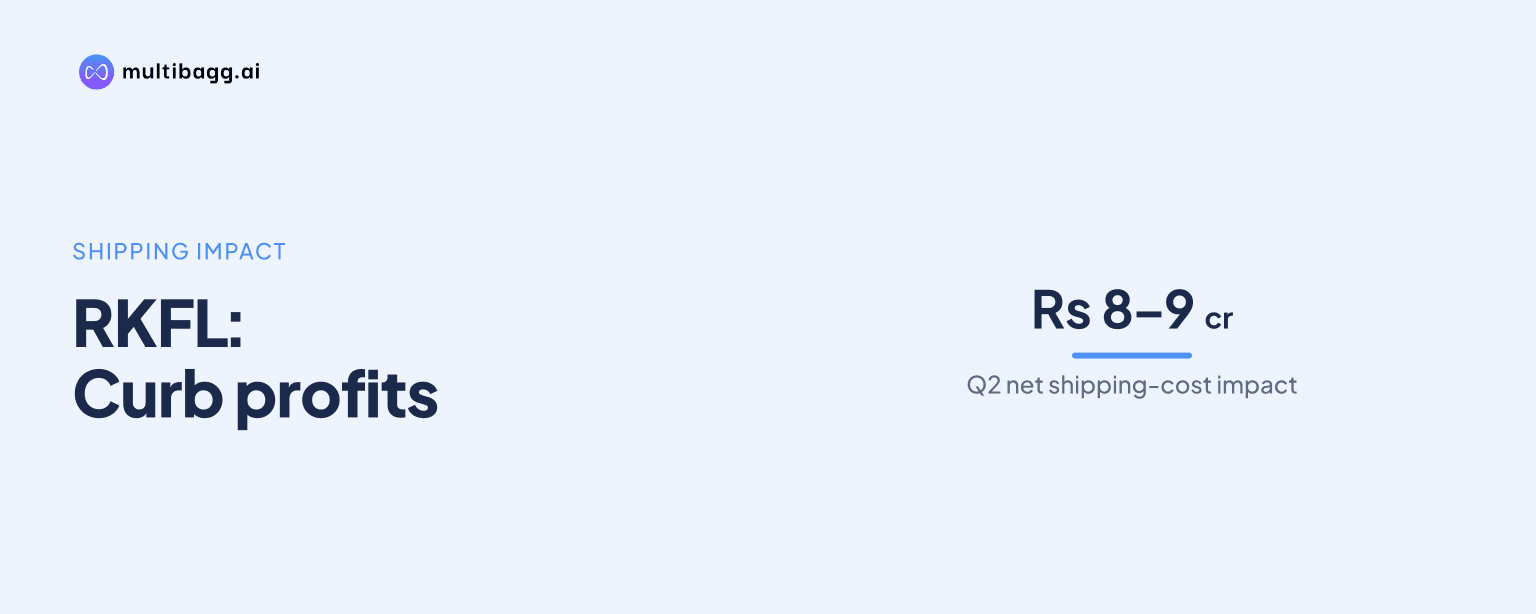
Ramkrishna Forgings Limited, or RKFL, absorbed a net Rs 8-9 crore shipping-cost impact in the current Q2 and recorded Rs 6-7 crore of negative export raw-material carry, as Indian steel prices rose faster than customer recoveries in North America and Europe. Management said freight increases were only partly passed through to customers.
Know Ramkrishna Forgings inside out
Results, valuation, peers and who's buying, in one view.
How much did freight and steel costs affect RKFL?
RKFL absorbed Rs 8-9 crore of shipping costs in the current Q2 after passing only part of the increase to customers. Chief Financial Officer Lalit Khetan said shipping costs had increased significantly from Q2 of the prior year, and other expenses would moderate only when freight costs decline.
RKFL also reported Rs 6-7 crore of negative raw-material carry in exports during the quarter. Management said the company had no inventory gains because Indian steel prices rose more than the price increases received from export customers. The disclosed freight and raw-material effects totalled Rs 14-16 crore, although freight was a logistics expense while the raw-material carry reflected pricing differences across markets.
Management said the freight issue could continue if rates remain at current levels. RKFL is discussing freight costs with customers and monitoring Freightos, but management said customers are not prepared to bear the full amount. The company may therefore continue sharing part of the cost with customers.
Why could RKFL not recover Indian steel costs in exports?
RKFL could not fully recover Indian steel-cost increases in exports because customer pricing follows local market benchmarks in North America and Europe. Management said the American steel market had not experienced an increase comparable with India, while European local steel prices had also not risen to the same extent.
Export pricing differs by contract and region, according to management. RKFL said it could recover increases linked to the relevant North American and European markets, but those recoveries did not match the increase in Indian steel costs. The Rs 6-7 crore negative carry recorded in the quarter was the reported result of that mismatch.
Domestic pricing worked differently in the current Q2. Management said domestic commodity-price changes are passed through every quarter and that RKFL had recovered the domestic steel-price increase. Management also said it believes there could be another Indian steel-price hike in January and expects domestic customer pricing to reflect any such increase.
The distinction between domestic and export contracts is important because the underlying steel is purchased in India while overseas customers reference local steel conditions. Management did not provide export contract durations or an estimate of when export price recoveries could fully catch up with Indian steel costs.
Got a follow-up? Ask IRIS
Did RKFL’s export growth improve the sales mix?
RKFL’s export revenue rose to Rs 424 crore in the current Q2 from Rs 277 crore in Q2 FY26, an increase of Rs 147 crore. Management said exports can support margin expansion, but declined to quantify the effect because the outcome depends on product mix.
North America delivered a V-shaped recovery after a subdued period last year that management linked to tariff issues. Management said the sudden increase in North American demand required RKFL to give that market more capacity allocation, affecting the timing of supplies to Europe.
Management said Europe was not weak overall, despite an analyst’s reference to a marginal quarterly decline in absolute revenue. RKFL said Europe’s share of its geographical breakup had increased to about 41% from 28% two years earlier. It attributed the short-term movement to capacity and scheduling choices and said the difference could be covered in the next quarter.
RKFL identified North America and Europe as its principal international growth regions. Management said existing order wins and capacity additions support the international business, but it did not disclose customer-level export revenue, regional profitability or a numerical forecast for either market.
What does RKFL expect for margins and freight costs?
RKFL expects margins to improve quarter by quarter, but management did not set a date for returning to the previous peak margin. Naresh Jalan said margins had improved by 30 to 50 basis points in each of the past couple of quarters. One basis point equals one-hundredth of a percentage point.
Management said RKFL aspires to exceed its earlier peak margin, but does not expect that to happen in the next quarter or the quarter after. It also said consolidated margins can remain below historical forging-focused levels because the company is investing in castings, where management said margins are lower than in forging.
Power costs declined in the current Q2 because some surcharges were reduced, but shipping costs kept other expenses elevated, according to Khetan. This created a different cost mix in the quarter: lower power charges provided relief, while the Rs 8-9 crore net freight impact continued to weigh on expenses.
Management said freight rates had largely settled at their peak and RKFL was not currently seeing a further increase. It cautioned, however, that geopolitical developments could alter that assessment. If freight rises again, management said RKFL would return to customers for discussions while expecting to bear some part of the increase.
Conclusion
RKFL’s current-Q2 export growth, including revenue of Rs 424 crore versus Rs 277 crore in Q2 FY26, occurred alongside a Rs 8-9 crore net freight burden and Rs 6-7 crore negative export raw-material carry. The figures show that higher overseas revenue did not eliminate the gap created when Indian steel and shipping costs exceeded contractual recoveries from export customers.
The next issue to watch is whether freight remains at peak levels and whether the Indian steel increase management expects in January materialises. Management says domestic steel increases can be passed through, while export freight may continue to require cost-sharing; it also plans to provide guidance after full-year results.