










RP Tech cuts working-capital cycle to 55 days in H1-FY27
Key highlights
- RP Tech reduced working-capital days to 55 in H1-FY27 from 61 in H1-FY26.
- Debtor days fell to 43 while creditor days increased to 48 in H1-FY27.
- RP Tech's doubtful-debt provision rate rose to 0.090% from 0.009% year on year.
- Cash flow from operations was negative Rs 516.5 crore in H1-FY27.
powered by IRIS
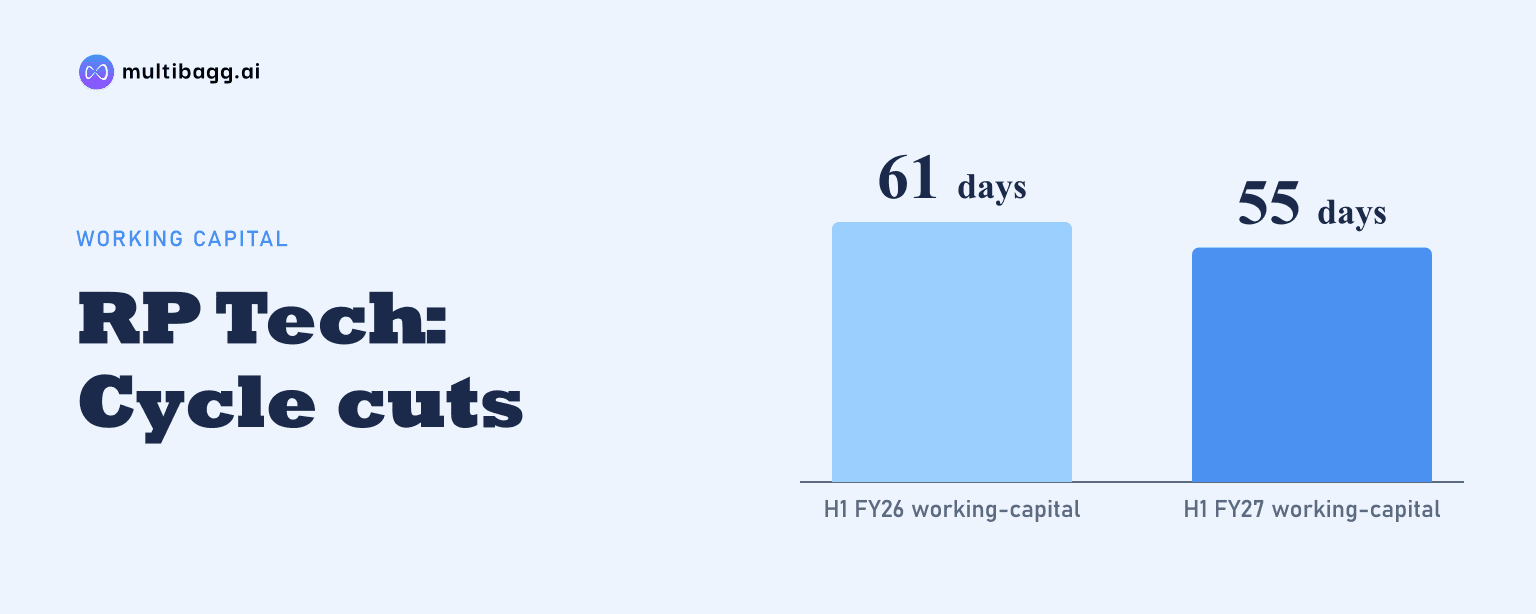
Rashi Peripherals Limited reduced its working-capital cycle to 55 days in H1-FY27 from 61 days in H1-FY26, as debtor days fell to 43 from 46 and creditor days increased to 48 from 44. Inventory days increased by one day to 60, while doubtful-debt and inventory write-off provision rates also rose.
Know Rashi Peripherals inside out
Results, valuation, peers and who's buying, in one view.
How did RP Tech reach a 55-day working-capital cycle?
RP Tech reached 55 working-capital days in H1-FY27 as a three-day reduction in debtor days and a four-day increase in creditor days outweighed a one-day increase in inventory days. Debtor days declined to 43 from 46 in H1-FY26, creditor days rose to 48 from 44, and inventory days increased to 60 from 59.
The six-day year-on-year reduction partly reversed the movement reported over the preceding full year. Working-capital days were 54 in both FY24 and FY25, increased to 58 in FY26, and then declined to 55 in H1-FY27. The H1-FY27 level was therefore three days below FY26 but one day above the FY24 and FY25 levels.
Why did RP Tech's provision rates increase?
RP Tech's provision for doubtful debt increased to 0.090% in H1-FY27 from 0.009% in H1-FY26. The H1-FY27 rate was ten times the prior-year rate, but the presentation does not disclose the rupee value of the provision or identify the receivables associated with it.
RP Tech's provision for inventory write-off increased to 0.070% in H1-FY27 from 0.019% a year earlier. The increase occurred alongside inventory days rising to 60 from 59. The presentation does not specify products, inventory-ageing categories or segments associated with the higher inventory write-off provision.
The disclosed provision movements add a separate consideration to the improvement in the reported day-count metric. Debtor days fell by three days in H1-FY27, yet the doubtful-debt provision rate rose by 0.081 percentage points; similarly, inventory days rose by one day while the inventory write-off provision rate increased by 0.051 percentage points.
What do RP Tech's H1-FY27 balance-sheet figures show?
RP Tech reported inventory of Rs 4,498.7 crore at H1-FY27, compared with Rs 2,553.7 crore at FY26, while trade receivables increased to Rs 3,130.4 crore from Rs 2,184.2 crore. Both balances rose in rupee terms while the reported working-capital cycle declined to 55 days, alongside 54.5% year-on-year consolidated revenue growth in H1-FY27.
Trade payables other than those to micro, small and medium enterprises were Rs 4,434.7 crore at H1-FY27, up from Rs 2,114.2 crore at FY26. Current borrowings increased to Rs 1,719.5 crore from Rs 958.6 crore, while total current liabilities rose to Rs 6,542.1 crore and total current assets reached Rs 8,795.6 crore.
The balance sheet also showed an increase in the net-debt-to-equity ratio to 0.76 times at H1-FY27 from 0.43 times in FY26. Total assets increased to Rs 9,315.3 crore from Rs 5,327.1 crore, while total equity rose to Rs 2,412.7 crore from Rs 2,036.3 crore over the same period.
Got a follow-up? Ask IRIS
Did RP Tech's lower working-capital days produce positive operating cash flow?
No, RP Tech reported cash flow from operations of negative Rs 516.5 crore in H1-FY27 despite the reported working-capital cycle declining to 55 days. The presentation also reports negative cash flow from operations of Rs 102 crore in FY24 and Rs 299.2 crore in FY25, but does not provide an FY26 figure in its historical performance table.
The presentation does not establish a direct link between the six-day year-on-year reduction in working-capital days and cash flow from operations. H1-FY27 operational revenue increased 54.5% year on year to Rs 11,287 crore, coinciding with higher absolute inventory, trade receivables, trade payables and current borrowings.
The difference between the day-count measure and the negative operating cash-flow figure means both measures need to be assessed separately. At H1-FY27, inventory was Rs 1,945 crore higher than FY26, trade receivables were Rs 946.2 crore higher, and current borrowings were Rs 760.9 crore higher.
How did RP Tech's earnings change alongside working capital?
RP Tech's consolidated revenue, earnings before interest, tax, depreciation and amortisation (EBITDA), and profit after tax increased in H1-FY27. Revenue from operations rose to Rs 11,287 crore from Rs 7,307.6 crore in H1-FY26, while EBITDA increased to Rs 375.4 crore from Rs 207.2 crore.
EBITDA margin increased to 3.33% from 2.84%, a rise of 49 basis points, where one basis point equals one-hundredth of a percentage point. Profit after tax increased to Rs 235.3 crore from Rs 120.9 crore, and its margin rose to 2.08% from 1.65%, an increase of 43 basis points.
Finance costs increased 47.0% to Rs 75.4 crore in H1-FY27 from Rs 51.3 crore in H1-FY26. The earnings increase therefore occurred alongside higher finance costs, a net-debt-to-equity ratio of 0.76 times at H1-FY27, and negative cash flow from operations of Rs 516.5 crore.
Conclusion
RP Tech's H1-FY27 data show that a shorter reported working-capital cycle was driven by lower debtor days and higher creditor days, despite a one-day rise in inventory days. Consolidated revenue, EBITDA and profit after tax increased year on year, but provisions for doubtful debts and inventory write-offs also rose, while cash flow from operations remained negative.
The next results will show whether debtor days remain near 43, creditor days near 48 and inventory days move from 60, as well as whether the provision rates of 0.090% for doubtful debts and 0.070% for inventory write-offs change. RP Tech has not disclosed a working-capital target or a timetable for changing provision rates in the presentation.