










Runwal plans 18-acre Dombivli monetisation to cut debt
Key highlights
- Runwal reported that external debt fell by Rs 500 crore to Rs 1,900 crore after its IPO repayment in October.
- Runwal is considering monetising about 18 acres at its 250-acre Gardens and My City project in Dombivli for data-operator use.
- JLL has received interest from 10 to 12 parties for the proposed Dombivli monetisation, but no buyer, valuation or timetable has been disclosed.
- Runwal expects blended project-level EBITDA margins to remain above 25% and is targeting pre-sales growth of around 20% annually over the next two to three years.
powered by IRIS
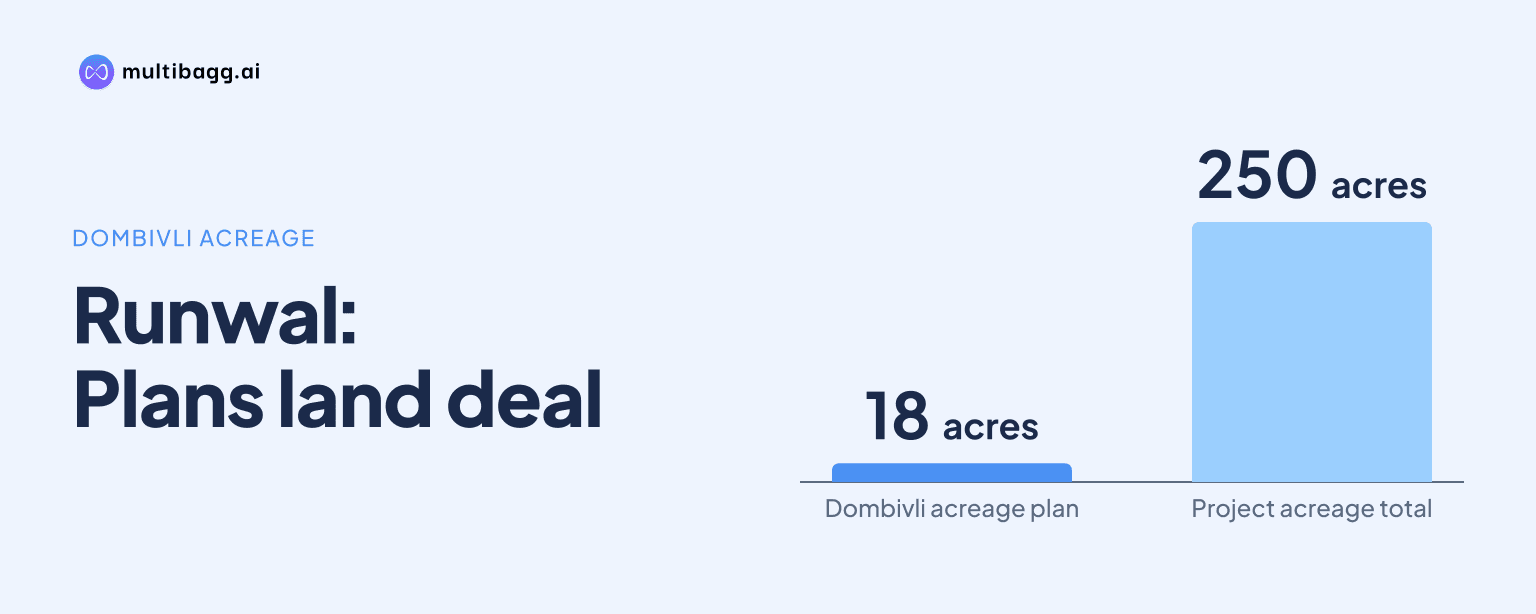
Runwal says it is considering the monetisation of about 18 acres at its Gardens and My City project in Dombivli to data operators, with proceeds intended directly for debt repayment. The plan follows an initial public offering, or IPO, repayment that management said reduced external debt to Rs 1,900 crore from about Rs 2,400 crore.
Know Runwal Enterprises inside out
Results, valuation, peers and who's buying, in one view.
What debt reduction has Runwal reported after its IPO?
Runwal reported that external debt fell by about Rs 500 crore after it received IPO proceeds in the first week of October. Management said the repayment reduced external debt from close to Rs 2,400 crore to Rs 1,900 crore, while the debt-to-equity ratio had already declined to 1.5 times from 3.1 times.
The timing matters because the lower balance was not reflected in results corresponding to September 30, according to management. It said the repayment occurred after the IPO proceeds were realised in October and would instead be visible in results for the quarter ending December 31. Management also described its debt-reduction objective as getting debt as low as possible.
Management distinguished external borrowings from loans from related parties and group companies. It said related-party loans remained around Rs 365 crore and do not get eliminated through consolidation, while describing the post-IPO aggregate net-debt figure as Rs 2,200 crore. The external-debt reduction, rather than the related-party balance, was the stated use of IPO proceeds.
How would Runwal's Dombivli land monetisation reduce debt?
Runwal says proceeds from the proposed Dombivli land monetisation would be used directly to repay debt. Management has given a mandate to JLL for the process and said it had received interest from 10 to 12 parties, but it did not disclose a valuation, prospective buyer, timetable or signed transaction.
The parcel under consideration is about 18 acres within Gardens and My City in Dombivli. Management said the overall project spans 250 acres and that a significant portion remains available for sale, while adding that it is open to considering other projects. For now, however, Dombivli is the specific site being evaluated for monetisation by data operators.
The contemplated disposal is an additional repayment route rather than a completed debt-reduction event. Management said further details would be disclosed only as the transaction advances and concludes. That leaves the amount of potential proceeds unresolved, even though the stated mechanism is clear: monetise land, then direct cash toward borrowings.
Why is Runwal pursuing an asset-light growth model?
Runwal says new acquisitions through joint venture and joint development, or JV/JD, structures should limit capital committed to expansion and thereby reduce the need for new debt. Management said its residential-development cash flows already allow debt to be repaid naturally, and it expects future borrowing to be limited, taken at the appropriate time and structured on a self-liquidating basis.
This approach sits alongside a growth objective rather than replacing it. Management said its endeavour for the next two to three years is to grow pre-sales by around 20% year on year, within a 20% to 25% range, while expanding in Mumbai and considering asset-light opportunities. It did not give formal pre-sales guidance, but said it would provide a general sense of Runwal's direction in future disclosures.
Runwal also linked capital discipline to partnerships in its annuity business, citing Nexus and a Japanese investor. Management said these arrangements would support equity-led growth where needed. The stated outcome is a combination of limited debt for new opportunities and debt servicing from operating cash flows, rather than dependence on the Dombivli monetisation alone.
Got a follow-up? Ask IRIS
What operating plans could support Runwal's deleveraging?
Runwal expects its project-level earnings before interest, tax, depreciation and amortisation, or EBITDA, margin to remain above 25% on a blended basis over the next few years. Management attributed that expectation to a mix across affordable, mid-income and luxury housing, saying increased sales and velocity in mid-income and luxury projects could support the blended margin.
Runwal also identified an existing portfolio with 88 million square feet of development potential, which management said could support 20% to 25% annual pre-sales growth for at least the next decade. Its launch plans include additional phases in Kanjurmarg and Dombivli, alongside prospective projects in Bandra, Marine Lines and Marine Drive, subject to approvals and launch timing.
On recurring income, Runwal said its mall and Bandra Kurla Complex, or BKC, developments should be completed over the next two and a half years. Management said rental income from the mall could exceed Rs 100 crore in its first stabilised year, while declining to quantify rental income from the BKC project because the appropriate end-use customer was still being evaluated.
What could delay Runwal's debt-reduction plans?
Runwal has not set a completion date for the Dombivli land transaction, despite interest from 10 to 12 parties. The absence of a disclosed transaction value, buyer selection and closing terms means the contribution to debt repayment cannot yet be measured. Management's direct-repayment intention is therefore conditional on a deal being concluded.
Launch timing also depends partly on third-party approvals. Runwal said a Bandra society-redevelopment project and a Marine Drive acquisition are awaiting approvals, although management said it was not expecting delays and could launch them either in the current year or early next year. It explicitly declined to provide launch guidance because approvals cannot be calibrated by management.
In Dombivli, ongoing tower and phase launches are also subject to approvals. These projects matter to Runwal's stated pre-sales objective of approximately 20% annual growth and to the residential cash flows management expects to use for natural debt repayment. The pace of approvals, land monetisation and project launches will therefore shape how quickly the stated deleveraging path proceeds.
Conclusion
Runwal has identified two components of its debt-reduction plan: the completed post-IPO reduction in external debt to Rs 1,900 crore and a proposed monetisation of about 18 acres in Dombivli for data-operator use. Alongside these actions, management is pursuing JV/JD acquisitions, residential pre-sales growth and future annuity income to limit fresh borrowing and support repayments.
The next developments to watch are whether JLL's process converts the 10 to 12 expressions of interest into a completed Dombivli transaction, including its undisclosed value, and whether the reduced debt appears in the December 31 quarter's results. Management also expects the mall and BKC projects to be completed in about two and a half years, when their rental contribution should begin appearing in profit and loss reporting.