










Indian rupee strengthens from 93.40 to 92.97 per dollar
Key highlights
- The Indian rupee strengthened from 93.40 to 92.97 per US dollar on November 20.
- The rupee touched 92.9950 per dollar, up 0.3% from the previous session and 2% for the month.
- Foreign equity inflows were reported at more than $8 billion so far in the month in one market update.
- Brent crude was reported below $92 per barrel, easing pressure on India's oil import bill.
powered by IRIS
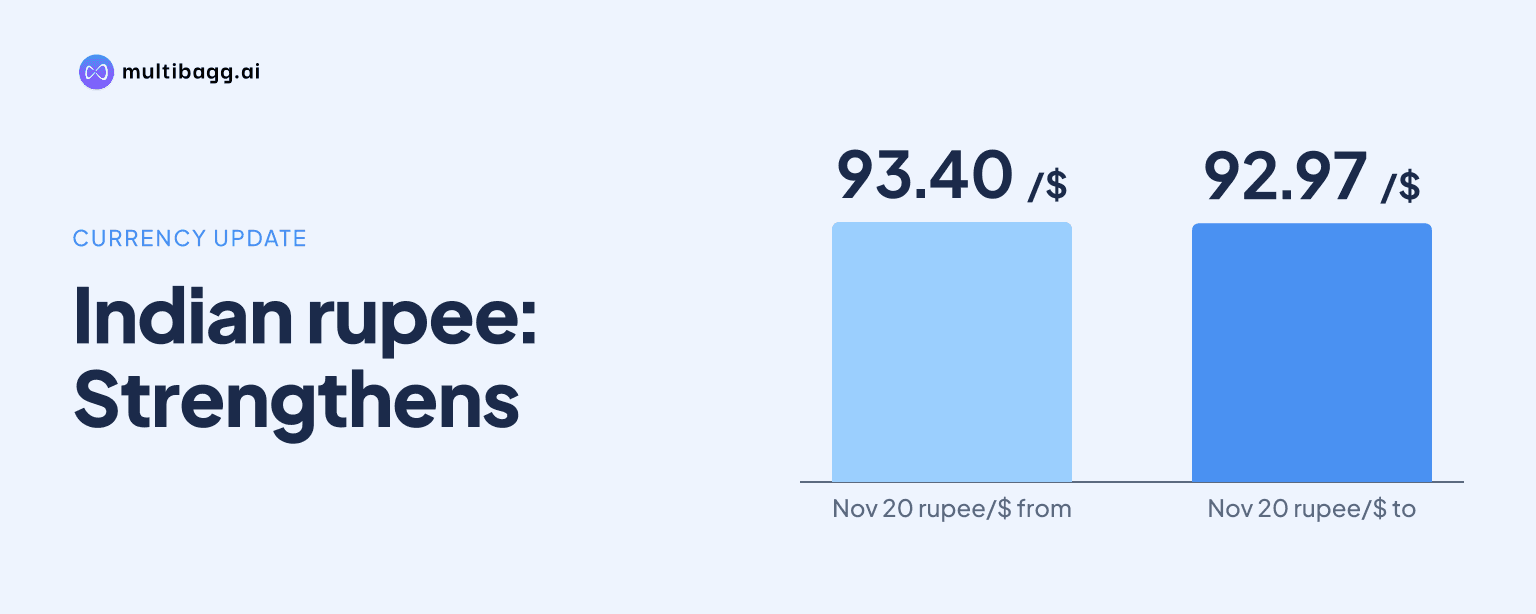
The Indian rupee strengthened from 93.40 to 92.97 per US dollar on November 20, moving past the 93-per-dollar mark for the first time since April as foreign portfolio inflows, overseas government-bond buying and lower crude oil prices increased demand for the domestic currency.
Why did the rupee cross 93 per dollar?
The rupee crossed 93 per dollar because sustained foreign investment inflows and relatively stable oil prices supported demand for the currency. Reuters reported that the currency rose to an intraday peak of 92.9950 per dollar, up 0.3% from the previous session's closing level and 2% so far in the month.
Market commentary cited foreign portfolio inflows into domestic equities, renewed overseas buying of Indian government bonds and trimming of bearish positions as key factors. Anil Kumar Bhansali, Head of Treasury and Executive Director at Finrex Treasury Advisors LLP, also pointed to a nearly 1,000-point Sensex rally as evidence of strong equity-market support.
The move came despite broader firmness in the US Dollar Index. This indicated that domestic capital flows and demand for Indian financial assets were outweighing the effect of a stronger dollar globally during the session.
What data shows the rupee's November rebound?
The rupee's November rebound was reflected in a 2% monthly gain at its 92.9950 intraday peak and a USD/INR reading of 93.4010 on November 19, down 0.08% from the preceding session. The context also places the currency's one-month gain at 1.43%, although it remained down 5.28% over the previous 12 months.
The currency's advance was notable after USD/INR reached an all-time high of 99.82 in March 2026. A lower USD/INR rate means the rupee is stronger against the dollar, because fewer rupees are required to buy one dollar.
Several reported trading levels show the pace of the recovery. The rupee opened at 93.20 against a previous close of 93.30 in one session, while another report said it gained 24 paise to 93.27 in early trade. These moves followed a period when the currency had traded near 97 per dollar in May and October.
Got a follow-up? Ask IRIS
How did foreign flows and crude oil support the rupee?
Foreign flows and lower crude prices supported the rupee by increasing dollar supply in the local market and easing concerns about India's oil-import bill. Reports cited foreign equity inflows exceeding $8 billion so far in the month, while another account referred to a $10 billion monthly inflow and nearly $4 billion of foreign equity inflows during a strong week.
Custodian-bank dollar inflows were reported to have comfortably absorbed early importer demand. Renewed foreign buying of Indian government bonds added another source of support, alongside overseas purchases of Indian equities.
Crude oil is significant for the rupee because India depends heavily on imported crude. Brent was reported below $92 per barrel, while West Texas Intermediate rose 0.18% to $82.59. Lower oil prices can reduce the dollars needed by oil importers and ease inflation concerns, helping currency sentiment.
What rupee levels are traders watching next?
Traders are watching 93.00 to 92.75 per dollar as the next area if foreign inflows remain sustained, while a reversal in overseas flows could weaken the rupee toward 94.50. Bhansali said gains may continue until 92.80, described as strong support for the dollar.
The Reserve Bank of India was reported to have been present around 93.39 and 93.40 levels, helping keep currency moves orderly. Such intervention-related market activity can limit volatility even when the rupee has strong support from foreign flows and lower oil prices.
For exporters, Bhansali said those getting an upside beyond 93.50 should sell for exports with higher premiums. He said importers may wait to buy near 93.00 levels. These are market views rather than assured outcomes, and the direction will remain dependent on flows, crude prices and global risk sentiment.
Conclusion
The Indian rupee's move from 93.40 to 92.97 per dollar reflects a combination of strong foreign portfolio demand, overseas bond buying, short covering and lower crude oil prices. The appreciation is notable because it occurred even as the US Dollar Index remained firm, showing the importance of local capital flows in the recent move.
The next focus is whether foreign investment into Indian equities and bonds remains durable and whether crude prices stay contained. Market participants are also watching the 93.00 to 92.75 area on further strength, while a reversal in foreign flows could shift attention toward 94.50 per dollar.