










Shanti Gold Sets 5-7% EBITDA Margin as Expansion Weighs
Key highlights
- Shanti Gold set a sustainable EBITDA margin range of 5% to 7% for the near future.
- New jewellery lines are operating at about 10% to 15% of their potential, according to management.
- Management expects manufacturing capacity utilisation to reach about 75% to 80% in coming years.
- Exports doubled to Rs 82 crore, with their business share rising from 4% to 6%.
powered by IRIS
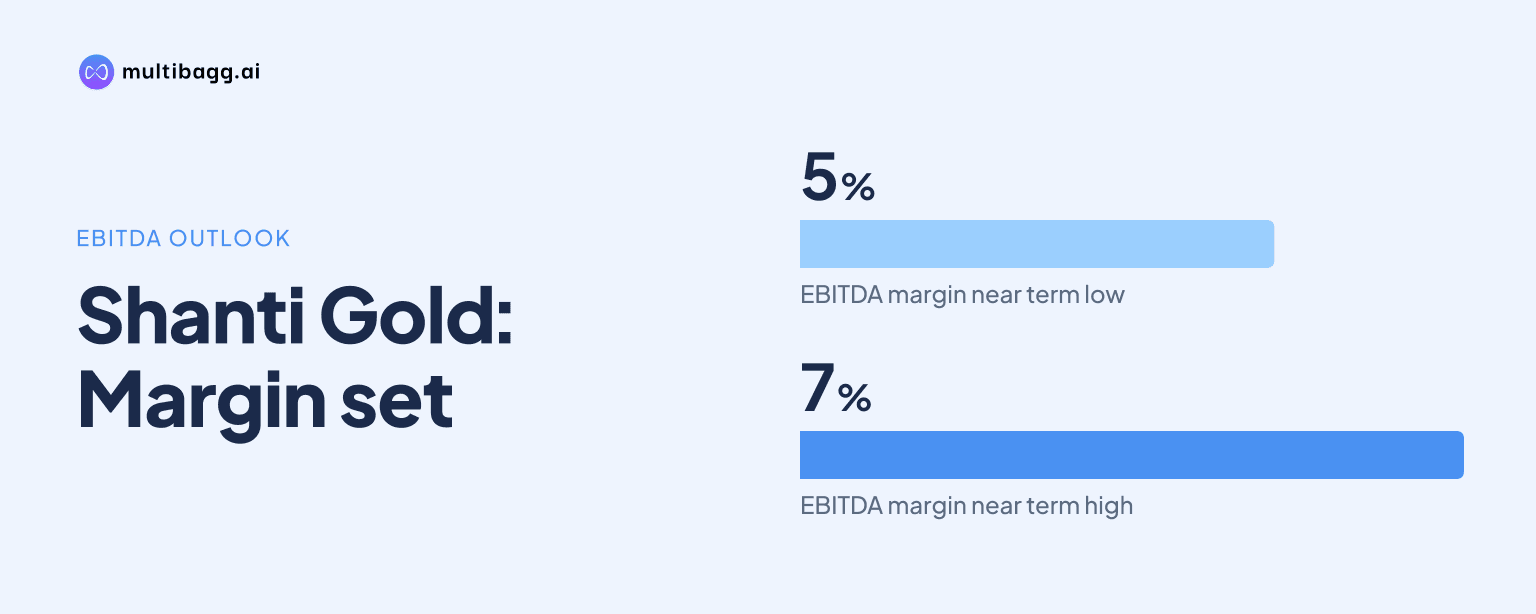
Shanti Gold International Limited said during its earnings call that it expects a sustainable earnings before interest, tax, depreciation and amortisation (EBITDA) margin of 5% to 7% in the near future. Management attributed margin moderation to upfront costs from new product lines, manufacturing expansion and scale-building, while expecting efficiency gains as utilisation improves.
Know Shanti Gold International inside out
Results, valuation, peers and who's buying, in one view.
What EBITDA margin range has Shanti Gold set?
Shanti Gold has set a cautious sustainable EBITDA margin range of 5% to 7% for the near future. Management said the range reflects current market dynamics, the evolving product mix, new jewellery designs and the pricing mechanisms used across its business, rather than a single-quarter margin expectation.
The stated range followed quarter-on-quarter EBITDA moderation. During the call, an analyst referred to Shanti Gold's current-quarter EBITDA margin as about 5.7% and compared it with a peer's reported 8%, but management did not endorse that comparison or provide an 8% target. Instead, it said the revised framework was based principally on the changing product mix and investment in scale.
Management described the 5% to 7% range as a blended outcome because the company is adding categories with different economics. Some products can have high volumes with lower making charges and margins, while others can have higher margins at lower volumes. Shanti Gold said it intends to retain flexibility across these categories instead of focusing on only one jewellery line.
Why has Shanti Gold's margin moderated?
Shanti Gold said the margin decline is transitional because the company is in a growth, investment and consolidation phase. Over the last few quarters, it has launched product verticals, expanded manufacturing capacity and invested in building operating scale, all of which involve upfront costs before operating leverage can fully emerge.
Management said it added several jewellery lines in the latest three-month period, including handmade chains and other products. It said these new lines are not yet operating at full scale, meaning the initial costs are being absorbed before production volumes can contribute fully to operating efficiency and the 5% to 7% margin framework.
The company also linked its product expansion to customer development. Shanti Gold said it previously had fewer product verticals but now offers customers a broader basket of products, designs and support. Management expects this wider offering to help increase its share of purchases from existing customers while supporting entry into newer markets in North and East India, after expanding from South India into western markets.
Can higher factory utilisation improve Shanti Gold's profitability?
Shanti Gold expects operating efficiencies to improve as newer businesses mature and plant utilisation rises. Management said it expects manufacturing capacity utilisation to reach about 75% to 80% in coming years once the relevant facilities begin operating and their production ramps up, although it did not disclose current utilisation.
The Marol facility is part of the immediate ramp-up programme, alongside inventory building and the planned Dubai office. Management said recently introduced jewellery lines are currently operating at only 10% to 15% of their potential. Its view is that higher output from these lines can spread fixed operating costs over larger production volumes, though it did not quantify margin improvement beyond the 5% to 7% sustainable range.
The Jaipur facility remains an important execution item. The building covers 65,000 square feet on 3 acres, after Shanti Gold added 15,000 square feet to an initially planned 50,000-square-foot structure. Management said the building was ready but interior and electrical work continued, and it indicated that operations could begin in January or February without confirming a calendar year.
Got a follow-up? Ask IRIS
How do exports and product launches fit Shanti Gold's plan?
Shanti Gold is combining product additions, domestic geographic expansion and exports in its sales plan. Management said larger retailers seek suppliers with inventory availability, designs and operational support, and it expects its wider product basket and manufacturing build-out to help serve those requirements as capacity and inventories rise.
Exports have doubled to Rs 82 crore, according to management. The export share of business increased from 4% to 6%, and management said it expects that share to settle at 6% to 7% this year. It added that the Dubai office could contribute additional international sales once market conditions affected by ongoing wars settle, but it did not provide an export-margin target.
Management also referred to historical growth while declining to provide detailed future volume guidance. It said Shanti Gold had grown at a compound annual growth rate of 43% over the past few years and had delivered volume growth of about 25% to 30%. These figures provide context for the capacity programme, but management did not state that either rate would be achieved in a specified future period.
What funding and hedging factors could affect the ramp-up?
Shanti Gold said its entire Rs 98 crore rights issue had been used for working capital. Management also said debt stood at 0.5 times under its stated measure and that this provided headroom for additional debt to support working-capital needs. It has not decided whether any later expansion funding would come through debt or equity.
Gold metal loans account for roughly 15% to 20% of the stock profile, according to management, and Shanti Gold said it could be comfortable increasing that proportion to 30%, subject to market conditions and availability. Management described natural hedging and inventory discipline as its main risk-management approach, with buying and selling cycles resetting prices over one to two months.
Management said it does not base its operating plan on inventory gains from gold-price movements. Instead, it identified market share, higher volumes, efficiency, product mix and market expansion as the operating drivers it is pursuing. This distinction matters because the 5% to 7% EBITDA range is tied to the business mix and facility ramp-up, rather than a stated forecast for gold prices.
Conclusion
Shanti Gold's 5% to 7% sustainable EBITDA margin range defines management's near-term profitability expectation during a period of product launches and manufacturing expansion. The company attributes the current margin pressure to upfront ramp-up costs and a changing blend of jewellery categories, while identifying fuller utilisation, larger volumes and maturing new lines as the mechanisms that could improve efficiency.
The next items to watch are the completion and commissioning of the 65,000-square-foot Jaipur facility, progress from the 10% to 15% operating level of newer jewellery lines, and whether exports can move from their current 6% share toward management's 6% to 7% expectation this year. Management also said it could provide a three-to-five-year roadmap on the next earnings call.