










Shree TNB Starts Amul Dairy Gas-Pipe Order as Registration Continues
Key highlights
- Shree TNB has started work on a gas-pipe order for Amul Dairy.
- Registration with Gujarat Gas and Mahanagar Gas may take another 2-4 months, according to management.
- Management said potential gas-distribution orders can require pipelines spanning thousands of kilometres.
- Shree TNB expects machine installation and commercial production in the first quarter of FY 27-28.
powered by IRIS
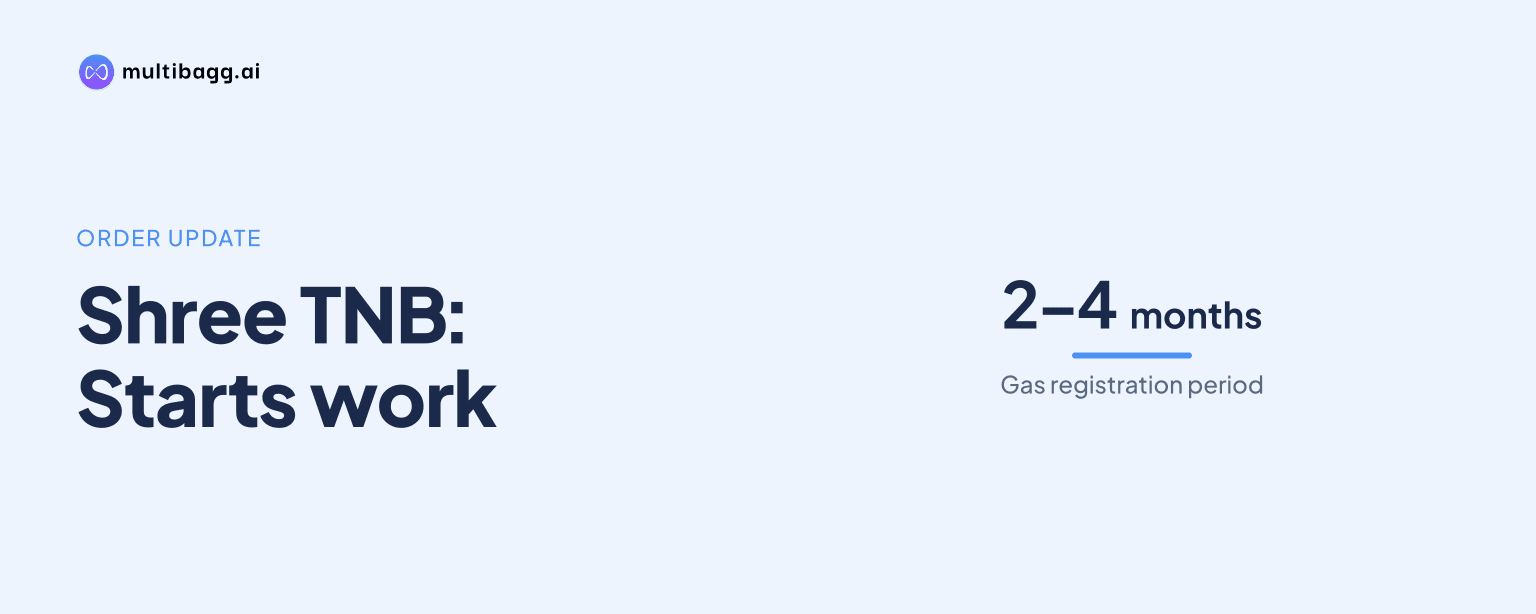
Shree TNB has started work on a gas-pipe order for Amul Dairy, but registrations with Gujarat Gas and Mahanagar Gas were still in process and management expected them to require another 2-4 months. Management said the opportunity could involve orders for thousands of kilometres once approvals and customer registration are completed.
Know Shree TNB Polymers inside out
Results, valuation, peers and who's buying, in one view.
What has Shree TNB started in gas-distribution pipes?
Shree TNB has started a pipe order for Amul Dairy, where gas is used, marking the company’s disclosed initial work in the gas-pipe segment. Management described the broader city-gas opportunity as being at an approval stage rather than as a fully secured set of large orders. No order value, pipe volume or delivery schedule for the Amul Dairy work was disclosed on the call.
The Amul Dairy order differs from the prospective work discussed with Gujarat Gas and Mahanagar Gas. Management said registrations with those two potential customers remained under way, meaning their potential demand should not be treated as confirmed revenue. Its reference to orders for thousands of kilometres described possible scale after the process begins, not an awarded quantity for Shree TNB.
When could Shree TNB complete registrations with gas companies?
Shree TNB said the registration process with Gujarat Gas and Mahanagar Gas could take approximately another 2-4 months from the call. Management said it had received the relevant approval only about 2 months earlier, which is why the registration process was still ongoing. It did not provide a calendar date for completion or say that either company had placed a commercial order.
The sequence described by management is approval, registration, production under customer oversight and then potential supply. That leaves execution steps between the initial Amul Dairy order and any larger gas-distribution supply programme. Shree TNB did not disclose whether Gujarat Gas or Mahanagar Gas had approved a specific pipe size, annual quantity, price or contract duration.
Management’s statement on thousands of kilometres indicates why it is pursuing the segment, but it also distinguishes market potential from a booked order. The only started pipe order named on the call was Amul Dairy. For Gujarat Gas and Mahanagar Gas, the 2-4 month estimate was management’s expected duration for registration, not a forecast of revenue recognition.
How will Shree TNB meet gas-pipe quality requirements?
Shree TNB said gas customers require continuous inspection during manufacturing, including online inspection of every pipe produced. Management used Mahanagar Gas Limited as an example, saying its quality representative remains at the manufacturer’s factory. This process places the customer’s inspection requirement within production rather than limiting checks to a final shipment review.
The gas-pipe process differs from Shree TNB’s polymer drum discussion elsewhere on the call. For drums, management referred to a Bureau of Indian Standards, or BIS, drop test in which a 200-litre drum is filled and dropped from a height. For gas pipes, it described continuous customer inspection instead, reflecting a separate product and end-use requirement.
Management said it saw no issue among the three products discussed on the call, but it did not disclose gas-pipe rejection rates, certification details, manufacturing capacity or the number of qualified pipe lines. The call therefore provides the proposed inspection mechanism, but not a quantified output record for Shree TNB under gas-company specifications.
Got a follow-up? Ask IRIS
Will Shree TNB face payment delays on gas-pipe work?
Shree TNB said it does not expect payment delays sometimes associated with direct government work in the gas business because the relevant customers are corporations. Management contrasted this with Nal Se Jal work, where a contractor may face delayed government payment if funds are unavailable or during an election period.
For its wider work, management said Shree TNB generally uses letters of credit and bank guarantees, mechanisms intended to reduce payment risk. It specifically said it did not see a funding requirement or payment-difficulty issue with Gujarat Gas Corporation and Mahanagar Corporation. The call did not disclose payment days, credit limits, outstanding receivables or the commercial terms for the Amul Dairy order.
The distinction separates management’s expected payment experience for prospective gas customers from Shree TNB’s other project exposure. However, no payment from the started Amul Dairy work was reported, and registrations with Gujarat Gas and Mahanagar Gas were unfinished. These comments were management’s assessment of the business model, not evidence of collections from those customers.
How does gas-pipe entry fit Shree TNB’s expansion plan?
Shree TNB expects machines ordered after its initial public offering proceeds arrived in the first week of October to be delivered within 5-6 months, with installation and commercial production planned in the first quarter of FY 27-28. Management said multiple new products would be launched in that quarter, although it did not identify what portion of the machine programme is dedicated to gas-distribution pipes.
Management estimated that the new products could add Rs 135-150 crore to revenue after reaching full commercial production. That estimate covers the wider new-product programme, not gas pipes alone, and management said it could not predict the actual figure at that point. In response to an investor’s calculation, management said total revenue could reach Rs 250-300 crore, but presented this as an estimate rather than a formal target.
Operationally, management said polymer-industry capacity utilisation is typically 70-75% because changing moulds between 200-litre, 210-litre, 225-litre, 235-litre and 250-litre products takes time. It also noted that pipe laying can slow for about 2 months in the rainy season because ground excavation is difficult. These factors place the gas-pipe opportunity alongside product-mix changeovers and seasonal installation conditions.
Conclusion
Shree TNB’s gas-pipe entry has moved from preparation to an identified initial order at Amul Dairy, while the potentially larger opportunity remains conditional on registration with Gujarat Gas and Mahanagar Gas. Management’s reference to thousands of kilometres signals possible demand, but the call disclosed neither confirmed volumes nor revenue from those prospective customers.
The next disclosed milestones are the expected 2-4 month registration period and the first quarter of FY 27-28, when management expects machine installation, commercial production and multiple product launches. Investors should watch whether registrations convert into named orders, whether Shree TNB discloses gas-pipe capacity and whether its Rs 135-150 crore new-products estimate gains a clearer product-wise breakdown.