










SMIORE plans ₹280 crore Deogiri plant for up to 1.7 MTPA output
Key highlights
- SMIORE plans approximately ₹280 crore of capex for its first in-mine beneficiation plant at Deogiri.
- The first 3.5 MTPA unit is targeted for commissioning in August 2027 and was about 25% complete on 19 November 2026.
- The plant is designed to upgrade ore from about 50% Fe to concentrate above 60% Fe.
- SMIORE reported Q2 FY27 consolidated EBITDA of ₹391 crore, up 37% year on year.
powered by IRIS
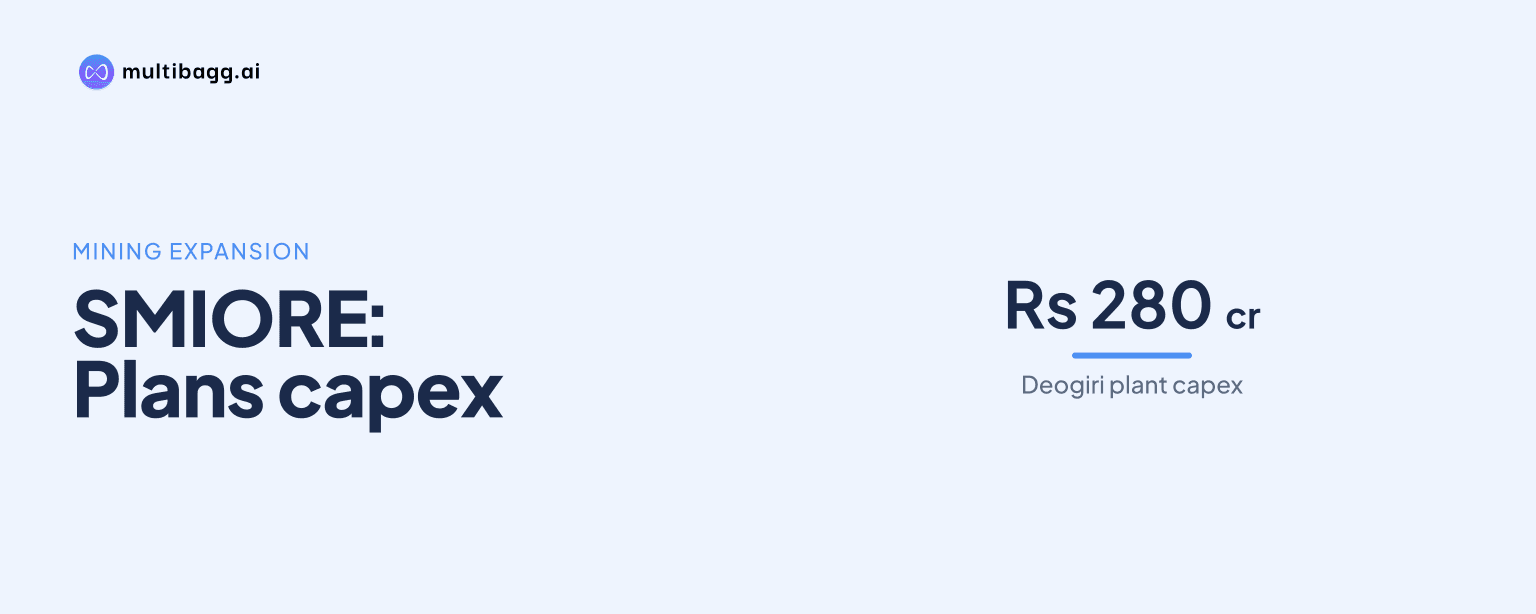
The Sandur Manganese & Iron Ores Limited plans a ₹280 crore mine-head beneficiation plant at Deogiri, with its first 3.5 MTPA unit targeted to produce 1.0-1.2 MTPA initially and potentially up to 1.7 MTPA of upgraded iron ore above 60% Fe by August 2027.
Know Sandur Manganese & Iron Ores inside out
Results, valuation, peers and who's buying, in one view.
What is SMIORE building at Deogiri?
SMIORE is planning its first in-mine iron ore beneficiation plant at Deogiri Village in Sandur Taluk, Ballari District, Karnataka, for approximately ₹280 crore. The 19 November 2026 announcement says the plant will process ore from the KTIO mines and some ore from the Deogiri mines, locating processing at the mine head.
The first unit will have 3.5 MTPA capacity, where MTPA means million tonnes per annum. It is designed initially to produce 1.0-1.2 MTPA of upgraded iron ore, while SMIORE identifies potential output of up to 1.7 MTPA from the unit.
How will the Deogiri plant change iron ore quality?
SMIORE says the Deogiri process is designed to raise iron, or Fe, content from about 50% to more than 60%. The intended product is concentrate suitable for pellet manufacturing, so the project is aimed at upgrading lower-grade ore rather than increasing raw ore extraction alone.
Management said the plant is expected to improve the quality and marketability of lower-grade ore, reduce waste and support better revenue realisation. These are expected outcomes rather than reported results because the first unit was about 25% complete as of the 19 November 2026 announcement.
SMIORE identified pellet plants in and around Sandur with aggregate capacity exceeding 24 MTPA as a potential market for beneficiated material. It also said the concentrate could support iron-making within its integrated steel value chain, but did not disclose a volume allocation between external pellet plants and internal use.
When will SMIORE commission the first unit?
SMIORE is targeting commissioning of the first 3.5 MTPA Deogiri unit in August 2027. Civil works are progressing, structural fabrication is under way, and orders for long-lead items have been placed, according to the 19 November 2026 release.
The ₹280 crore project is being implemented in two phases, with a long-term plan for two 3.5 MTPA units. The announcement does not provide a commissioning date, capital cost or expected upgraded-ore output for the second unit, so the August 2027 target applies only to the first unit.
The mine-head design is expected to reduce transportation of waste-bearing ore and support tailings management. SMIORE also expects the project to generate 150-200 direct and indirect jobs, without specifying the split between direct and indirect roles.
Got a follow-up? Ask IRIS
How does SMIORE plan to fund the ₹280 crore capex?
SMIORE expects to fund the ₹280 crore Deogiri project through a combination of debt and internal accruals. The company did not disclose the debt proportion, borrowing terms, project-wise cash contribution or a capital-spending schedule across the two phases.
The funding plan follows reported growth in consolidated earnings for Q2 FY27. Consolidated total income reached ₹1,519 crore, up 22% year on year, while EBITDA, or earnings before interest, tax, depreciation and amortisation, rose 37% to ₹391 crore and profit after tax increased 88% to ₹261 crore.
For H1 FY27, consolidated total income was ₹2,909 crore, a 21% year-on-year increase. EBITDA grew 25% to ₹749 crore and profit after tax rose 60% to ₹489 crore, meaning income growth was lower than the corresponding growth rates for EBITDA and profit after tax in the first half.
What does the project mean for SMIORE's operations?
SMIORE’s stated operational objective is to convert ore containing about 50% Fe into concentrate containing more than 60% Fe, using material from KTIO and some Deogiri mine ore. This gives the company a disclosed processing route for lower-grade material that is suitable for pellet manufacturing.
SMIORE describes itself as an integrated metals and mining group with manganese and iron ore mining, ferroalloys, coke and energy, and specialty and alloy steel through Royal Sandur Metals. Within that structure, management said Deogiri concentrate could be supplied to pellet plants with more than 24 MTPA aggregate local capacity or support iron-making within the group’s steel value chain.
SMIORE was founded in 1954 and describes itself as the flagship company of the Royal Sandur Group. The announcement identifies SMIORE as India’s second-largest manganese ore miner, Karnataka’s third-largest iron ore miner and among the top five Special Bar Quality steel players, without giving market-share figures or production volumes.
Conclusion
The ₹280 crore investment combines a 3.5 MTPA first-stage beneficiation unit with initial upgraded-ore output of 1.0-1.2 MTPA and potential output of up to 1.7 MTPA. The planned change is ore quality: SMIORE intends to upgrade about 50% Fe ore to concentrate above 60% Fe for pellet manufacturing while reducing transport of waste-bearing ore.
The next disclosed milestone is the August 2027 commissioning target for the first unit, which was about 25% complete on 19 November 2026. Investors can watch construction progress, the mix of debt and internal-accrual funding, and whether SMIORE discloses timing, expenditure and output details for the planned second 3.5 MTPA unit.