










Sutlej targets Rs 250 crore home-textile revenue this year
Key highlights
- Sutlej said home-textile volume, measured by metreage, grew about 30% year on year in H1 FY27.
- Sutlej is targeting about Rs 250 crore of home-textile turnover this year.
- Sutlej’s home-textile gross block is roughly Rs 110 crore, according to management.
- Sutlej reported Q2 FY27 EBITDA of Rs 53.4 crore, compared with Rs 17 crore in Q2 FY26.
powered by IRIS
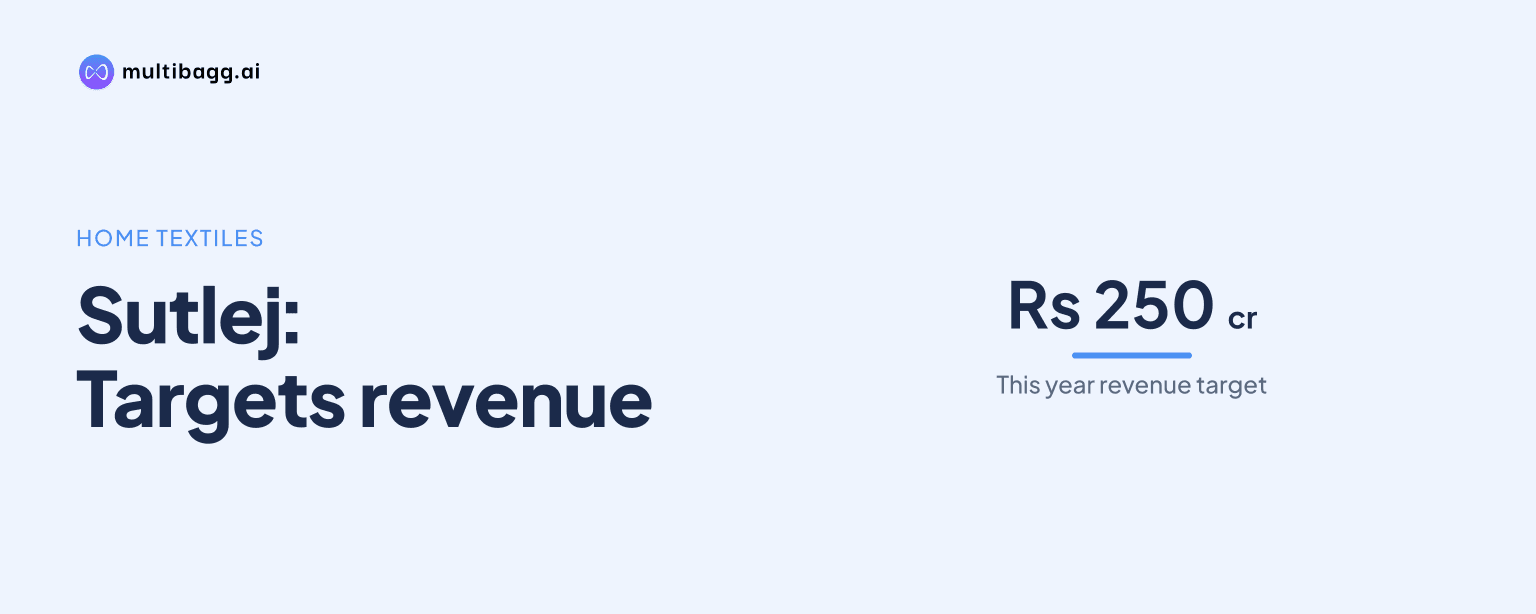
Sutlej Textiles and Industries Limited is targeting about Rs 250 crore of home-textile turnover this year after home-textile volume, measured by metreage, rose about 30% year on year in H1 FY27. Management said the business has stabilised operationally and is being scaled as a value-added fabric segment, while yarn remains the company’s core business.
Know Sutlej Textiles and Industries inside out
Results, valuation, peers and who's buying, in one view.
How fast did Sutlej home-textile volumes grow?
Sutlej said home-textile volume grew about 30% year on year in the half year, measured by metreage rather than turnover. The disclosure followed an analyst’s question on whether home textiles were expanding faster than yarn. Management did not provide metres sold, the prior-year volume base or separate H1 FY27 home-textile revenue.
The growth reflected both volume and product mix. Sutlej said prices had increased “a little”, while its home-textile portfolio includes basic fabrics as well as value-added jacquards and fabrics with greater design intricacy. Management did not quantify the share of either category, their price difference or the resulting contribution to the approximately 30% volume increase.
Sutlej’s broader Q2 FY27 financial performance also improved, although it did not disclose home-textile profitability. Stand-alone income increased to Rs 833 crore from Rs 642 crore in Q2 FY26, while EBITDA, or earnings before interest, tax, depreciation and amortisation, rose to Rs 53.4 crore from Rs 17 crore. Management said all three business verticals were EBITDA-positive.
What is Sutlej targeting from home textiles this year?
Sutlej is targeting about Rs 250 crore of home-textile turnover this year, and management said it expects to achieve the target. It clarified that Rs 250 crore was the current-year objective, not a goal for three or four years. Management did not give a quarterly target or a separate target for home-textile exports.
The business has a gross block of roughly Rs 110 crore, according to management. Sutlej did not provide a capacity figure, an asset breakdown or the fixed investment required to double turnover when questioned on that subject. Management instead said home textiles had stabilised operationally and was receiving encouraging customer acceptance.
Management said home textiles should post better growth over the coming few quarters while maintaining profitability. This is a management expectation rather than formal guidance: Sutlej did not disclose a segment margin, a margin range or a timetable beyond the Rs 250 crore turnover objective for this year.
Got a follow-up? Ask IRIS
Why does Sutlej see more value in home textiles than yarn?
Sutlej management said fabric can generate higher realisation and contribution, including EBITDA, than yarn where value addition is involved. Its explanation was based on the production chain from fibre to yarn and then fabric. The company is therefore allocating more capital toward businesses where management believes it can create more value, including home textiles.
The strategy depends on selling a broader mix rather than simply raising prices. Sutlej identified jacquards and more design-intensive fabrics as value-added offerings alongside basic fabrics. Management did not quantify the home-textile realisation premium, the EBITDA difference against yarn, or the percentage of segment revenue contributed by value-added products.
The move accompanies a wider portfolio plan. Sutlej reported H1 FY27 EBITDA of Rs 101 crore with a 6.5% margin, compared with Rs 85 crore for the full prior year cited by management during the call. Separately, management expects technical-textile contributions to begin from FY28 and is developing differentiated recycled-fibre products through Sutlej Green Fibre.
How is Sutlej funding growth and modernising yarn?
Sutlej is pairing home-textile expansion with phased yarn modernisation, including an upgrade of its entire fibre-dye unit and planned spindle replacements in coming years. Management said these steps are intended to support value addition and reduce manpower and power costs. It estimated modernisation could reduce manpower cost by about 1.5% to 2% over time, without giving a capital-expenditure total or completion date.
Sutlej had about 15,500 employees, and management said headcount was being reduced deliberately. It added that absolute labour cost was declining or static despite annual wage increases, but did not disclose the labour-cost amount. The company is also pursuing an asset-light finished-fabric model in Africa and the Middle East, using external weaving partners rather than investing in additional weaving infrastructure.
Working capital increased because of higher material prices and inventory requirements, though management said it remained within its envisaged range. Debt to equity was about 1.1 times, and management said investments would be funded through internal accruals and existing financing arrangements. Q2 FY27 EBITDA margin was 6.4%, with management citing higher freight costs and raw-material volatility as constraints on sequential margin improvement.
Conclusion
The 30% year-on-year increase in home-textile metreage and the Rs 250 crore turnover target show Sutlej’s effort to build a larger value-added fabric business alongside its yarn base. Management’s rationale is that design-intensive fabrics can produce higher realisation and contribution than yarn, although the company has not disclosed home-textile revenue for H1 FY27 or segment-level profitability.
The next measure to watch is whether Sutlej achieves its Rs 250 crore home-textile target this year while preserving profitability. Management also plans phased fibre-dye modernisation and spindle replacement, expects technical-textile contributions from FY28, and reported debt to equity of about 1.1 times as it funds growth through internal accruals and existing financing arrangements.