










Tata Steel Q2 FY27 Results Due as India Output Rises 10%
Key highlights
- Tata Steel's India crude steel production rose 10% year-on-year to 6.21 million tonnes in Q2 FY27.
- India deliveries increased 7% year-on-year and 15% quarter-on-quarter to 5.97 million tonnes.
- Tata Steel reported Q1 FY27 revenue of ₹60,794 crore, up 14.3% year-on-year.
- Management indicated that India realisations in Q2 could be about ₹1,500 per tonne lower than in Q1.
powered by IRIS
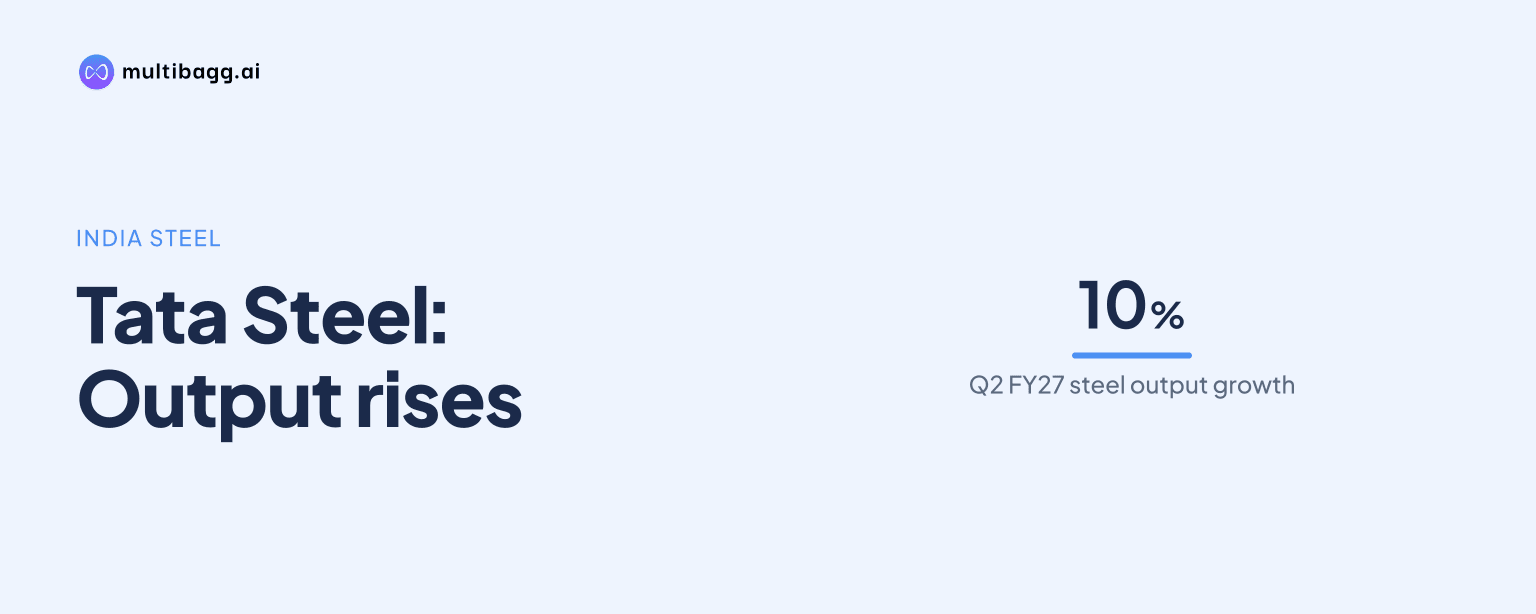
Tata Steel Limited is due to consider Q2 FY27 results after its India crude steel production increased 10% year-on-year to 6.21 million tonnes in the July-September 2026 quarter, while deliveries rose 7% to 5.97 million tonnes. The earnings update will show how higher volumes and lower stated realisations affected profitability.
Know Tata Steel inside out
Results, valuation, peers and who's buying, in one view.
When will Tata Steel announce Q2 FY27 results?
Tata Steel said its board would meet on 7 November 2026 to consider results for Q2 FY27, covering July through September 2026. The company also scheduled an investor meeting on the same date from 2:00 pm to 3:00 pm IST, with a live telecast and Webex participation options.
Some notices in the supplied material referred to an earlier board meeting on 27 October 2026 for approval of audited standalone and unaudited consolidated results for the quarter and half year ended 30 September 2026. However, the company snapshot dated 5 November 2026 identifies 7 November as the next results date and states that figures had not yet been filed. Investors should therefore rely on the exchange-filed results and the company’s final disclosure for confirmed financial numbers.
The Q2 announcement will cover both the July-September quarter and the first half of FY27. It follows Tata Steel’s provisional operating update issued on 7 October, which indicated stronger domestic production and deliveries during the period.
What did Tata Steel report in the previous quarter?
Tata Steel reported consolidated revenue of ₹60,794 crore in Q1 FY27, up 14.3% year-on-year but down 3.9% from the preceding quarter. The latest-quarter snapshot also showed gross profit of ₹5,624 crore, up 20.1% from a year earlier and down 14.3% sequentially.
The supplied data contains different net-profit references for Q1 FY27. One quarterly snapshot lists net profit at ₹2,289 crore, while another company update puts it at ₹2,385 crore and a separate summary cites ₹2,318 crore. All three references indicate year-on-year growth, but the final reported filing should be used for the definitive figure.
The company’s stated operating margin for Q1 FY27 was 15.2%. Another supplied earnings summary reported consolidated EBITDA of ₹9,370 crore, up 25% year-on-year. For the India business, the material cited EBITDA of ₹9,908 crore, equivalent to ₹19,162 per tonne, and an EBITDA margin of about 27%.
How did Tata Steel's India operations perform in Q2 FY27?
Tata Steel’s provisional operational update showed India crude steel production of 6.21 million tonnes in Q2 FY27, a 10% increase from a year earlier and an 8% increase from Q1. India deliveries reached 5.97 million tonnes, rising 7% year-on-year and 15% quarter-on-quarter.
The company said the delivery growth was supported by record quarterly volumes in Branded Products & Retail and Automotive & Special Products. Branded Products & Retail volumes were about 2.2 million tonnes, while Automotive & Special Products volumes were about 1.1 million tonnes.
These operating figures matter because steel earnings are influenced by both volumes and realisations. Higher production and deliveries can support sales volumes, but their effect on profit depends on selling prices, product mix, input costs and the performance of businesses outside India.
Got a follow-up? Ask IRIS
What could affect Tata Steel's Q2 profitability?
Tata Steel’s management indicated during the Q1 call that India realisations in Q2 could be about ₹1,500 per tonne lower than in Q1. The company linked weaker long-product pricing to monsoon conditions, while stating that additional volumes were expected to support India EBITDA in rupee terms.
This makes the relationship between volume growth and pricing central to the Q2 result. Deliveries increased materially quarter-on-quarter, but lower realisations may offset part of the benefit from greater tonnes sold. The reported accounts will provide the financial outcome of those opposing factors.
The supplied material also identifies overseas operations and input costs as variables for the quarter. No Q2 consolidated revenue, EBITDA, margin or net-profit figure has been provided before the result, so comparisons with Q1 remain incomplete until Tata Steel publishes its financial statements.
Why are investors watching Tata Steel's Q2 update?
Tata Steel has a market value of about ₹2.33 lakh crore in the supplied data, making its quarterly disclosures relevant to investors tracking the Indian metal and mining sector. Its results offer evidence on domestic steel demand, price conditions and the conversion of operating volumes into earnings.
For shareholders, management’s discussion during the scheduled investor meeting may be as important as the headline numbers. Investors can look for commentary on India realisations, product mix, costs, overseas operations and the outlook disclosed by the company. The scheduled discussion gives shareholders an opportunity to hear management’s explanation of the quarter after the release.
Conclusion
Tata Steel enters its Q2 FY27 results update with a stronger India operating base: production rose 10% year-on-year to 6.21 million tonnes and deliveries increased 7% to 5.97 million tonnes. The key financial issue is whether higher shipments compensated for the company’s indicated decline of about ₹1,500 per tonne in India realisations.
The next confirmed milestone is Tata Steel’s 7 November 2026 board meeting and investor discussion scheduled from 2:00 pm to 3:00 pm IST. Investors will watch the filed Q2 and H1 FY27 accounts for verified revenue, profitability, margins and management commentary on pricing, costs and overseas operations.