










TFS sales rose 18.8% as Q2 passenger traffic fell 4.8%
Key highlights
- TFS system-wide sales rose 18.8% year on year to Rs 865 crore in Q2 FY27 while passenger traffic fell 4.8%.
- TFS reported 3.5% system-wide like-for-like sales growth and 11.1% net contract gains in Q2 FY27.
- TFS's Q2 FY27 consolidated EBITDA was Rs 160 crore, with a 37.1% margin versus 38.0% a year earlier.
- TFS expanded from 501 to 570 outlets and from 18 to 22 airports over the preceding 12 months.
powered by IRIS
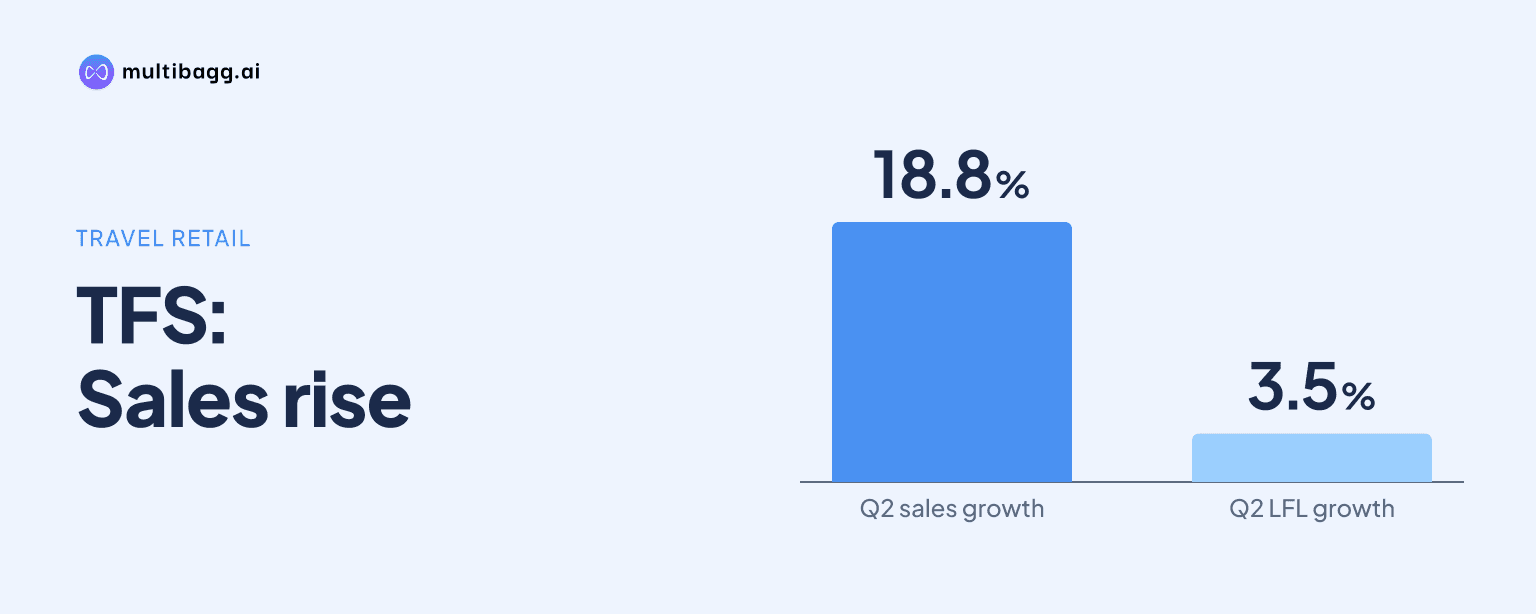
Travel Food Services Limited, or TFS, increased system-wide sales by 18.8% year on year to Rs 865 crore in Q2 FY27 even as passenger traffic at its managed airports declined 4.8%. The quarter ended September 30, 2026 showed growth from existing outlets and network additions despite weaker domestic aviation demand and higher consumer costs.
Know Travel Food Services inside out
Results, valuation, peers and who's buying, in one view.
How did TFS grow sales while passenger traffic declined?
TFS grew Q2 FY27 system-wide sales by 18.8% to Rs 865 crore while passenger traffic at its managed airports fell 4.8% year on year. Management called the quarter one of the toughest for Indian aviation in the post-Covid period, citing higher domestic airfares, airline capacity rationalisation and schedule changes as pressures on traffic.
The difference was also visible in H1 FY27. System-wide sales increased 18.4% to Rs 1,710 crore during the six months ended September 30, 2026, while passenger traffic at TFS-managed airports declined 2.2%. Management said international traffic remained lower year on year after disruption from the West Asia conflict in Q1, although the pace of decline eased in Q2.
Management attributed the sales outcome to actions within its operating control, including menu and product-mix work, premiumisation and offerings for different passenger segments and price points. During the six-month period, TFS cited its Onam Sadya Thali and Ganesh Chaturthi specials as examples of regional and festive offerings, alongside inventory, supply-chain, overhead and manpower controls.
What drove TFS's Q2 FY27 sales growth?
TFS said both its existing portfolio and new contracts supported Q2 FY27 system-wide sales growth, with like-for-like sales up 3.5% and net contract gains contributing 11.1%. The disclosed components show new contracts supplied the larger part of growth, while the existing portfolio still delivered positive like-for-like sales during a 4.8% decline in passenger traffic.
More than 70 travel quick-service restaurant, or QSR, outlets were mobilised in the 12 months before the November 13, 2026 call. TFS said these units were mainly across Delhi, Cochin, Navi Mumbai, Noida and Bhogapuram airports, while its lounge aggregation business also contributed to net contract gains.
Consolidated sales rose 19.5% year on year to Rs 430 crore in Q2 FY27, slightly faster than the 18.8% system-wide increase. Consolidated like-for-like sales grew 6.6%, compared with 3.5% system-wide, while consolidated net contract gains were 11%. In H1 FY27, consolidated sales rose 20.1% to Rs 880 crore, with 5.3% like-for-like growth and 15.7% net contract gains.
Management said the timing of openings affects the reported contribution from contract gains because units opened later in a period do not contribute for a full year. It described new-contract growth as lumpy rather than a fixed annual percentage, while identifying the more than 70 units mobilised over the preceding 12 months as the principal source of recent expansion.
How did TFS's profitability change in Q2 FY27?
TFS reported consolidated earnings before interest, tax, depreciation and amortisation, or EBITDA, of Rs 160 crore in Q2 FY27, up 16.8% year on year. EBITDA margin was 37.1%, down from 38.0% in the prior-year quarter, as employee and other operating costs rose while newly mobilised locations were still building revenue.
Reported consolidated profit after tax, or PAT, increased 50.5% year on year to Rs 147 crore in Q2 FY27. This included a Rs 46.8 crore provision write-back following completion of reconciliations with airport counterparties on rent and other matters. Excluding the write-back, management said Q2 PAT was Rs 100 crore, representing 2.7% year-on-year growth.
The H1 FY27 figures similarly included a non-operating accounting benefit. Reported PAT rose 43.2% year on year to Rs 276 crore, including Rs 56.6 crore of provision write-backs, of which Rs 46.8 crore was recorded in Q2. Management said PAT excluding these write-backs was Rs 220 crore in H1, up 13.8% year on year.
Got a follow-up? Ask IRIS
How is TFS expanding its airport network?
TFS expanded from 18 airports to 22 airports and increased its outlet count from 501 to 570 during the 12 months discussed on the call. Its brand portfolio rose by 21 to 156 brands, including Foo and Brijwasi, providing the larger platform behind the 11.1% Q2 FY27 system-wide net contract gains.
At Bengaluru Terminal 1, TFS opened The Filter Coffee, its first travel QSR outlet at the terminal after operating lounges there. Management said another QSR outlet was under construction at the same terminal. It also said locations in Noida and additional outlets and lounges in Delhi and Cochin were in ramp-up, carrying pre-operating costs before revenue matures.
TFS's joint ventures added capacity at major airports. GMR Hospitality Limited, its venture with GMR Airports, secured the travel QSR concession for Terminal 3 at Delhi Airport, covering nearly 50 outlets compared with 32 previously operated there. Semolina Kitchens, its joint venture with Adani Airports, increased its network from 115 to 154 outlets over the year, including at Navi Mumbai International Airport.
GMR Hospitality also began operations at Bhogapuram Airport with six travel QSR outlets, with further units under fitout. Management said early participation in a greenfield airport allows the business to establish an operating base as connectivity and passenger volumes develop, although such locations can initially add costs before sales scale.
What is TFS expecting in H2 FY27?
TFS expects operating conditions to improve gradually rather than immediately in H2 FY27, according to management. It cited the seasonally stronger second half, airline winter schedules indicating progressive capacity restoration and possible moderation in crude and fuel prices after the 4.8% Q2 FY27 traffic decline.
Management said it would continue its cost and efficiency measures while pursuing its plan to deepen operations at existing airports, enter new and greenfield airports, and scale EATS across passenger services. Internationally, TFS said its focus remained on lounge opportunities in Asia-Pacific and the Middle East, while it selectively evaluates expressway opportunities in India.
TFS reported a debt-free consolidated balance sheet and cash of about Rs 1,030 crore as of September 30, 2026. Management said receivables had progressively normalised in H1 following a timing-related build-up associated with EATS, and presented the cash balance as funding flexibility for its growth pipeline subject to capital-allocation and return discipline.
Conclusion
TFS delivered sales growth substantially above airport passenger traffic in Q2 FY27: system-wide sales increased 18.8% to Rs 865 crore while traffic declined 4.8%. Positive like-for-like sales, 11.1% net contract gains and a network expanded by more than 70 QSR units supported that result, although EBITDA margin declined 0.9 percentage points to 37.1% as newer sites ramped up.
The next results should show whether seasonal travel and airline winter capacity additions improve traffic and the contribution from newer units. Management has identified ramp-up operations at Noida, Delhi, Cochin and Bhogapuram, while the Terminal 3 Delhi concession covers nearly 50 outlets, making the pace of revenue build-up and associated operating costs key matters to watch.