










Vegorama Punjabi Angithi Limited links dining to kitchen sales
Key highlights
- Vegorama says its Gurugram dining outlet could lift revenue at 10 to 12 nearby cloud kitchens by 30% to 35%.
- The owned Gurugram site will have 4 storeys and seating for 250 covers.
- Management expects at least Rs 10 lakh to Rs 12 lakh of daily venue revenue within 3 to 4 months.
- Vegorama expects Gurugram business to grow 20% to 25% annually through March FY2027.
powered by IRIS
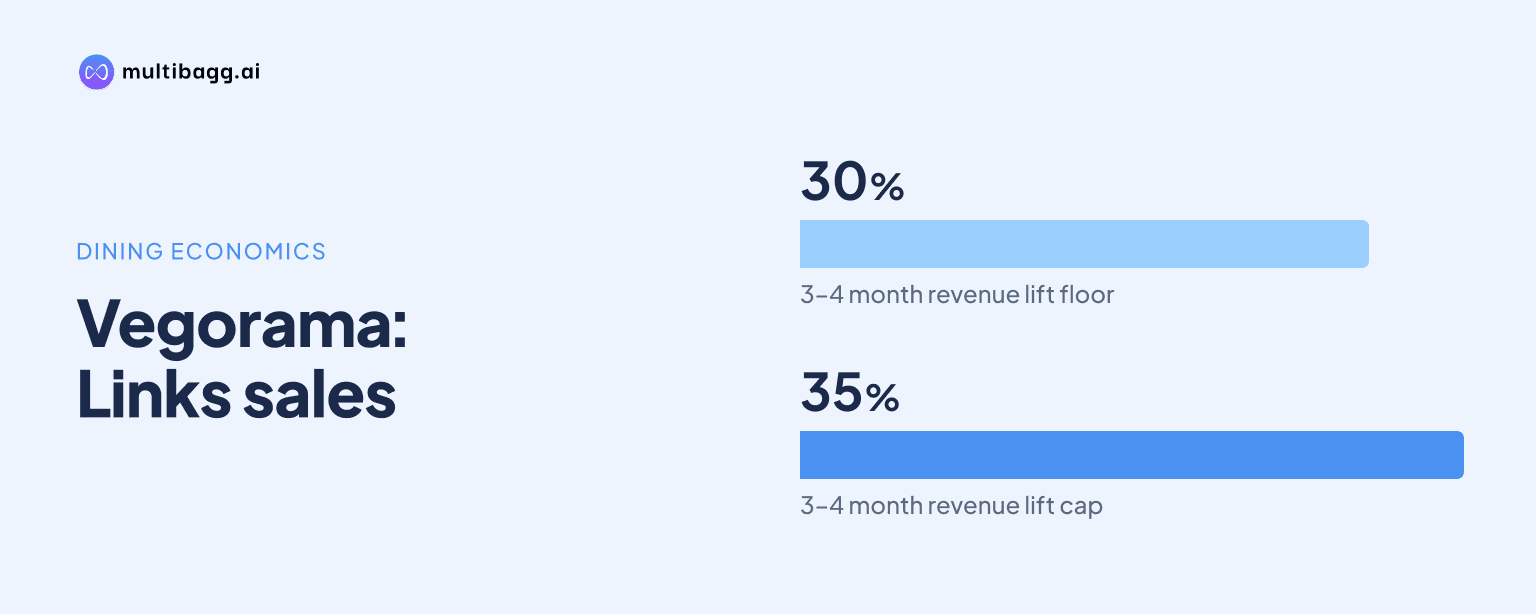
Vegorama Punjabi Angithi Limited says its owned Gurugram dining project is designed to increase revenue at 10 to 12 nearby cloud kitchens by 30% to 35%, using a four-storey physical site as a brand-awareness anchor rather than launching a broad dine-in rollout.
Know Vegorama Punjabi Angithi inside out
Results, valuation, peers and who's buying, in one view.
Why is Vegorama opening a Gurugram dining outlet?
Vegorama says it is opening the Gurugram outlet to create a physical brand presence that can increase delivery orders in the surrounding cloud-kitchen network. Management told an investor that customers currently encounter the brand through Zomato, Swiggy, Toing and its own app, while a large visible outlet could increase familiarity among local customers. The stated mechanism is to use dine-in awareness to support home-delivery demand rather than replace cloud kitchens.
Management compared the proposed Gurugram setup with its Delhi experience, where it said Vegorama has two dining outlets and 10 outlets in their vicinity. According to management, that combination lets customers use both the dine-in format and home delivery. The Gurugram site is intended to apply the same approach in a market management described as developing, with flats expected to be occupied over time.
How large is Vegorama's Gurugram dining project?
Vegorama says the Gurugram location will be a four-storey dining outlet with seating for 250 covers. Management described it as a three-to-four-floor dining store rather than a conventional banquet-hall business. The venue is also expected to include a small celebration hall for 50 to 80 people, for events such as Friday parties, conferences, business meetings and tea-coffee meetings.
Management said the project is being developed on property owned by Vegorama. It said the site will carry no rent and should not require major capital expenditure after opening that could leave capital tied up. Management also said diners can be billed directly, although aggregators will remain present for a smaller portion of the business.
Is Vegorama planning a broad dine-in restaurant expansion?
Vegorama says it has no mission to open dining outlets widely and describes the Gurugram site as an owned-property project. Management said its operating approach is to place one dining outlet among roughly every 10 stores, rather than establish a standalone restaurant chain. It also said Punjabi Angithi has operated dining alongside cloud kitchens from its earlier days and currently has two dining outlets.
The company’s stated expansion priority remains its kitchen network. Management said it expects to have 45 to 50 stores in 2027-28, including Maa Ka Khana kitchens, compared with an investor’s reference to 31 stores by March 2027. Management set a Rs 365 crore revenue mission for 2027-28 and agreed that an investor’s Rs 350 crore to Rs 400 crore kitchen calculation did not include dining revenue.
Management said it had been planning an owned large-format Gurugram site for five years and linked it to the initial public offering objective of developing the entire Gurugram market. It expects Gurugram business to grow by 20% to 25% annually through March FY2027. That projection is management’s target and depends on improving brand awareness and making the city more comparable with Delhi for Vegorama.
Got a follow-up? Ask IRIS
What revenue and cost assumptions has Vegorama disclosed?
Vegorama management said it expects the 250-cover Gurugram location to generate at least Rs 10 lakh to Rs 12 lakh of daily revenue within three to four months. This is a management aspiration rather than reported revenue. Management said the venue would need time after opening to inform its customer database and build customer participation at the physical destination.
Management said direct dine-in billing changes the commission structure relative to delivery. It stated that Zomato commission at the location would be 5% to 10% where the aggregator is used, while customers at the outlet can be billed directly. In a separate discussion of smaller delivery orders, management cited a 28% platform cost and estimated that an in-house rider network would still cost about 22% after salaries, fuel and maintenance.
How does the dining project fit Vegorama's delivery strategy?
Vegorama says fresh food and preparation speed remain central to its delivery model. Management said its kitchen preparation time, or KPT, is 15 to 20 minutes from order placement, and that it focuses on live food instead of frozen products. The Gurugram outlet is intended to reinforce that offer by giving customers a physical experience of the brand that may lead to later app and delivery orders.
Vegorama is not seeking to immediately replace aggregators with its own fleet. Management said it launched its own app after the May 2026 initial public offering, alongside an artificial-intelligence-enabled call centre that routes customers to the relevant Delhi or Gurugram outlet. It said own-channel sales increased from 11% to 15%-16%, while customers ordering at 0% commission generate Rs 2 crore to Rs 3 crore in monthly revenue.
Management said each outlet has four to five own riders focused on catering, bulk thalis and office bookings, including orders of Rs 5,000, Rs 10,000 and Rs 20,000. Small orders continue to flow through Zomato and Swiggy because order peaks, including Saturdays and Sundays, require rider capacity. The dining project therefore complements the aggregator-led network and direct-order channels rather than replacing either of them.
Conclusion
Vegorama’s Gurugram project is presented as a single owned-property brand anchor for its cloud-kitchen network, not a shift to a broad dine-in strategy. Management’s central operating claim is that the four-storey, 250-cover venue can lift revenue at 10 to 12 nearby kitchens by 30% to 35%, while direct dine-in billing can reduce reliance on delivery commissions.
The next items to watch are the outlet’s opening, its revenue over the three to four months management says it needs to establish the destination, and whether nearby kitchens show the projected sales uplift. Management has also set a target of 20% to 25% annual Gurugram business growth through March FY2027 and a Rs 365 crore company revenue mission for 2027-28.