










Visaka targets December 2027-28 Tonk start as boards run full
Key highlights
- Visaka targets a December 2027-28 start for its Tonk boards plant.
- The Tonk project is designed to add 6,000 tonnes per month, or about 72,000 tonnes annually.
- Visaka said its existing fibre-cement board facilities are operating at 100% utilisation.
- Management cited a Rs 450 crore capital-expenditure plan over three years.
powered by IRIS
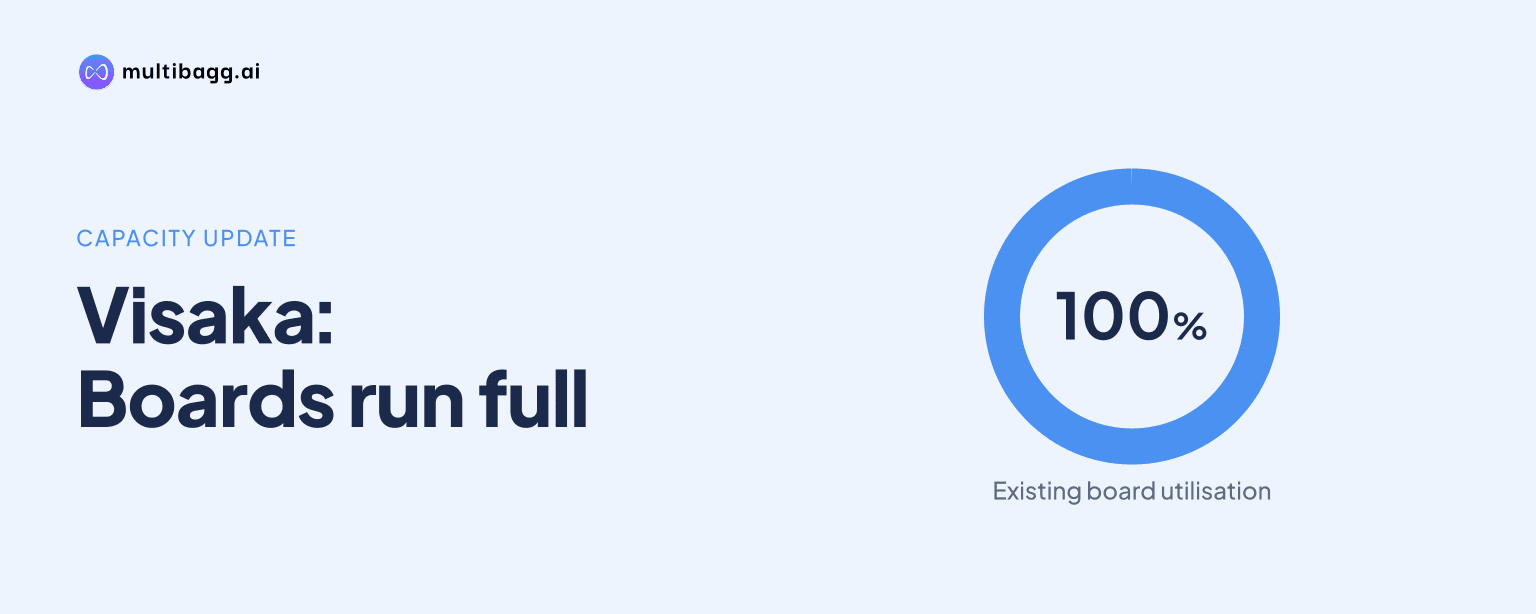
Visaka is targeting a December 2027-28 start for its Tonk, Rajasthan boards plant, which is designed to add about 72,000 tonnes of annual capacity while its existing fibre-cement board facilities operate at 100% utilisation. Management said boards and panels are the company’s principal construction-materials expansion priorities.
Know Visaka Industries inside out
Results, valuation, peers and who's buying, in one view.
When will Visaka's Tonk boards plant begin operations?
Visaka expects the Tonk facility to begin operations in December 2027 into 2028, according to management’s response during the November 16, 2026 earnings call. The Rajasthan project is planned to manufacture fibre-cement and calcium silicate boards, though management did not disclose a phased commissioning plan or a precise production ramp-up schedule.
The Tonk development forms part of a Rs 450 crore capital-expenditure plan over three years cited by management. Visaka said Tonk and construction materials are the announced elements of that plan, while details of future capacity additions will be disclosed to stock exchanges when appropriate. Management also confirmed that land-sale proceeds would be deployed in the business and further capital expenditure.
Why is Visaka adding fibre-cement board capacity?
Visaka is adding capacity because its fibre-cement board plants are operating at 100% utilisation, according to management. It said capacity had also been expanded at existing plants in the prior year, but demand for boards and panels now requires the Tonk addition.
Management said Visaka is the Number 1 manufacturer of fibre-cement boards and intends to retain that position through further capacity, product range and distribution. Its V-Next boards are autoclaved cement boards used in prefabricated construction, including false ceilings, exterior walls, interior panels and applications that can substitute for plywood and gypsum boards.
The expansion case also depends on broadening adoption. Management identified limited awareness among architects and contractors, along with specialised skill requirements for handling boards, as barriers for V-Next. Visaka said it is expanding market presence while adding capacity, rather than relying only on its existing 100% utilisation level.
How much capacity will Visaka add at Tonk?
Visaka said Tonk will add 6,000 tonnes per month, equivalent to about 72,000 tonnes annually. Management did not disclose the existing network’s total board capacity, so the percentage increase represented by Tonk cannot be calculated from the earnings call.
The new plant will make fibre-cement and calcium silicate boards, rather than roofing sheets. This is important because management described boards as having broadly consistent demand and supply, while roofing-sheet volumes are seasonal, with the first and fourth quarters usually carrying higher sales volumes than the second and third quarters.
That difference affects the interpretation of group results. Management said roofing sheets largely determine quarterly performance and that delayed or lower rainfall in the current year had supported roofing-sheet volumes. In the same call, it cited Q2 operating profit of about Rs 12.5 crore after exceptional items and taxes, but did not provide separate boards revenue or profit figures.
Got a follow-up? Ask IRIS
How does Visaka plan to grow boards and panels?
Visaka plans to grow boards and panels through premium products, wider applications and higher utilisation of manufacturing assets. Management said panels have scope in institutional applications, industrial products and prefabricated structures, while boards are marketed for their moisture resistance, fire resistance, water resistance, termite resistance and durability.
Management said fibre-cement board margins are about 14% to 15% when discussing longer-term plans. It identified designer and premium boards as differentiators, saying new designs are released every quarter and that Visaka has a larger distribution channel than competitors. It also said pricing differences versus competitors vary by state and are not significant overall.
Visaka is also positioning V-Next around installed and life-cycle costs rather than initial material cost alone. Management said V-Next may have a higher initial cost than some alternatives, but cited lower maintenance, durability and faster, cleaner drywall construction. The strategy depends on greater acceptance by architects, contractors and installers alongside Tonk’s planned 72,000 tonnes of annual capacity.
Will Visaka open its own board retail stores?
Visaka does not plan to open its own retail stores for fibre-cement boards, management said. Instead, the company plans to expand its dealer base in individual states through a distribution network developed during more than 40 years in the industry.
That dealer-led approach differs from a company-operated retail education model. Management said it is addressing V-Next awareness and specialised-skill barriers, while using dealer expansion to reach more customers. It did not disclose dealer numbers, a state-by-state rollout schedule or a board-specific retail-revenue target.
The focus on boards contrasts with ATUM, Visaka’s integrated roofing and solar-power product. ATUM has 30 megawatts of annual capacity and current utilisation of about 10 megawatts, while fibre-cement boards are at 100% utilisation. Management described ATUM as an emerging market and said its current order book and volumes are not material to the company’s overall business.
Conclusion
Visaka’s Tonk target is intended to address a defined capacity constraint in fibre-cement boards: existing facilities are operating at 100% utilisation, and the new plant is planned to add 6,000 tonnes per month, or about 72,000 tonnes annually. Management is pairing the project with premium designs, dealer expansion and promotion of board uses in partitions, interiors, ceilings and exterior walls.
The next items to watch are construction and commissioning updates for Tonk ahead of the stated December 2027-28 start, as management has not disclosed the project’s individual cost or current board capacity. Investors can also monitor disclosures on the remaining Rs 450 crore three-year capital plan and progress toward management’s stated three-year goals of 10% to 12% compound annual top-line growth and 10% to 12% EBITDA growth.