










ZIM submits final EU-GMP response after Australian GMP approval
Key highlights
- ZIM received TGA GMP certification, which it said opens the Australian market.
- ZIM was submitting its final EU-GMP CAPA response in Q3 FY27, subject to satisfactory verification.
- ZIM made 48 regulatory filings and received four marketing authorisations in Q2 FY27.
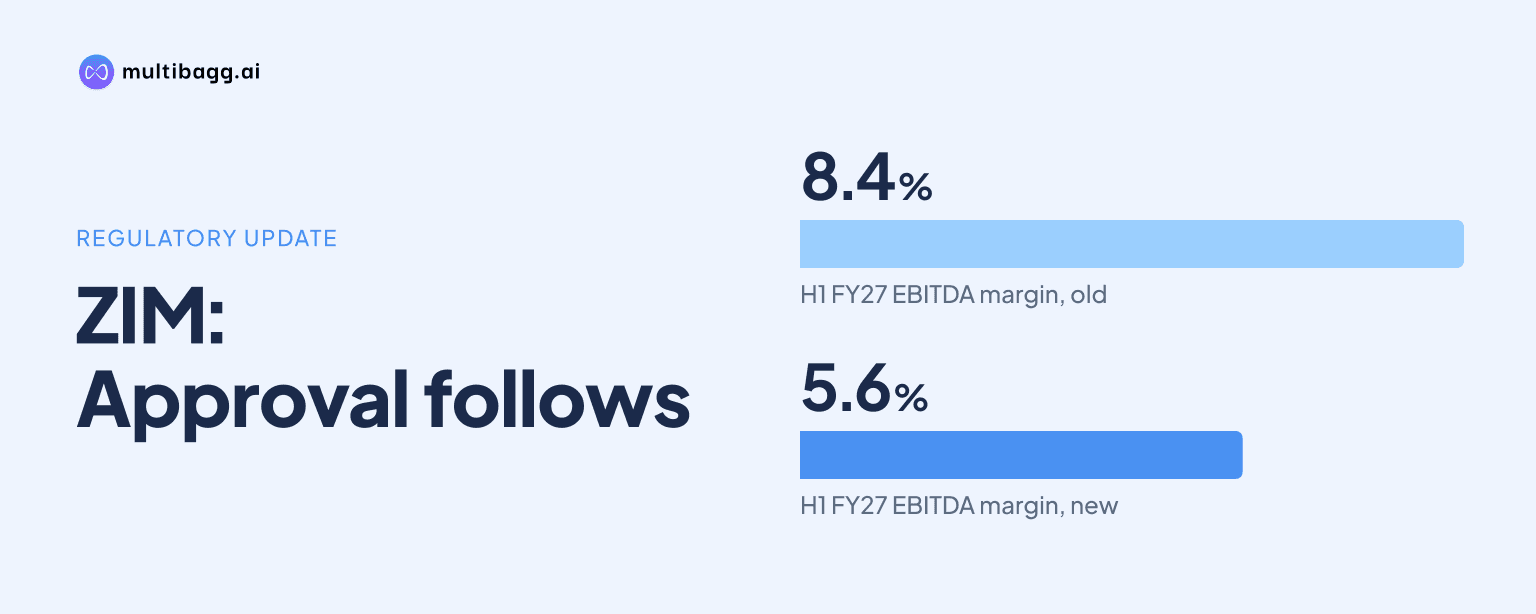
- H1 FY27 operating income rose 24.4% to Rs 199.6 crore, while EBITDA margin declined to 5.6% from 8.4%.
powered by IRIS
ZIM Laboratories Limited secured Australian Therapeutic Goods Administration GMP certification and was submitting its final response to European Union inspector comments in Q3 FY27, after completing most of its corrective and preventive action remediation plan. ZIM also recorded 48 regulatory filings in Q2 FY27, although EU-GMP acceptance remains subject to satisfactory verification.
Know Zim Laboratories inside out
Results, valuation, peers and who's buying, in one view.
What is ZIM's EU-GMP remediation status?
ZIM's EU-GMP remediation is at the final-response stage, not at confirmed re-certification. In Q3 FY27, ZIM said it had received final comments from EU inspectors and was submitting its response to EU authorities that week; it also stated that acceptance of the corrective and preventive action, or CAPA, would depend on satisfactory verification.
The programme began following a June/July EU-GMP inspection listed in Q2 FY26. ZIM appointed an external consultant, submitted a comprehensive CAPA remediation plan and placed capital-expenditure orders for key systems. It also finalised accredited contract manufacturing for Star Product 1 at an alternate site, creating an additional manufacturing route while the EU process continued.
In Q3 FY26, ZIM submitted CAPA progress through October 2026, appointed a European consultant, strengthened its quality management system team and hired a quality-assurance head. Q4 FY26 included independent assessments by European and Indian consultants, effectiveness checks, remediation validation and a pre-audit, alongside the potential for a facility re-audit by European Medicines Agency, or EMA, inspectors.
ZIM marked its Q2 FY27 CAPA submission, planned after receipt of the final EMA inspector report, as complete. Its Q3 FY27 plan was still in progress and covered the final inspector response, a secured developed-market order for Star Product 1, and raw-material pre-ordering and production planning for potential European Union and United Kingdom supplies.
What does Australian GMP certification mean for ZIM?
Australian GMP certification gives ZIM access to the Australian market, according to the presentation. The Therapeutic Goods Administration, or TGA, granted the approval while the EU-GMP remediation remains subject to EU authority verification, making the Australian certification a completed regulatory outcome rather than a pending one.
ZIM linked Australia with preparation for the EU, UK and other developed markets. It said it had established plants, processes and people for commercial entry in these markets, but its business remained limited to rest-of-world, or RoW, markets while EU-GMP re-certification was pending. The presentation did not disclose Australian sales, launch timing or revenue from the TGA certification.
The company is also building supply readiness alongside regulatory work. In Q1 FY27, ZIM listed the launch of Star Product 1 in alternate markets and an extension of its alternate-manufacturing strategy to other markets as completed actions. In Q3 FY27, it listed a developed-market order for Star Product 1 and advance EU and UK supply planning as in progress.
This distinction matters because Australian approval does not resolve the EU-GMP matter. ZIM's presentation says the final CAPA response must be accepted after satisfactory verification, while its EU and UK activity is described as planning for raw materials and production readiness rather than as current commercial supply.
Got a follow-up? Ask IRIS
How large was ZIM's Q2 FY27 regulatory pipeline?
ZIM made 48 regulatory filings and received four marketing authorisations in Q2 FY27 across developed, Pharmerging and RoW markets. The filing total comprised 34 New Innovative Products, two oral thin films and 12 finished-formulation generics, while the four authorisations comprised one New Innovative Product and three oral thin films.
The quarter's filings exceeded marketing authorisations by 44, indicating that more products entered regulatory review than completed it during Q2 FY27. New Innovative Products accounted for 34 of 48 filings, whereas oral thin films accounted for three of the four authorisations. ZIM did not provide country-level approval dates or expected revenue from the filings.
The filing activity coincided with higher RoW formulation supplies. ZIM reported Q2 FY27 export revenue of Rs 90.8 crore, up 24.7% year on year, driven by increased RoW supplies. Total operating income in Q2 FY27 rose 18.9% year on year to Rs 105.4 crore, with ZIM attributing growth to formulation business in RoW markets.
How have remediation and readiness costs affected ZIM's results?
ZIM reported H1 FY27 total operating income of Rs 199.6 crore, up 24.4% from Rs 160.5 crore in H1 FY26, but EBITDA declined to Rs 11.1 crore from Rs 13.5 crore. EBITDA margin fell to 5.6% from 8.4%, and the net loss widened to Rs 6.1 crore from Rs 2.3 crore.
Management attributed the H1 FY27 earnings impact to people and process costs for developed-market readiness, non-recurring EU-GMP remediation expenses, and duplicated manufacturing during cephalosporin and Unit 3 transitions. Total expenses increased to Rs 92.9 crore from Rs 72 crore, including Rs 13.1 crore of higher employee costs and Rs 7.9 crore of higher operating expenditure.
ZIM said it spent about Rs 18 crore on EU-GMP remediation over the preceding 15 months and characterised the costs as one-time and not expected to recur. It added that consultant and CAPA-related costs had mostly been incurred and were not expected to fully recur in H2 FY27, although one-time settlement costs could arise from cost rationalisation.
Operationally, ZIM stopped production at its old cephalosporin unit after commissioning a new plant. It also shut its old Unit 3 nutraceutical ancillary facility and shifted production to a new nutraceutical facility. Management said these actions were intended to rationalise alternate costs and optimise utility and operating expenses.
Conclusion
ZIM's regulatory progress is at two different stages. TGA GMP certification has opened Australia, while EU-GMP re-certification remains conditional on the acceptance and verification of the final CAPA response. Meanwhile, 48 Q2 FY27 filings, Rs 90.8 crore of quarterly export revenue and Rs 199.6 crore of H1 FY27 operating income show continuing product and RoW activity during the unresolved EU process.
The next disclosed issue is EU authority verification of ZIM's final response. Management has also begun raw-material ordering and production readiness planning for EU and UK supplies, while progressing a developed-market order for Star Product 1. Subsequent periods will show whether the closures of the old cephalosporin plant and Unit 3, alongside lower remediation-related costs, alter the Rs 92.9 crore H1 FY27 expense base.