








Addictive Learning’s AI-data agreements remain non-binding
MAX Plan at ₹4,999/yr

Find your next multibaggerBe a Pro Investor
Research stocks and track your picks on the go. Download the app.
Key highlights
- Addictive Learning cites more than 1.7 lakh trained, assessed and verified professionals across law, accounting, compliance and finance.
- Addictive Learning says its agreements and NDAs with several global AI-data companies and big-tech multinationals are exploratory and non-binding.
- Addictive Learning reported Q2 FY27 revenue of Rs 25.3 crore, up 21% year on year, without disclosing AI-data revenue.
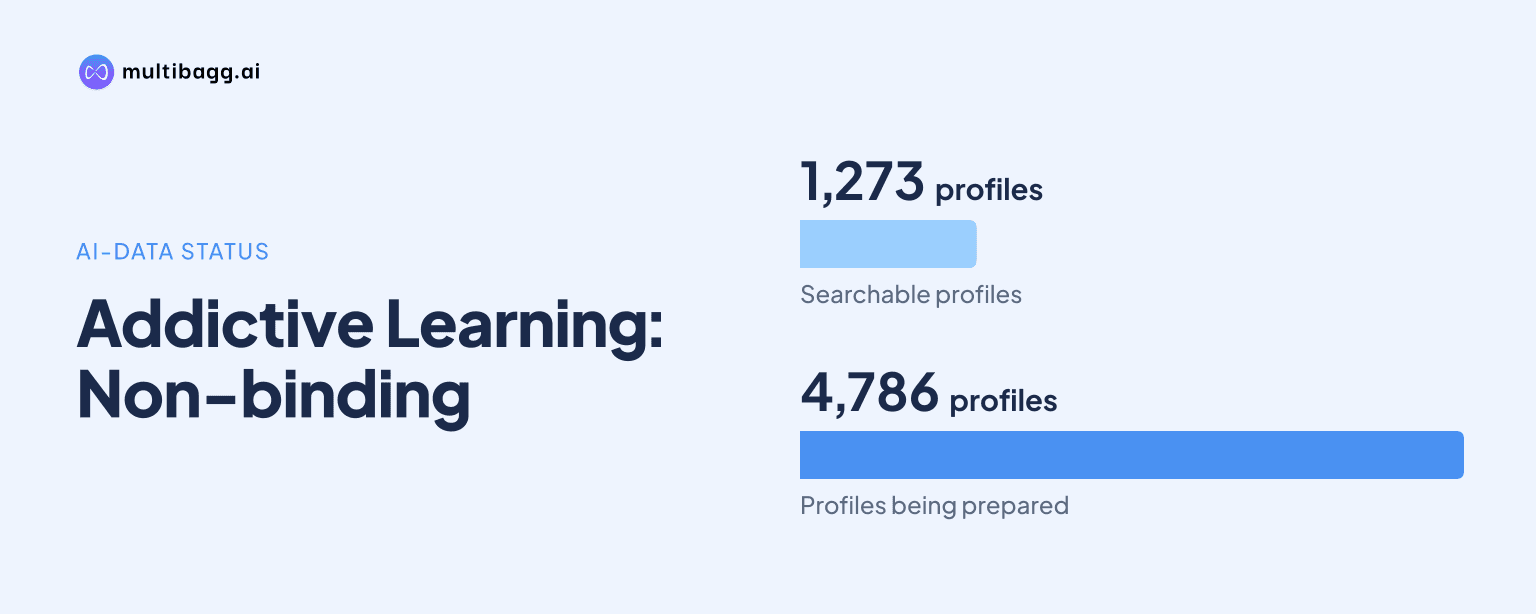
- BoardReady had 1,273 searchable profiles out of 4,786 profiles being prepared as of 23 November 2026.
powered by IRIS
Addictive Learning is seeking paid AI-data pilots using its network of more than 1.7 lakh trained, assessed and verified professionals, but the agreements it has signed with several global AI-data companies and big-tech multinational corporations are exploratory and non-binding. The presentation does not disclose customer names, contract values or AI-data revenue.
Know Addictive Learning Technology inside out
Results, valuation, peers and who's buying, in one view.
What is Addictive Learning’s AI expert-data initiative?
Addictive Learning’s initiative is to supply domain experts who can create, assess and correct professional-level data for artificial-intelligence models. The company says its pool covers law, accounting, finance and compliance, and that AI laboratories need this work for reinforcement learning from expert feedback, benchmarks and specialist datasets.
The proposition is based on Addictive Learning having already trained and assessed the professionals it intends to supply. The company says those professionals pay it to learn, unlike expert networks that must spend to find and vet specialists. Addictive Learning plans to use this model to provide expert feedback and datasets to AI labs, legal-AI companies, finance-AI companies and search engines seeking authentic Indian legal data.
The initiative is the fifth layer of Addictive Learning’s five-part model, called “Power AI”. Page 14 says the company has signed non-disclosure agreements, or NDAs, and exploratory agreements with several leading global AI-data companies and big-tech multinational corporations. Their names are withheld under NDAs, and the company explicitly describes the agreements as non-binding.
How large is Addictive Learning’s expert network for AI data?
Addictive Learning says it knows more than 1.7 lakh professionals in depth across law, accounting, compliance and finance. It describes these professionals as trained, assessed and verified, while its community and bootcamp model is intended to enable thousands of people to complete real tasks every month when a customer requires expert data at scale.
The network is materially larger than the professional pool currently disclosed for Addictive Learning’s BoardReady work-matching service. As of 23 November 2026, BoardReady had 1,273 searchable alumni profiles from 4,786 profiles being prepared for independent-director searches, compared with the 1.7 lakh-plus community cited for AI-data work across four domains. BoardReady is designed to match individuals to board roles, while the AI-data proposal is to mobilise cohorts to create, check or grade data.
Addictive Learning identifies legal and accounting tasks as priority areas for the initiative. Its presentation cites OpenAI’s 2025 GDPval benchmark, which covered 44 jobs, including lawyers, accountants and auditors, and used tasks written and graded by professionals averaging 14 years of experience. That external benchmark provides context on specialist AI testing, rather than evidence of Addictive Learning’s own delivery volumes.
What commercial traction has Addictive Learning disclosed?
Addictive Learning has disclosed discussions and exploratory agreements, not binding customer contracts or completed paid pilots. It says NDAs and exploratory agreements are in place with several global AI-data companies and big-tech multinational corporations, and management expects to turn those discussions into paid pilots. The presentation does not name any counterparty or give a date for a pilot launch.
The company is collaborating with AI labs to launch its own benchmarks for specialised legal, accounting, governance and marketing tasks. It also says a legal-data marketplace is in design and that search engines are seeking its authentic Indian legal data. Pages 14 and 15 do not specify the number of contributors, client commitments, commercial terms or revenue expectations for these projects.
Reported financial results do not identify any AI expert-data revenue. In Q2 FY27, covering July to September 2026, Addictive Learning reported consolidated revenue of Rs 25.3 crore, up 21% year on year, and profit after tax of Rs 2.29 crore, about seven times Q1. Earnings before interest, tax, depreciation and amortisation, or EBITDA, were Rs 7.7 crore, up 59% on Q1, but the presentation does not attribute any part of those results to the expert-data initiative.
Got a follow-up? Ask IRIS
Why does Addictive Learning expect demand for expert legal and accounting data?
Addictive Learning expects demand because AI is moving from chat functions towards professional work that requires experienced people to write, check and grade specialist outputs. The company points to OpenAI’s 44-job GDPval benchmark as an example of testing AI on real professional tasks, including law, accounting and audit work.
The presentation also cites third-party estimates of a global expert-data market in 2026, while warning that estimates vary. It highlights Harvey, a legal-AI company used by 80 of the top 100 US law firms, according to a 2026 company announcement. These examples explain management’s market rationale, but they are not customer commitments or revenue evidence for Addictive Learning.
Addictive Learning’s stated difference is its source of professional supply. It says most expert networks incur substantial costs to find and assess specialists, whereas its professionals have already been trained and assessed through its programmes. Whether that model can meet customers’ requirements for data quality, speed, rights management and pricing remains undisclosed.
What must happen before Addictive Learning can report AI-data revenue?
Addictive Learning must convert exploratory discussions into paid pilots and establish how experts will deliver recurring work. The presentation identifies three potential outputs: reinforcement learning from expert feedback, benchmark work and specialist datasets. It does not disclose pricing, expert compensation, client volumes, data-rights terms, take rates or margins for any of them.
The company must also develop the legal-data marketplace beyond its current design stage. Its wider opportunity-platform plan starts with BoardReady, where a first pilot involving 50 alumni was starting as of 23 November 2026, followed by Offshore Accountant for US accounting and then other categories. AI-data activity is presented as part of this broader effort to connect trained professionals with global work opportunities.
Addictive Learning reported Rs 10.7 crore of cash and bonds and zero debt in Q2 FY27, saying all investment had been paid from its own cash. This gives context on its disclosed financial position, but the presentation does not state how much will be allocated to expert-data products, benchmark development or the legal-data marketplace.
Conclusion
Addictive Learning has identified a potential supply base of more than 1.7 lakh professionals for expert feedback, benchmarks and specialist datasets in law, accounting, finance and compliance. Its stated advantage is that these professionals are already trained and assessed through its programmes, but the commercial position disclosed so far is limited to unnamed, exploratory and non-binding agreements rather than binding contracts, paid pilots or separately reported revenue.
The next evidence to watch is whether management announces paid pilots from its AI-data discussions and discloses customer, pricing, contributor-volume or revenue details. Progress on the legal-data marketplace, which remains in design, and on specialised benchmarks being developed with AI labs would indicate whether the initiative is moving from discussions into an operating product.

