










BSE Limited ₹4,000 Call OI Sets Key November Expiry Barrier
Key highlights
- BSE’s ₹4,000 call held 10.28 lakh open interest for the 23 November 2026 expiry.
- The ₹4,000 strike recorded 36.61 lakh call volume, the highest reported in the option chain.
- BSE options implied a ₹180.60, or 4.62%, move from the reported ₹3,904.90 spot price.
- The implied expiry range was ₹3,724.30 to ₹4,085.50 with 11 days remaining.
powered by IRIS
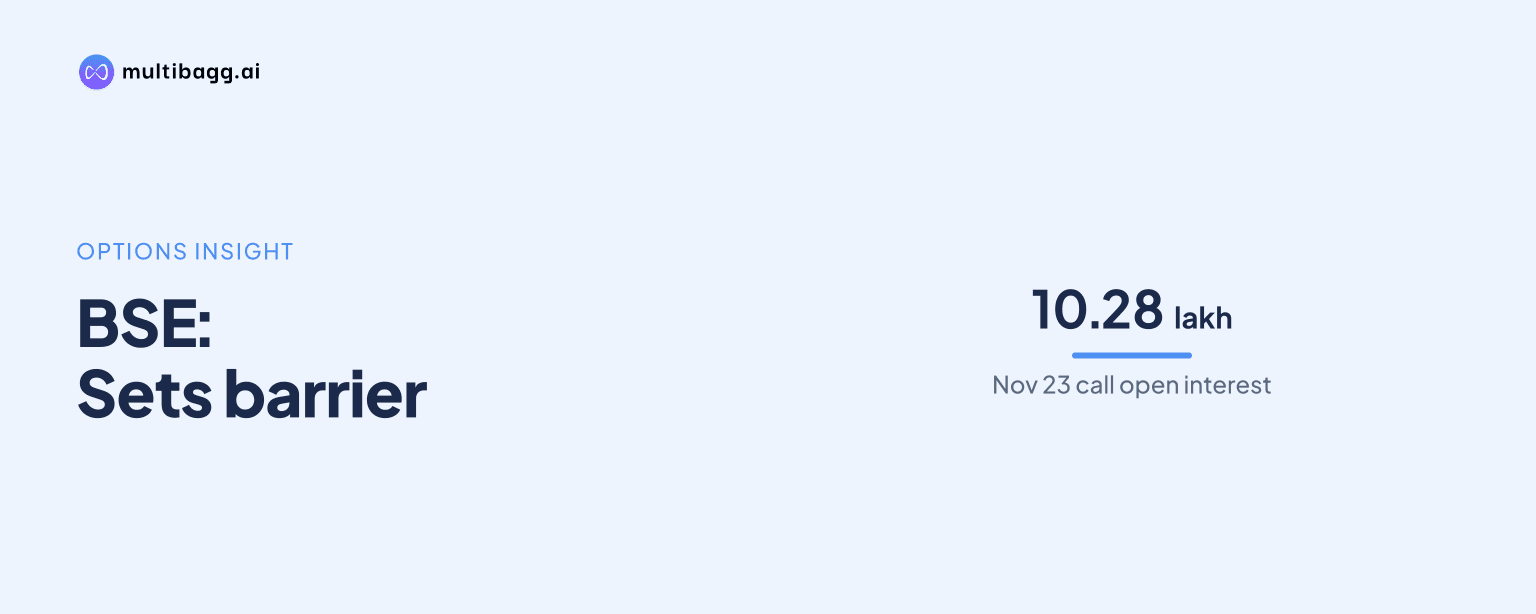
BSE Limited’s ₹4,000 call was the key near-term barrier for the 23 November 2026 expiry, carrying 10.28 lakh call open interest while the reported spot price was ₹3,904.90. The options-implied range of ₹3,724.30 to ₹4,085.50 left room above ₹4,000, but did not establish that a breakout would occur.
Why is BSE’s ₹4,000 call strike in focus?
BSE’s ₹4,000 call strike is in focus because it had the highest reported call open interest, at 10.28 lakh, for the 23 November expiry. The strike also recorded 36.61 lakh in call volume, the highest reported volume in the option chain. Its concentration close to the prevailing cash-market price made it the most visible upside level for traders.
At the reported spot price of ₹3,904.90, the ₹4,000 call was out of the money by ₹95.10. The share price would need to move above the strike by expiry for the option to have intrinsic value. This is why the concentration can be read as a resistance reference rather than evidence that BSE will necessarily move through the level.
What range are BSE options pricing before 23 November?
BSE options were pricing an expected move of plus or minus ₹180.60, or 4.62%, from the ₹3,904.90 spot price for the 23 November expiry. This calculation, based on the combined premium of the at-the-money ₹3,900 call and put, produced an implied range of ₹3,724.30 to ₹4,085.50 with 11 days remaining.
The upper end of ₹4,085.50 is above the ₹4,000 resistance strike. That means the options market was pricing enough potential movement for BSE to cross the level before expiry. However, an implied range reflects what traders were paying for movement in either direction, not a forecast of where the share will settle.
Where are BSE’s nearby support and resistance levels?
BSE’s option chain marked ₹3,900 as the main volume-based support area and ₹4,000 as the main call resistance level. Separately, reported open-interest support was at ₹3,800, where put open interest was 5.12 lakh. These levels frame the nearby range being watched into expiry.
The max-pain reading was ₹3,700 as of 15:40 IST on 12 November 2026, below both the reported spot price and the ₹3,800 open-interest support. Max pain is an options-chain calculation and should not be treated as a price target. It adds another reference point, but it does not override price action around ₹3,900 or the substantial call positioning at ₹4,000.
Got a follow-up? Ask IRIS
What does the ₹3,900 straddle say about BSE volatility?
BSE’s at-the-money ₹3,900 straddle was priced at ₹180.60, consisting of a ₹90 call and a ₹90.60 put, with implied volatility at 33.17%. The straddle is the basis for the reported expected move and captures the premium traders were paying for near-term volatility rather than a directional outcome.
For holders of the ₹4,000 call, a move above the strike matters for intrinsic value, but it is not the only variable affecting the premium. With limited time left before expiry, time decay and changes in implied volatility can affect the option price. Reported quotes for the contract varied across updates, including a ₹54.80 premium shown at 02:53 on 13 November 2026.
What should BSE option traders monitor into expiry?
BSE option traders should monitor whether the cash price can hold the ₹3,900 volume-support area and absorb the heavy call positioning at ₹4,000. A sustained move through the strike would be closely watched because the implied upper range extends to ₹4,085.50, while a failure to hold higher levels would leave out-of-the-money calls more exposed to time decay.
A separate reported update said BSE closed at ₹3,930.10 on 12 November, with 6,599 ₹4,000 call contracts traded and 5,657 contracts of open interest in that snapshot. The context also stated that BSE was above its 5-day, 20-day, 50-day, 100-day and 200-day moving averages. These observations support attention on the upside strike, but they do not remove the expiry-related risk in a short-dated call.
Conclusion
The combined options data places ₹4,000 at the centre of BSE’s 23 November expiry setup. The strike had 10.28 lakh call open interest and 36.61 lakh call volume while spot was reported at ₹3,904.90, making it a clear nearby resistance level. The ₹3,900 support reference and the ₹3,724.30 to ₹4,085.50 implied range show that the market was pricing scope for movement on either side.
The next point to watch is BSE’s ability to hold ₹3,900 and trade decisively through ₹4,000 before the scheduled Monday, 23 November 2026 expiry. Traders will also watch changes in open interest, the ₹3,900 straddle premium and implied volatility, since all can alter the risk profile of the ₹4,000 call as time runs down.