










Concord Enviro Systems Limited shifts assembly as Sharjah hits 50%-60%
Key highlights
- Concord Enviro Systems shifted many export-project assembly activities from Sharjah to India and now ships directly to clients.
- Sharjah is operating at 50% to 60% utilisation, while membrane manufacturing there remains unchanged.
- Concord Enviro Systems expects to review its scaled-back Sharjah expansion investment in Q4.
- Management reported an order book of about Rs 714 crore and maintained a 15% to 20% current-year growth expectation.
powered by IRIS
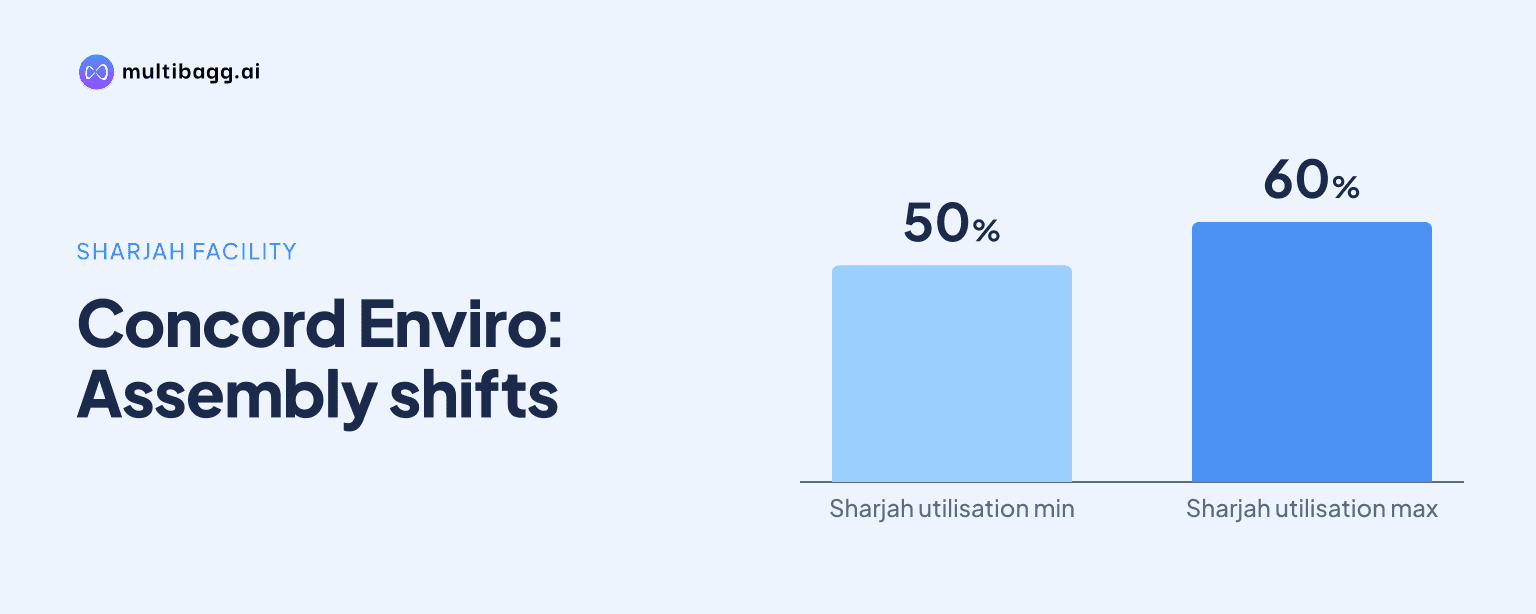
Concord Enviro Systems Limited has moved much of its export-project assembly from Sharjah to India while retaining Sharjah as its membrane-production hub; management said the Sharjah site is operating at 50% to 60% utilisation after regional disruption increased the cost of executing certain activities there.
Know Concord Enviro Systems inside out
Results, valuation, peers and who's buying, in one view.
Why did Concord Enviro Systems move export-project assembly to India?
Concord Enviro Systems moved non-core Sharjah activities, including assembly for many export projects, back to India because those activities had become too expensive to execute in Sharjah. Management said the Indian facility is now carrying the heavier workload and is shipping assembled export projects directly to clients rather than using Sharjah as the assembly point.
The change is a recalibration of activities rather than a closure of the Sharjah operation. Management linked its response to the regional conflict and said business-continuity policies had been activated to reduce the continuing disruption. The company had previously described the first quarter, or Q1, as poor because of constraints associated with the Gulf conflict.
What is Sharjah utilisation now at Concord Enviro Systems?
Concord Enviro Systems said Sharjah is operating at 50% to 60% capacity and expects that range to continue until it reviews investment decisions in the fourth quarter, or Q4. Management said utilisation declined because project-assembly work formerly performed in Sharjah has shifted to India.
The 50% to 60% figure does not mean every Sharjah activity has been reduced equally. Management said the membrane-manufacturing and membrane-product businesses at the site were untouched, citing demand from Indian volumes and overseas projects. The lower overall utilisation instead reflects the removal of non-core and higher-cost export-project activities.
Management has not given a date for Sharjah to return to a higher utilisation level. It said it will first assess how the crisis develops, then make an informed decision once conditions stabilise. The planned Q4 review is therefore the stated decision point for the scale-up of the Sharjah operation.
What work will remain in Sharjah for Concord Enviro Systems?
Concord Enviro Systems will keep all membrane products in Sharjah, where it manufactures and exports them. Management said the facility handles the process from casting or coating membranes from raw fabric through rolling and welding, rather than only undertaking final rolling work.
The Sharjah site also supports the company's local-manufacturing pitch in Middle Eastern projects. Management said locally manufactured products are an important part of its offering in the region, particularly for tertiary sewage recycling, and said its first demonstration cycle there had begun with orders expected in Q3.
Management distinguished its industrial-waste membranes from a broad range of Chinese products used across applications. It said Concord Enviro Systems' products address industrial waste and can command a premium based on longevity and value provided to industrial clients. That statement was management's market assessment, not a disclosed market-share measure.
Got a follow-up? Ask IRIS
How does the shift affect Concord Enviro Systems' revenue plan?
Concord Enviro Systems said it remains confident of 15% to 20% revenue growth in the current financial year, supported by an order book of about Rs 714 crore, much of it executable during the year. Management said large steel-sector deliveries scheduled for Q4 are expected to make revenue recognition uneven between quarters.
The company explained that normal orders are typically worth Rs 5 crore to Rs 15 crore, while it categorises orders above Rs 50 crore as large orders. This mix creates quarter-to-quarter variation in project-system sales, while operations and maintenance, or O&M, and sales of spares and consumables are steadier revenue streams.
A recently disclosed solar-photovoltaic order illustrates the short execution cycle for some work. Concord Enviro Systems received the Rs 14.25 crore order in the first week of October and expected to deliver it in December, whereas the Rs 126 crore steel-sector order has a 14-month to 18-month execution cycle. Moving assembly to India may therefore allow exports to continue without requiring every short-cycle project to pass through Sharjah.
When will Concord Enviro Systems decide on Sharjah expansion?
Concord Enviro Systems has scaled back, rather than cancelled, investment in a new Sharjah facility and expects to review the project in Q4. Management said the decision will depend on how the regional crisis develops and whether conditions have stabilised sufficiently to support an expansion of operations.
The company described broader capital expenditure of Rs 30 crore to Rs 35 crore for the current financial year, including about Rs 15 crore for rebuilding and improving its Vasai facility and Rs 15 crore to Rs 20 crore of maintenance capital expenditure. It said the Vasai work is being funded largely through initial public offering proceeds.
For the next financial year, management indicated capital expenditure of about Rs 50 crore to Rs 60 crore, including a potential restart of Sharjah investment and a possible alternative manufacturing unit planned with a four-year to five-year outlook. That plan remains conditional because management had not committed to the Sharjah scale-up on the November 4, 2026 call.
Conclusion
Concord Enviro Systems has responded to regional disruption by separating its manufacturing and assembly footprint: Sharjah remains the membrane hub, while India has taken on export-project assembly and direct shipment. The immediate consequence is 50% to 60% utilisation at Sharjah, but management said membrane activity there remains supported by Indian and overseas demand.
The next item to watch is management's Q4 review of Sharjah investment and operating scale. Investors can also assess whether the current Rs 714 crore order book, including Q4 steel deliveries, supports the company's stated 15% to 20% growth expectation while the revised production footprint is in place.