










Credent targets positive cash flow in next year's second half
Key highlights
- Credent has capped credit for new clients at 30 days, compared with earlier terms of 45 to 60 days.
- Management said debtor ageing is about 60 days and is targeted to fall below 45 days.
- Credent said cash flow may turn positive by next year’s second half.
- Management said it had used about Rs 4 crore to Rs 5 crore of Rs 93.9 crore IPO proceeds for working capital.
powered by IRIS
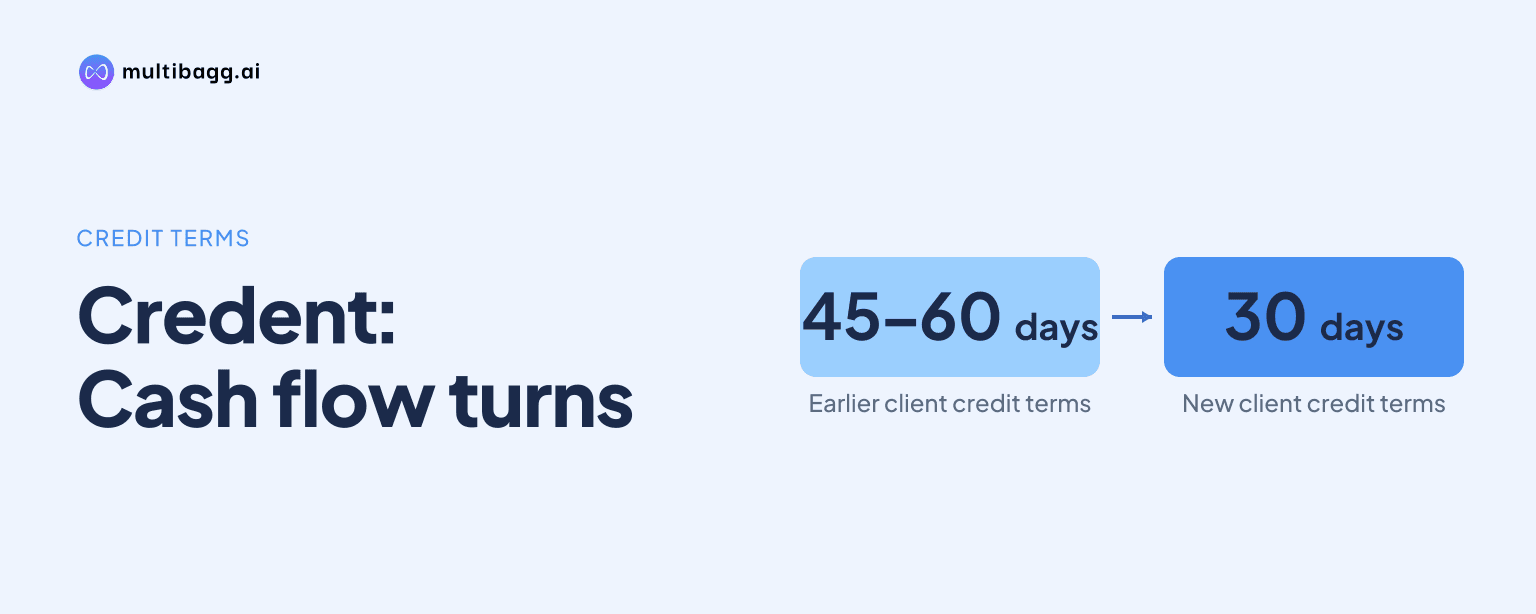
Credent Connect N Care Limited, or Credent, is targeting positive cash flow by next year’s second half after setting a maximum 30-day credit period for new clients, compared with earlier 45-to-60-day terms, and launching a prepaid On-Demand service. Management said debtor ageing is about 60 days and aims to reduce it to below 45 days.
Know Credent Connect N Care inside out
Results, valuation, peers and who's buying, in one view.
How is Credent changing customer payment terms?
Credent is restricting credit for new clients to no more than 30 days, replacing the earlier 45-to-60-day terms described by management. The company said the change is intended to improve cash collection and help reduce debtor ageing to less than 45 days.
Management said debtor ageing is currently about 60 days because enterprise clients may have a 30-day billing cycle and then pay another 30 to 45 days later. The revised terms apply to new agreements, while previous clients continue under their existing arrangements. That means any improvement in the overall receivables cycle will depend on the pace of new-client additions and collections from the legacy base.
Management described the 30-day agreements as one part of a three-part cash-flow approach, alongside prepaid business and collection improvements. It did not provide a numerical forecast for lower receivables, operating cash flow or the number of customers that will move to the revised payment terms.
What is Credent's prepaid On-Demand model?
Credent's On-Demand model is a prepaid platform through which smaller laboratories can book collection or logistics pickups before Credent delivers the service. Management said a customer receives a code, recharges a wallet and pays Credent before the pickup is fulfilled.
The service is aimed at smaller and unorganised laboratories that want to expand their network without adding fixed costs, according to management. This differs from the enterprise model, in which cash can remain tied up through billing and payment cycles. Management said the prepaid format is intended to reduce the need to place working capital into enterprise customers’ receivables.
On-Demand pricing is intended to be dynamic, based on factors including time, turnaround time, frequency and the value a customer gives in a month. Management said the charge is determined on a pickup or logistics basis rather than by the value of a patient’s test. It did not disclose an average realisation rate for the service.
Credent named Wockhardt and Thyrocare when asked about clients onboarded in the prepaid segment. Management did not disclose prepaid revenue, booking volumes, wallet balances or the share of collections expected to shift to On-Demand. The financial contribution of the model therefore remains undisclosed.
Got a follow-up? Ask IRIS
When does Credent expect cash flow to turn positive?
Credent's management said cash flow may turn positive by next year’s second half. The response was made when an investor asked whether positive cash flow could be reached by the end of the current year or in the first half of the following year.
The timing depends on a combination of shorter terms for new clients, the prepaid platform and efforts to improve collections from existing customers. Management said legacy clients remain on earlier payment arrangements, so the targeted reduction from about 60 days of debtor ageing to below 45 days is a future objective rather than a reported result.
Management linked cash conversion to its growth pace, stating that Credent has grown at a 45% compound annual growth rate, or CAGR, while facing a working-capital shortfall. It said working capital could enable faster growth, although it did not provide a cash-flow forecast or a quarterly target for debtor ageing.
Credent said it had used about Rs 4 crore to Rs 5 crore of its Rs 93.9 crore initial public offering, or IPO, proceeds for working capital at the time of the call. Management also said it expected to use approximately Rs 5 crore during September. It did not provide a full schedule for deploying the remaining IPO proceeds.
How does the cash-flow plan fit Credent's growth strategy?
Credent said its 45% CAGR growth target through 2030 is based on organic growth and excludes acquisitions. Management is targeting Rs 1,000 crore of revenue by 2030 and said it does not expect to need another market fundraising for organic growth through that period.
Management made a distinction between organic funding needs and acquisitions. It said Credent could return to the market for equity if an inorganic opportunity arose and may dilute equity for an acquisition. The company said it was considering profitable wellness or logistics businesses at multiples of 10 to 12 and with revenue below Rs 100 crore, but it had no finalised transaction.
The company said it currently generates about Rs 300 crore of revenue and estimated that organised diagnostic players’ pre-analytics spending could represent a Rs 1,000 crore addressable opportunity. Management compared an 11% industry CAGR with Credent's 45% CAGR, but both the market estimate and the growth target were management statements during the call.
Credent also described its operating model as requiring limited capital expenditure, or capex, for expansion. Management said it would enter a new city after securing a client’s minimum business guarantee. It estimated that a Rs 1,000 crore revenue scale would require a fleet of 15,000 to 16,000, compared with about 7,000 fleet at Rs 320 crore of revenue.
Conclusion
Credent’s plan combines 30-day credit terms for new clients with prepaid On-Demand bookings to change the collection mix over time. Management is seeking to reduce debtor ageing from about 60 days to below 45 days, while its stated expectation of positive cash flow by next year’s second half remains dependent on execution across new contracts, legacy collections and prepaid adoption.
The next measures to watch are debtor ageing, operating cash flow and the disclosed scale of On-Demand revenue or bookings. Management has also set a Rs 1,000 crore revenue target for 2030 and said it had used about Rs 4 crore to Rs 5 crore of Rs 93.9 crore IPO proceeds for working capital, while any acquisition would be considered separately from organic-growth funding.