










Data Patterns targets direct MoD systems with 1,100 engineers
Key highlights
- Data Patterns had a Rs 2,698 crore order book, including negotiated orders, at September 30, 2026.
- Data Patterns said 1,100 engineers work in development and programme management.
- Data Patterns expects nearly Rs 1,000 crore of negotiated Central Government orders to be formalised within one to two months.
- Data Patterns said investment may exceed its previously discussed Rs 150 crore capital-expenditure plan over two years.
powered by IRIS
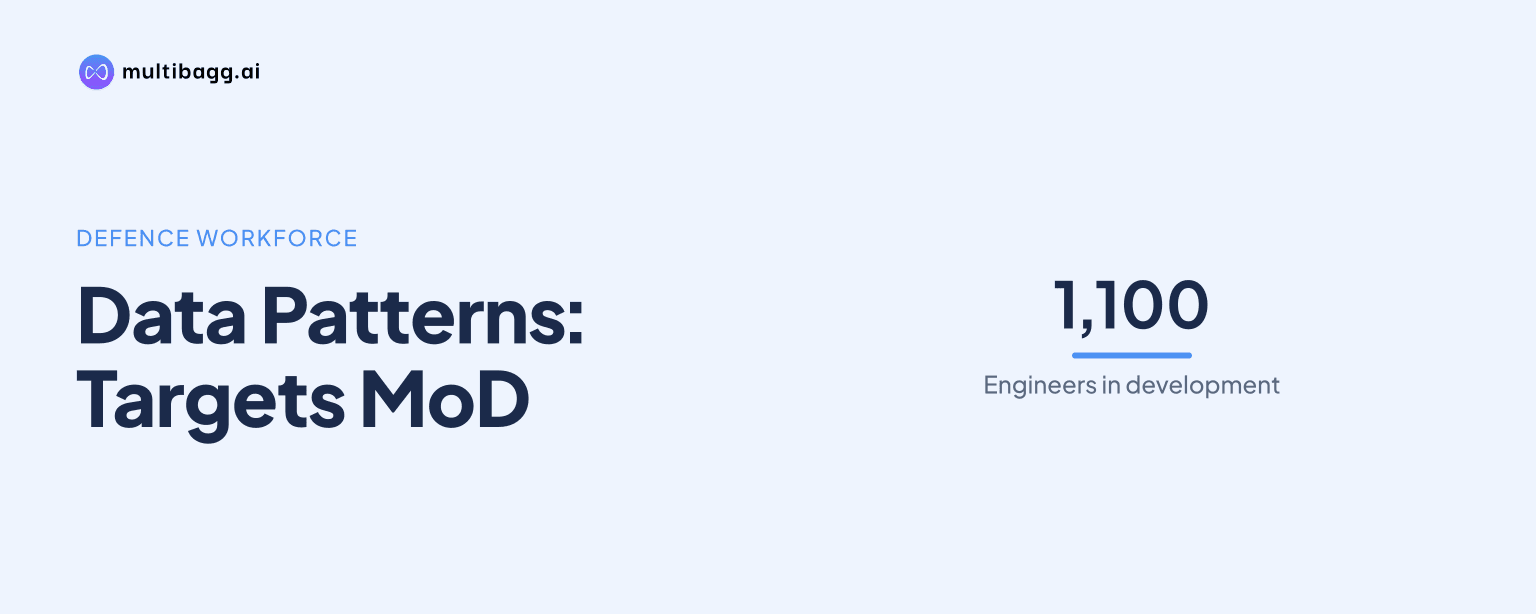
In Q2 FY27, Data Patterns said it was expanding from defence subsystems into indigenous complete systems for direct Ministry of Defence bids, supported by 1,100 engineers in development and programme management and a Rs 2,698 crore order book, including negotiated orders, at September 30, 2026.
Know Data Patterns (India) inside out
Results, valuation, peers and who's buying, in one view.
Why is Data Patterns pursuing direct Ministry of Defence contracts?
Data Patterns is pursuing direct Ministry of Defence, or MoD, contracts because management expects complete systems to address larger programmes than its earlier role in parts and subsystems. Management said the prior model involved developing subsystems with the Defence Research and Development Organisation, or DRDO, transferring technology to Bharat Electronics or another organisation, and then supplying as a subcontractor. The company said this business will continue alongside the direct-systems strategy.
Data Patterns said direct MoD requirements are generally served by defence public-sector undertakings, or DPSUs, and by large companies or multinational groups that work with Indian partners. Its alternative is to design and manufacture indigenous end products in-house, using capabilities developed over its existing defence work. Management said the objective is to scale the business over the next few years rather than remain limited to subsystem tenders.
The direct-bid strategy is an add-on to Data Patterns’ existing markets, not a transition away from them. Management said DRDO and DPSUs remain large customers, including for new technology requirements, while direct MoD tenders create an additional addressable market. Those tenders may require a finished product to undergo validation and meet indigenous-content requirements, creating a different route to market from the company’s earlier subcontracting work.
Which complete systems is Data Patterns developing?
Data Patterns is developing complete systems across communications, electronic warfare, counter-drone equipment, airborne protection and satellites. Its software-defined radio programme covers Army ground communications, airborne communications for helicopters and aircraft, and naval applications. Management said it expects to integrate its radios with other platform radios in the coming months to establish compatibility before addressing direct MoD requirements.
The Sukhoi-30 self-protection jammer pod is one example of a system designed without an external software dependency. Management said the pod’s software, hardware and mechanical elements have been designed in-house, and the Air Force was satisfied with progress. It expects the pod to fly in the next few months to demonstrate operational readiness, unlike the Hawk radar project, where hardware is ready but software integration remains delayed.
Data Patterns is also assembling a counter-drone portfolio combining active radar detection, passive radio-frequency detection and active jamming. Management said its radar can detect drones with a radar cross-section of 0.001 square metre, while electronic-warfare and communications-intelligence capabilities are being adapted for passive detection. It expected the product to be ready for demonstrations and tender participation within one to two months, although production orders would follow development contracts and field trials.
How is Data Patterns supporting the systems strategy?
Data Patterns is deploying 1,100 engineers in development and programme management while building reusable technology blocks for several products. Management said this approach allows components and systems designed for one programme to be used in another, reducing development cost and shortening the time needed to prepare products for government trials. It also said the company has more than 100 engineers in quality control.
The company had previously discussed capital expenditure of Rs 150 crore over two years, but management said the product roadmap prepared over the previous six to eight months could require substantially more investment. Planned spending includes another building and factory, production infrastructure and test equipment. Management said it would seek board approval before disclosing any revised investment amount to the market.
Data Patterns reported more than Rs 500 crore in cash, bank balances and investments at September 30, 2026, which management said provides flexibility for growth initiatives and strategic investments. Revenue from operations was Rs 133.3 crore in Q2 FY27, up from Rs 116 crore in Q1 FY27, while first-half FY27 revenue was Rs 249.3 crore. It retained FY27 guidance for 20% to 25% revenue growth and earnings before interest, tax, depreciation and amortisation margins of 35% to 40%.
Got a follow-up? Ask IRIS
What supports Data Patterns’ ability to convert development into orders?
Data Patterns’ reported order book was Rs 2,698 crore at September 30, 2026, including negotiated orders, while its international order book was Rs 32 crore. Management separately referred to about Rs 1,700 crore of orders on hand and nearly Rs 1,000 crore of negotiated contracts. The company said these negotiated orders were linked to Central Government tenders that had been opened, negotiated and funded, but still required internal approval processes.
Management expected most of the nearly Rs 1,000 crore of negotiated orders to be formalised within one or two months from the Q2 FY27 call. Beyond this group, it cited an additional pipeline of Rs 1,500 crore to Rs 2,000 crore that it expected before March, although it said customer timing was outside its control. Data Patterns has also ordered materials and components in advance for some expected contracts to support faster delivery once orders are issued.
The company said products developed for DRDO have already been delivered under large programmes and may become production orders in one to one-and-a-half years. Management also described self-funded programmes, including the jammer pod, as potential production opportunities over a five-to-six-year period. This creates a longer conversion cycle than the current order book, but management’s stated aim is to build recurring production lines alongside project-based work.
What could delay Data Patterns’ direct-systems plan?
Data Patterns said the principal risks are meeting end specifications, winning contracts and navigating government procurement schedules. Management said a technically capable product does not ensure a contract, because customer requirements, tender timing and competition determine awards. It also acknowledged that foreign competitors could provide investment or support pricing that changes the competitive setting for a particular programme.
Revenue timing will also depend on customer delivery schedules rather than only on order receipt. Management said some of the roughly Rs 1,700 crore of orders on hand will be executed in FY27, while other contracts extend into the following two years. It described the business as programme-based and often weighted towards the fourth quarter, and said production for Q3 and Q4 FY27 deliveries had already started.
The Hawk radar software issue illustrates a technical dependency that can slow progress. Management said hardware for MiG and Sukhoi applications was ready, but software integration had not advanced as expected. By contrast, the Sukhoi-30 pod has no stated external dependency, while counter-drone systems still require software validation, demonstrations and initial development contracts before management expects larger production orders.
Conclusion
Data Patterns is retaining its DRDO and DPSU relationships while using its engineering base to pursue a larger role as a complete-system supplier. The strategy combines direct MoD opportunities with in-house work in software-defined radios, jammer pods, counter-drone equipment and satellites. Its Rs 2,698 crore order book provides execution visibility, while the newer products remain at different stages of development, testing and tender participation.
The next developments to watch are management’s one-to-two-month expectation for formalisation of nearly Rs 1,000 crore of negotiated orders, the planned Sukhoi-30 pod flight in the next few months, and counter-drone demonstrations and tender participation. Management also said it may provide clearer direction on satellite development in six to eight months after initial staffing and development work progress.