










Data Patterns starts self-funded 100 kg-500 kg satellite plan
Key highlights
- Data Patterns plans to develop and launch 100 kg to 500 kg satellites before seeking commercial orders.
- Management said clearer satellite details may be available in six to eight months.
- Data Patterns said it has more than 1,100 engineers in development and programme management.
- Management said broader product and infrastructure investment could exceed the previously discussed Rs 150 crore over two years.
powered by IRIS
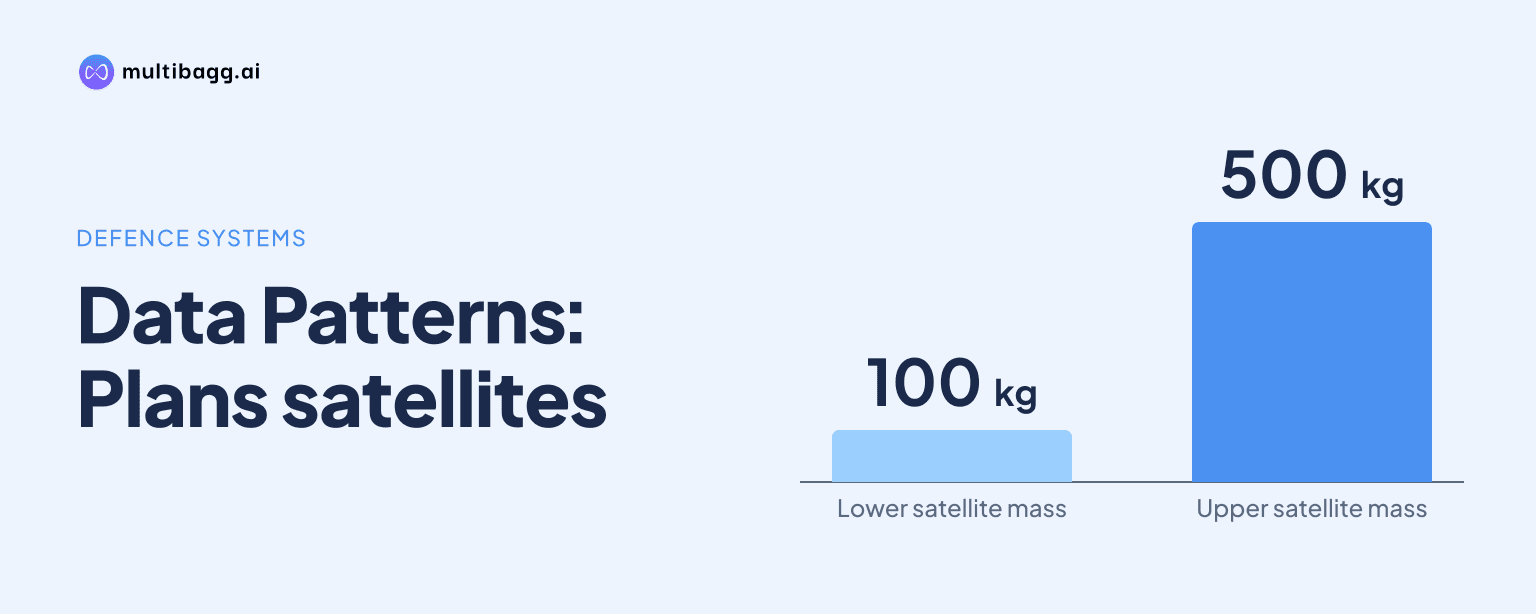
Data Patterns has started a self-funded plan to develop and launch 100 kg to 500 kg satellites before seeking commercial orders, with management saying the first system will establish operational space heritage for Indian and global markets. The company will design payloads, platforms and associated systems in-house rather than enter through low-value satellite contracts.
Know Data Patterns (India) inside out
Results, valuation, peers and who's buying, in one view.
Why is Data Patterns entering the satellite market now?
Data Patterns is entering the satellite market because management now intends to build complete systems instead of pursuing contracts it previously considered uneconomic. Management said it had refrained from building complete satellites in recent years as multiple start-ups entered the segment and contract values had fallen to almost no value, which could have reduced revenue and profit.
The revised approach is product-led rather than order-led. Data Patterns plans to build a satellite, launch it using local and in-house investment, and approach the market after demonstrating the system. Management said the products are being designed for global requirements, rather than only Indian specifications, but did not disclose the first satellite's mission, launch date, development budget or customer.
The stated 100 kg to 500 kg range defines the proposed satellite offering. Management said Data Patterns is considering cluster-satellite applications in security-sensitive areas, but gave no annual production target, expected sales figure or pricing. The programme is therefore an early-stage development initiative and is not part of the company's disclosed order book, negotiations or pipeline.
What will Data Patterns manufacture for satellite customers?
Data Patterns plans to manufacture complete satellite systems, including payloads and platforms, rather than operate only as a downstream services provider. Management said it intends to develop the initial satellite and its payloads, launch it, gain launch and operating experience, and then design and manufacture similar systems to customer specifications in India and overseas.
The proposed in-house scope includes optics, electronics, sensors, satellite platforms and bus structures. Management said Data Patterns already has bus structures designed in-house and plans to reuse some existing subsystems, modify others and develop new elements to complete a 100 kg to 500 kg satellite system.
The company ultimately plans to create infrastructure to manufacture multiple satellites a year. Management did not disclose the number of satellites that infrastructure could support, the timing of its construction or whether it would sell payloads separately. Its stated model is instead to use the first launch to establish heritage before offering customised complete systems.
What satellite experience does Data Patterns have?
Data Patterns says its starting point is prior satellite work with the Indian Space Research Organisation (ISRO), for which it has delivered parts and subsystems over many years. Management said those subsystem capabilities can be reused, modified or redesigned as part of the move from supplying components to developing an entire satellite.
Management also said Data Patterns had designed a satellite in-house for four years in space, including its ground station and ground corrections. Separately, it said the company had launched a satellite and operated it for three years in space. The call did not identify either satellite, its payload, launch provider or customer, so the precise link between those programmes and the new 100 kg to 500 kg plan was not disclosed.
The company has begun staffing the initiative with former ISRO personnel and senior scientists. This recruitment supports a wider product strategy in which Data Patterns is seeking to move from parts and subsystems towards complete systems, alongside areas including counter-drone products, software-defined radios and aircraft systems.
Got a follow-up? Ask IRIS
How will Data Patterns fund satellite development and production?
Data Patterns said the initial satellite will be developed and launched through local and in-house investment, without identifying a dedicated satellite budget. Management had previously discussed Rs 150 crore of capital expenditure over the next two years, but later said the wider product-development and infrastructure plan prepared during the preceding six to eight months would probably require substantially more than Rs 150 crore.
That broader investment includes a new building and factory, production infrastructure and test equipment for potential production orders across programmes. Management said construction of the building had started and that Data Patterns was investing before contracts arrive, but it did not state how much of the spending above Rs 150 crore would be allocated to satellites.
Management linked the spending approach to a building-block model, in which common technology can be reused across programmes. For the satellite initiative, that means applying existing ISRO-related subsystem experience while adding the payload, platform and manufacturing capabilities required for a complete 100 kg to 500 kg system.
When will Data Patterns provide more satellite details?
Data Patterns said it may provide clearer satellite details in six to eight months, after initial staffing and development work advances. Management said only the internal decision to proceed could be discussed at present, leaving unresolved the first launch schedule, final application, prospective buyer, dedicated investment and route to revenue.
The sequence disclosed by management is to launch the first satellite, obtain space heritage meeting or exceeding Indian requirements, and then market comparable products. That makes successful technical development and operation the key early milestones before Data Patterns can assess commercial demand for its customised satellite systems.
Satellite development remains separate from near-term defence business projections. Management said counter-drone products were expected to be ready for demonstration and tender participation within one to two months, whereas the satellite programme was described as a future initiative outside current projections, negotiations and pipeline.
Conclusion
Data Patterns is shifting from satellite subsystem work towards self-funded development of complete 100 kg to 500 kg satellites. Its plan combines internally designed payloads, platforms, optics, sensors and bus structures with an initial launch intended to establish space heritage before pursuing customised sales in India and global markets.
The next disclosed milestone is management's expected update in six to eight months, after early recruitment and development progress. Investors will need to watch for details on the first satellite's application and launch plan, capital committed beyond the previously discussed Rs 150 crore two-year expenditure plan, and the proposed timetable for multi-satellite manufacturing infrastructure.