










EFC targets 60-90 day Design & Build working-capital cycle
Key highlights
- EFC said its Design & Build working-capital cycle is generally 60-90 days, depending on project type and work scope.
- EFC said full project realisation, including milestones and retention, can require 90-120 days.
- Retention payments are generally about 5% of total Design & Build project value, according to EFC.
- EFC said its Design & Build order book exceeds Rs 300 crore and supports its 50-60% annual growth target.
powered by IRIS
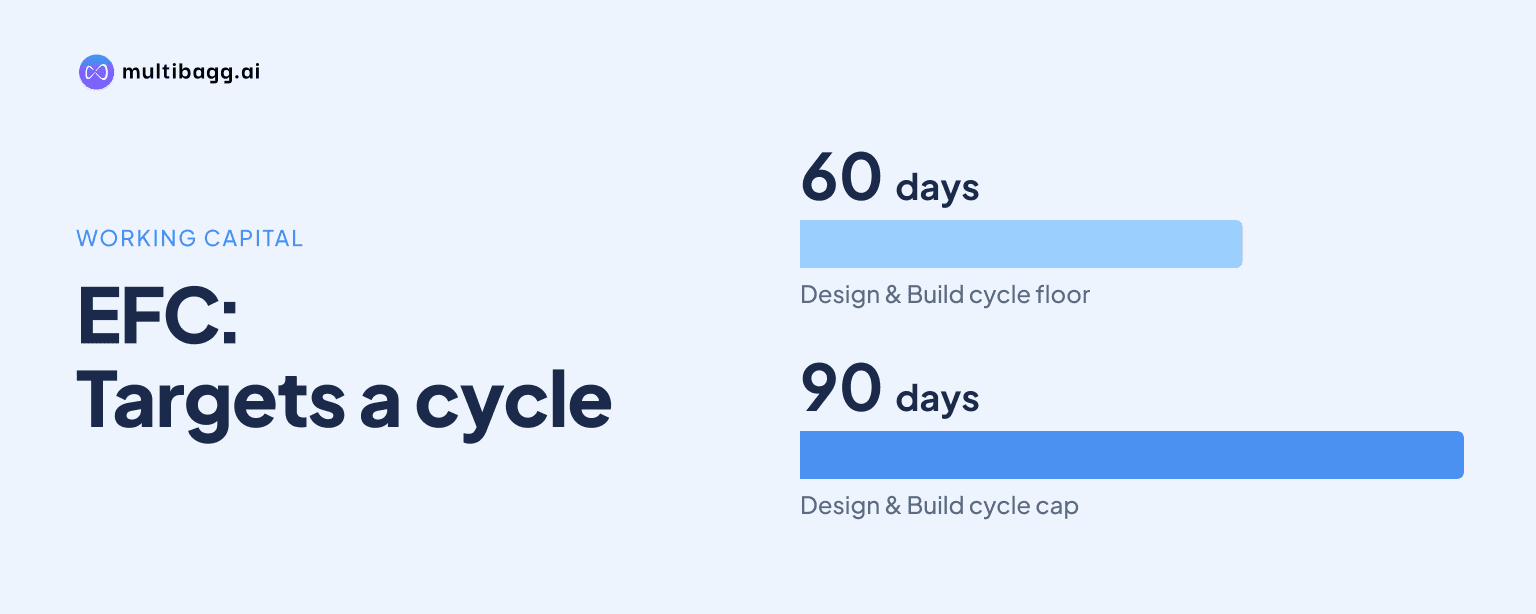
In the Q2 earnings call, EFC (I) Limited said its Design & Build business is managed around a 60-90 day working-capital cycle, depending on the project and work scope, while retention payments are generally about 5% of total project value. EFC said milestone-based billing and project selection are intended to prevent working capital rising disproportionately as the vertical expands.
Know EFC (I) inside out
Results, valuation, peers and who's buying, in one view.
What working-capital cycle does EFC expect in Design & Build?
EFC said it generally expects a 60-90 day working-capital cycle for Design & Build, with the duration varying by project and the type of work being executed. Management described Design & Build as asset-light but working-capital intensive because projects require deployment of funds before payments are received against agreed milestones.
Management also referred to a broader 90-120 day period when discussing the time in which a project is realised from both milestone and retention perspectives. The two ranges were disclosed in the same response: 60-90 days was presented as the operating working-capital cycle, while 90-120 days was described as the period that may need to be accounted for through project realisation and retention.
The distinction matters because a project can generate billing through milestones before its final retention amount is released. EFC did not provide a reported debtor-ageing schedule, total receivables balance or a numerical split between institutional and private projects during this exchange, so the disclosed ranges are management's operating framework rather than a reported balance-sheet measurement.
Why does EFC say working capital will not rise disproportionately?
EFC said working capital should not grow disproportionately because it selects a mix of institutional and private projects with different payment characteristics. Large institutional projects release payments on what management called a strict milestone basis, while certain private and private-institutional assignments allow EFC to seek more favourable working-capital cycles.
That mix is the principal safeguard management identified against a direct one-for-one rise in capital deployment as Design & Build revenue increases. EFC nonetheless explicitly classified the vertical as working-capital intensive, meaning its position was not that cash deployment disappears, but that project selection and contract terms can constrain its duration relative to project execution.
The scale of simultaneous work also shapes the need for funding. Management said EFC operates multiple projects and institutional activities at the same time, which is why it needs to plan around a 60-90 day cycle even though individual project realisation, including retention, can extend to 90-120 days. No target was given for a maximum receivables balance or for net working capital as a share of revenue.
Got a follow-up? Ask IRIS
How do milestones and retention payments shape EFC cash conversion?
EFC said Design & Build contracts use milestone-based payments, so cash is released as specified stages of a project are delivered rather than only at completion. This mechanism is particularly relevant to institutional clients, which management said require strict delivery timelines before entering such Design & Build activities.
Retention payments are generally around 5% of a project's total value, according to management. EFC linked these withheld amounts to performance obligations and timely delivery, indicating that the final portion of project cash conversion depends on meeting contractual conditions after or alongside the main milestones.
Performance guarantees are another part of the contract structure cited by management. EFC said such guarantees need to be issued because it is developing and delivering projects within defined timelines; therefore, the working-capital requirement includes more than materials or services used during execution and also reflects contractual obligations to clients.
Management additionally acknowledged cost timing in its broader discussion of quarterly profitability. It said materials and services saw substantial price increases in the quarter, while project execution and recognition can occur at different points. That explanation concerned margins rather than debtor ageing, but it shows why quarterly revenue, expenses and cash collection may not move in the same period for project work.
What does the cash cycle mean for EFC's growth plan?
EFC said it remains on target for 50-60% annual growth in its Design & Build vertical, supported by an order book of more than Rs 300 crore. Management said first-half growth appeared lower because large projects need not be completed within a two-to-three-month quarter, and it expects execution from existing orders to support the next two quarters.
The relationship between the growth target and working capital is direct: more projects under execution may require EFC to fund more milestone-linked activity, but management said the project mix is designed to keep the cycle within the stated range. Its claim that working capital will not rise disproportionately rests on payment structures and the ability to negotiate terms in selected private projects, not on an assertion that Design & Build needs no capital.
EFC also said its Leasing and Furniture verticals had achieved their proportionate targets in the first half, whereas Design & Build could appear to lag based on recorded first-half figures. Management attributed the difference to the timing of execution and said the order book gives it confidence that Design & Build orders will be executed within the financial year.
Conclusion
EFC's central disclosure is that Design & Build growth carries a defined cash-conversion constraint: management plans around a 60-90 day working-capital cycle, while recognising that full project realisation including retention can take 90-120 days. The 5% typical retention level, milestone billing and performance guarantees explain why the vertical needs working capital even though management classifies it as asset-light.
Next, readers should watch whether the more than Rs 300 crore Design & Build order book converts into execution during the next two quarters, as management expects, and whether the stated 50-60% annual growth target is met. Management did not disclose debtor-ageing data or a receivables balance, leaving those measures unresolved for future updates.