










Encompass Design India Files H1 FY27 Earnings Call Transcript
Key highlights
- Encompass filed its H1 FY27 earnings-call transcript with the NSE on November 23, 2026, after the November 19 call.
- H1 FY27 revenue from operations was ₹47.5 crore, up 69% year on year.
- H1 FY27 profit after tax was ₹9.3 crore, up 86% year on year.
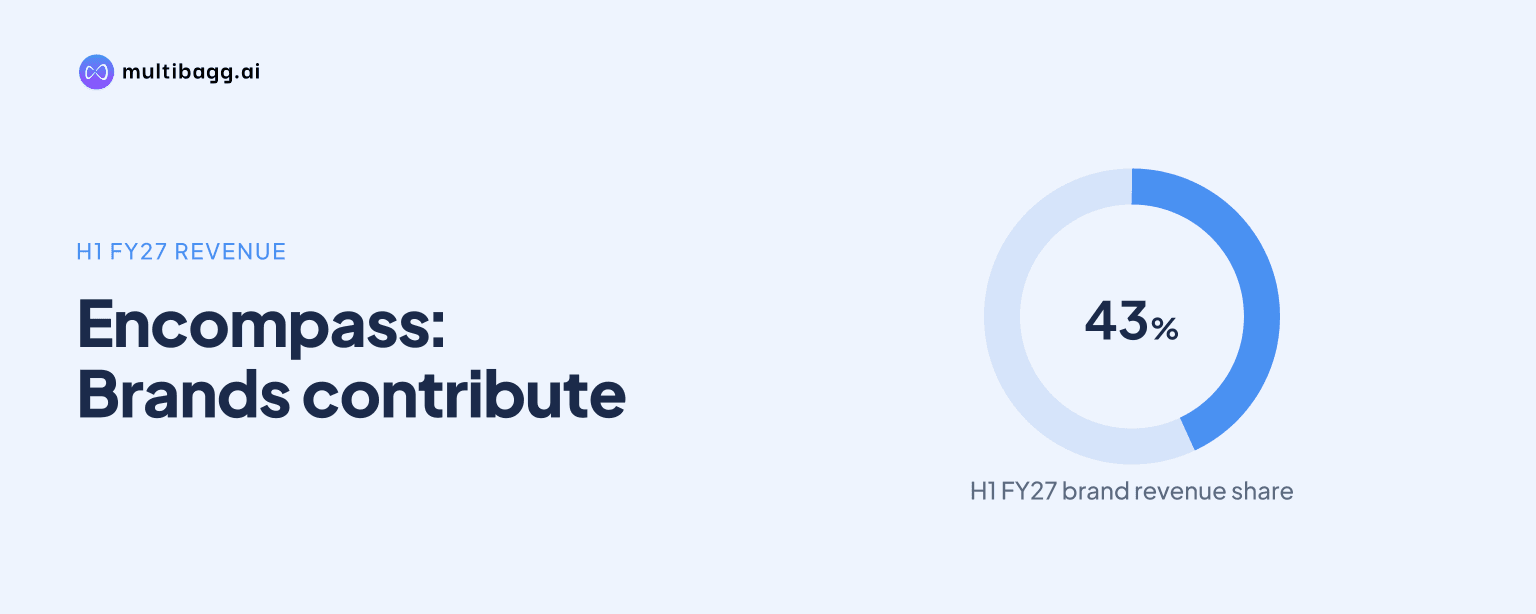
- Consumer brands contributed 43% of revenue, while the ₹95 crore preference issue short-closed at ₹44 crore.
powered by IRIS
On November 23, 2026, Encompass Design India Limited filed its H1 FY27 earnings-call transcript with the NSE, documenting revenue of ₹47.5 crore, up 69% year on year. The transcript covers the company’s first earnings call as a listed entity, held on November 19, and records management’s comments on financial performance, consumer brands, funding and FY27 growth guidance.
Know Encompass Design India inside out
Results, valuation, peers and who's buying, in one view.
What did Encompass file with the NSE?
Encompass filed the transcript of its earnings conference call for the half year ended September 30, 2026, with the NSE on November 23, 2026. The call was held on November 19, 2026, at 4:00 PM IST and discussed the company’s H1 FY27 financial results and business outlook.
The filing is relevant because it places management’s discussion of the half-year numbers on the exchange record. It also marks Encompass’s first reported earnings call after becoming a listed entity. The company’s NSE trading symbol is ENCOMPAS, as stated in the available filing-related information.
The transcript follows the company’s approval of unaudited standalone and consolidated results for the half year ended September 30, 2026. The disclosed discussion focused on revenue growth, profitability, the contribution of consumer brands and the capital-raising position.
What financial results did the call transcript record?
Encompass reported H1 FY27 revenue from operations of ₹47.5 crore and profit after tax of ₹9.3 crore, representing year-on-year growth of 69% and 86%, respectively. EBITDA was reported at ₹15.5 crore, with an EBITDA margin of 32.6%.
The figures show that profit grew faster than revenue during the reported half year. The source information also indicates that consumer brands accounted for 43% of group revenue and generated a 45% EBITDA margin, making this business segment material to the company’s overall financial mix.
The available information presents slightly different year-on-year growth percentages for some metrics across related summaries, including profit after tax. The earnings-call transcript summary supplied with the filing states 86% growth in profit after tax, and that figure is used here for the filing event.
What did management say about business mix and outlook?
Management said consumer brands were driving growth and contributed 43% of H1 FY27 revenue. The source information states that the consumer brands business grew 148%, while the call discussion highlighted its 45% EBITDA margin.
This business mix is important because Encompass’s consumer-facing brands are increasingly significant within group revenue. The disclosed brand data also showed that Stoa Paris and Small Batch were predominantly online-led during H1 FY27, with direct-to-consumer and other online channels accounting for 96.9% of Stoa Paris revenue and 94.7% of Small Batch revenue, respectively.
For FY27, management guided for revenue growth of 50% to 55%. This is a forward-looking management target rather than a reported result. The filing does not establish whether the target will be achieved, but it provides the benchmark management used while discussing the H1 FY27 performance.
Got a follow-up? Ask IRIS
What funding and cost details were disclosed?
The call materials stated that a proposed ₹95 crore preference issue was short-closed at ₹44 crore. This means the disclosed amount raised or subscribed under the preference issue was below the originally indicated issue size.
The source information does not provide a detailed explanation in the filing summary for the short closure or set out a revised capital-raising plan. It does, however, identify the preference issue outcome as a factor relevant to the company’s funding position alongside its stated growth plans.
Related H1 FY27 material also reported finance cost of ₹1.2 crore, up 209% year on year, while profit after tax increased. The presentation cited in the source did not state an operational reason for the higher finance cost. Investors therefore have a disclosed cost movement, but no corresponding management explanation in the supplied information.
How does the filing matter to investors and operations?
The filing gives investors a formal record of management’s discussion following H1 FY27 results, including the 69% revenue increase, the 86% rise in profit after tax and the 50% to 55% FY27 growth guidance. It also identifies the consumer brands segment as a large contributor to revenue and margin performance.
For operations, the disclosed figures indicate that online-led consumer brands have become a substantial part of the business. The 43% revenue contribution from consumer brands and their reported 45% EBITDA margin provide context for management’s emphasis on this segment during the call.
No share-price movement, analyst estimate or change in market valuation was provided in the supplied filing information. As a result, the transcript supports an assessment of reported operating and financial disclosures, but it does not by itself demonstrate how the market reacted to the announcement.
Conclusion
Encompass’s November 23 filing formally records the discussion from its H1 FY27 earnings call, held four days earlier. The central disclosures were revenue of ₹47.5 crore, up 69% year on year, profit after tax of ₹9.3 crore, up 86%, and the growing role of consumer brands, which represented 43% of revenue.
The next disclosed reference point is management’s FY27 revenue-growth guidance of 50% to 55%. Investors will also have reason to track further disclosures on the ₹95 crore preference issue that short-closed at ₹44 crore, as well as any additional information on funding requirements, finance costs and the performance of the consumer brands business.