










Gayatri Rubbers ties Plant 3 to railway-pad approval
Key highlights
- GRCL has cleared 1 of 4 railway-pad approval stages and estimates complete clearance could take 9 to 12 months.
- GRCL will consider Plant 3 only after railway-pad approval and has not disclosed capex, timing or funding details.
- Plant 1 was about 85% utilised, while specialised-railway Plant 2 was about 35% to 40% utilised.
- Management estimates Plant 2 could generate Rs 50 crore to Rs 60 crore of revenue at peak utilisation.
powered by IRIS
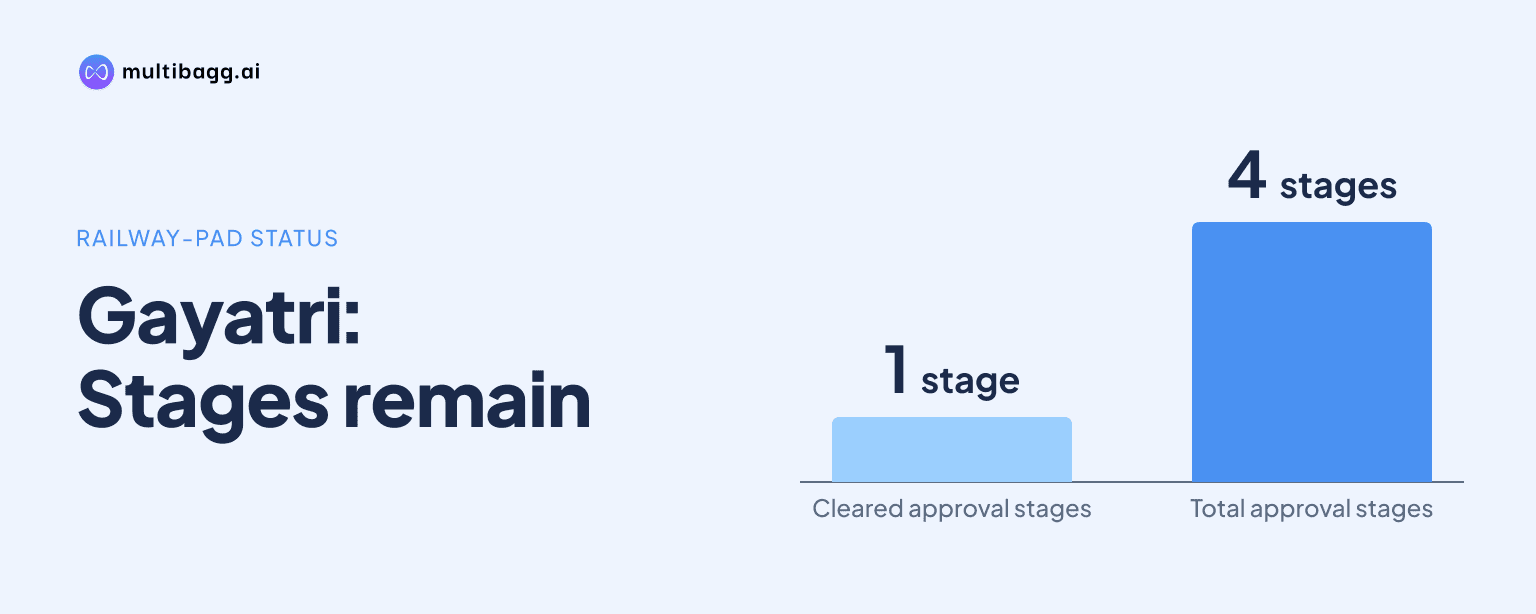
Gayatri Rubbers will consider Plant 3 only after its railway-pad product receives full approval, management said, with one of four approval stages completed and the remaining process estimated at nine to 12 months. GRCL did not disclose Plant 3 capex, a construction timeline or a funding mix because the project remains conditional on this approval.
Know Gayatri Rubbers and Chemicals inside out
Results, valuation, peers and who's buying, in one view.
What determines whether GRCL proceeds with Plant 3?
GRCL will decide on Plant 3 only after railway pads receive complete approval. Management said it had applied for the approval and that the product must clear four stages before receiving proper clearance. One stage had been cleared when management answered the question, leaving three stages outstanding.
The company has therefore not committed capital to a third facility in the transcript. Asked about Plant 3 capex, timing and funding through internal accruals or debt, management said it would think about the plant after railway-pad approval. The plant's size, location, financing and construction schedule were not disclosed.
Railway pads are part of a wider opportunity within GRCL's existing railway portfolio. Management said the company supplies about 65 of the 75 products required in a railway coach. Of the remaining 10 products, it identified two to three as high-revenue categories, including railway pads and automatic inter-car gangways.
When could GRCL receive railway-pad approval?
GRCL estimates complete railway-pad clearance could take nine to 12 months, although this is management's estimate rather than a confirmed approval date. Management said final approval for a new railway product usually takes 15 to 18 months, but it expected this process to take about 12 months.
Management linked the anticipated approval to its FY28 revenue expectations. It told an analyst that railway pads could contribute to FY28 revenue if approval is received by then. No railway-pad order value, tender award, production volume or revenue forecast was disclosed.
Indian Railways is already a material segment for GRCL, contributing around 50% of revenue according to management. The railway order book stood at about Rs 10 crore to Rs 12 crore, and management expected 100% of that order book to be completed in FY27. That disclosed order book does not include a stated value for railway pads.
Can GRCL meet demand without immediately building Plant 3?
GRCL says its two operating plants provide capacity headroom for current demand without immediate additional manufacturing investment. Plant 1 has installed capacity of 200 metric tonnes per month and was operating at about 85% utilisation. Plant 2, dedicated to specialised railway products, was operating at about 35% to 40% utilisation.
Management's medium-term objective is to raise utilisation at its existing facilities to 90% to 95%. It said Plant 1 could reach complete utilisation around FY27, while Plant 2 could be fully utilised by the end of FY28. These timelines place the ramp-up of existing capacity ahead of any disclosed Plant 3 commitment.
At peak utilisation, Plant 2 could generate about Rs 50 crore to Rs 60 crore of revenue, management estimated. It said the outcome would depend on how much machinery is used. This is a peak-capacity estimate rather than revenue guidance for a particular financial year.
Got a follow-up? Ask IRIS
What railway demand supports GRCL's existing capacity plan?
GRCL said Indian Railways and smart meters were contributing to its FY27 revenue target of Rs 55 crore. Management said the company was on track to meet that target and that it could exceed it, while Indian Railways made a good contribution in H1 FY27.
H1 FY27 earnings before interest, tax, depreciation and amortisation, or EBITDA, margin was around 23.5%, compared with 21.11% in FY26. Management said it expected EBITDA margin of around 25% in H2 FY27 and described the H1 margin as sustainable, while adding that it would seek to improve it further.
Within railway-related business, management expects about Rs 10 crore to Rs 15 crore of FY27 revenue from Vande Bharat and Metro projects combined. It said GRCL was receiving good Vande Bharat orders and expected some good Metro orders, while treating revenue from the rest of Indian Railways separately.
Management said railway tender timing could affect quarterly revenue to some extent. It did not expect a significant impact on half-yearly revenue because of recurring smart-meter orders and business in architectural, automotive and industrial applications. GRCL is a single-source supplier to Genus Power and HPL Power in the smart-meter industry, according to management.
How do exports and adjacent products affect the Plant 3 decision?
GRCL has not assigned an export revenue contribution to its Plant 3 rationale. Management said 70% of required export documents, permissions and certificates had been completed, while the remaining 30% involved tests and pending criteria. It is looking at European countries but did not estimate export revenue.
Adjacent products are at different development stages. GRCL expects specialised rubber-pipe supplies to commence in the first half of 2027, and management said Genus had accepted its gas and water meter prototype. It also cited bridge pads and railway pads as active opportunities, but only railway-pad approval was expressly identified as the trigger for considering Plant 3.
Management said GRCL has an in-house laboratory for fire-retardant compliance and that only three companies in India have such a laboratory specifically for this purpose. It did not disclose a specific research and development spending figure, saying directors are personally involved in product development. The call did not state that these capabilities assure railway-pad approval.
Conclusion
GRCL's Plant 3 position is conditional rather than a committed expansion programme. One of four railway-pad approval stages has been cleared, while existing facilities remain below management's 90% to 95% utilisation objective: Plant 1 was at about 85% and specialised-railway Plant 2 at about 35% to 40%.
The next disclosed milestones are complete railway-pad approval, which management expects within nine to 12 months and sees as a potential FY28 revenue contributor, and full Plant 2 utilisation by the end of FY28. Management also expects completion of its Rs 10 crore to Rs 12 crore railway order book in FY27 and says it is on track for its Rs 55 crore FY27 revenue target.