










Jain Irrigation Systems Reports 10.1% Q2 Revenue Growth
Key highlights
- Jain Irrigation Systems' Q2 FY27 consolidated revenue rose 10.1% year-on-year to ₹1,576.7 crore.
- Q2 FY27 EBITDA increased 4.2% year-on-year to ₹207.5 crore, with a 13.2% EBITDA margin.
- Jain Irrigation Systems reported Q2 FY27 PAT of ₹18.01 crore after a ₹17.80 crore loss in Q1 FY27.
- H1 FY27 revenue grew 3.6% to ₹3,085.0 crore, while EBITDA fell 7.3% to ₹371.9 crore.
powered by IRIS
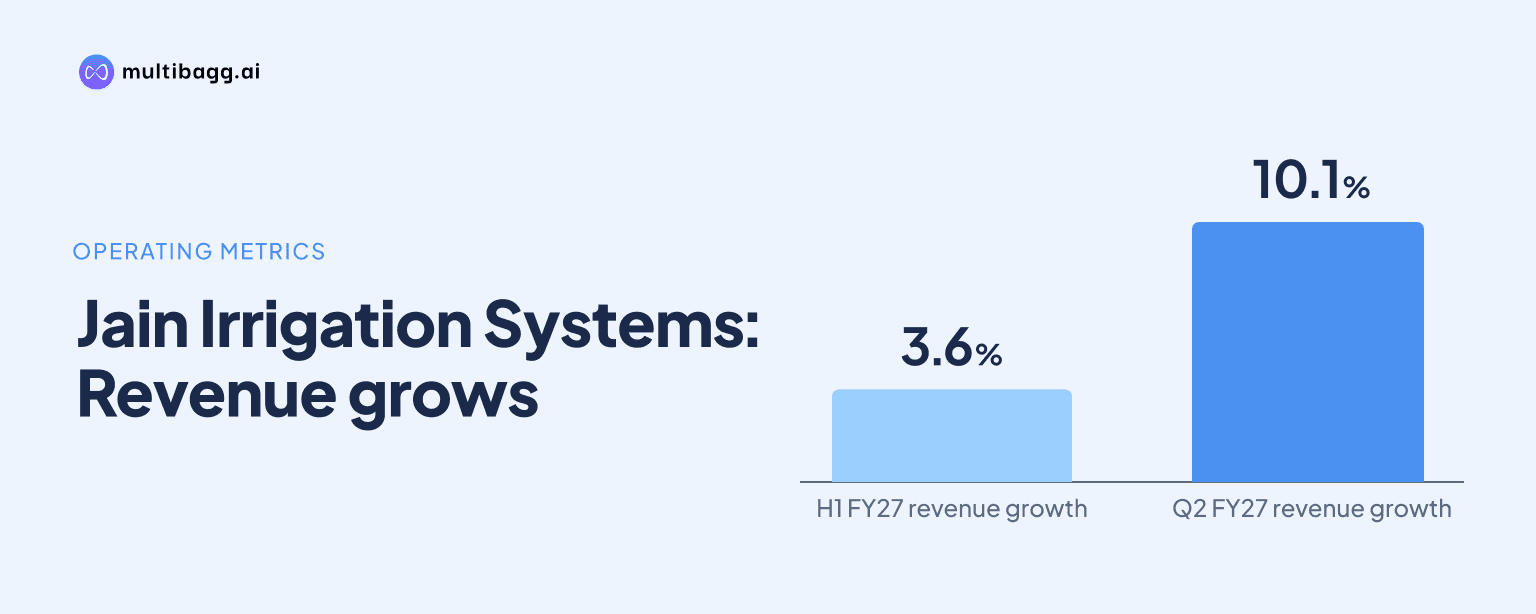
Jain Irrigation Systems Limited reported 10.1% year-on-year consolidated revenue growth to ₹1,576.7 crore in Q2 FY27, while EBITDA rose 4.2% to ₹207.5 crore for the quarter ended September 30, 2026. The result marked a recovery from the preceding quarter's consolidated loss, although margins remained below the prior-year level.
Know Jain Irrigation Systems inside out
Results, valuation, peers and who's buying, in one view.
What did Jain Irrigation Systems report for Q2 FY27?
Jain Irrigation Systems reported consolidated revenue of ₹1,576.7 crore in Q2 FY27, compared with the corresponding quarter a year earlier. Revenue was also 4.5% higher than Q1 FY27, when the company had reported consolidated revenue of ₹1,508.37 crore.
EBITDA rose 4.2% year-on-year to ₹207.5 crore, while the EBITDA margin stood at 13.2%. This was below the 13.9% margin cited for Q2 FY26, but represented an improvement from the 10.89% operating margin reported in Q1 FY27. Consolidated profit after tax was ₹18.01 crore, against ₹15.34 crore a year earlier and a loss of ₹17.80 crore in the previous quarter. Basic earnings per share was ₹0.23, compared with ₹0.21 in Q2 FY26.
How did the quarter unfold across Jain Irrigation Systems' businesses?
Jain Irrigation Systems released its Q2 and H1 FY27 results and investor presentation on November 4, 2026. The company subsequently made available an audio recording of its Q2/H1 FY27 investor conference call under Regulation 30 of the Listing Obligations and Disclosure Requirements regulations.
On the call, Managing Director and Chief Executive Officer Anil Jain said overall revenue was close to ₹1,576 crore and EBITDA was about ₹207 crore. He said the Hi-Tech Micro Irrigation business maintained a margin of about 18.8%. Management indicated margins of around 12% in food processing and around 9% in the plastics segment.
The quarterly profit comparison was affected by finance costs. Finance costs rose to ₹119.33 crore from ₹115.67 crore a year earlier and ₹110.56 crore in Q1 FY27. The filing notes included ₹21.53 crore of non-cash interest linked to the unwinding of NCD and ECB effective-interest adjustments. Management said adjusted profit after accounting for the NCD unwind was about ₹40 crore.
What do the first-half FY27 results show?
Jain Irrigation Systems recorded consolidated revenue of ₹3,085.0 crore in H1 FY27, up 3.6% year-on-year. EBITDA for the six months was ₹371.9 crore, down 7.3% from the year-earlier period, and the EBITDA margin declined to 12.1% from 13.5% in H1 FY26.
The contrast between the quarter and the half year reflects the weaker first quarter. Q1 FY27 revenue was ₹1,508.37 crore and the company posted a consolidated loss after tax of ₹17.80 crore. The improvement in Q2 therefore helped restore profitability for the quarter, but did not reverse the first-half decline in EBITDA.
Got a follow-up? Ask IRIS
Why were margins under pressure despite higher revenue?
Jain Irrigation Systems said the plastics division faced margin pressure in its domestic operations. EBITDA in the standalone India plastics business declined 62.8% year-on-year to ₹6.1 crore during the first half. This made the segment a notable drag on the group's profitability despite growth in consolidated revenue.
Overseas plastics operations performed differently, with H1 EBITDA increasing 34.6%, according to the supplied results summary. Management also referred to uncertainty around polymer prices and agricultural demand. These factors are relevant because the company operates across micro-irrigation, plastics and agro-processing businesses, where input prices and farm-sector demand can affect both volumes and margins.
The company had reported a stronger Q2 FY26, when overall income rose 20% to ₹1,432 crore and EBITDA increased 43% year-on-year. The FY27 comparison therefore comes against a prior period that had benefited from stronger operating growth, even as the Q2 FY27 result showed a sequential improvement from Q1.
What does the result mean for investors and operations?
For investors, the key positive in the Q2 release was the return to reported quarterly profit after the Q1 loss, supported by revenue growth and improved sequential operating margin. However, the lower year-on-year EBITDA margin and higher finance cost show that revenue growth did not translate into proportionate operating and net-profit expansion.
For business operations, the segment information points to mixed conditions. High-teen micro-irrigation margins supported the quarterly outcome, while domestic plastics remained under pressure. The movement in polymer prices and agricultural demand remains relevant for the company's near-term sales and profitability because management cited both as continuing sources of uncertainty.
Jain Irrigation Systems serves more than 10 million farmers across over 126 countries, according to the supplied company information. Its results are therefore also linked to broader conditions in agricultural investment, irrigation demand and material costs across its domestic and overseas operations.
Conclusion
Jain Irrigation Systems delivered higher Q2 FY27 revenue, EBITDA and reported profit compared with the prior year, while also improving materially from its Q1 loss. Yet the 13.2% EBITDA margin remained below the year-earlier level, and the first-half figures showed that margin pressure in domestic plastics and higher finance costs continued to affect overall performance.
Investors will watch management's second-half outlook, which indicated broadly flattish year-on-year revenue growth amid uncertainty over polymer prices and agricultural demand. The next results will also show whether the Q2 sequential improvement in profitability and working-capital conditions can be sustained.