










Om Infra links Kundah balance to 200 GW storage pipeline
Key highlights
- Om Infra disclosed Rs 60 crore of unexecuted Kundah project value as of 31 March 2025.
- The Kundah pumped-storage project is listed at 1,000 megawatts in Om Infra’s presentation.
- India has more than 200 gigawatts of identified pumped-storage potential, according to the presentation.
- The CEA planned clearance of 22 gigawatts across 13 pumped-storage projects in FY26, following 7.5 gigawatts fast-tracked in FY25.
powered by IRIS
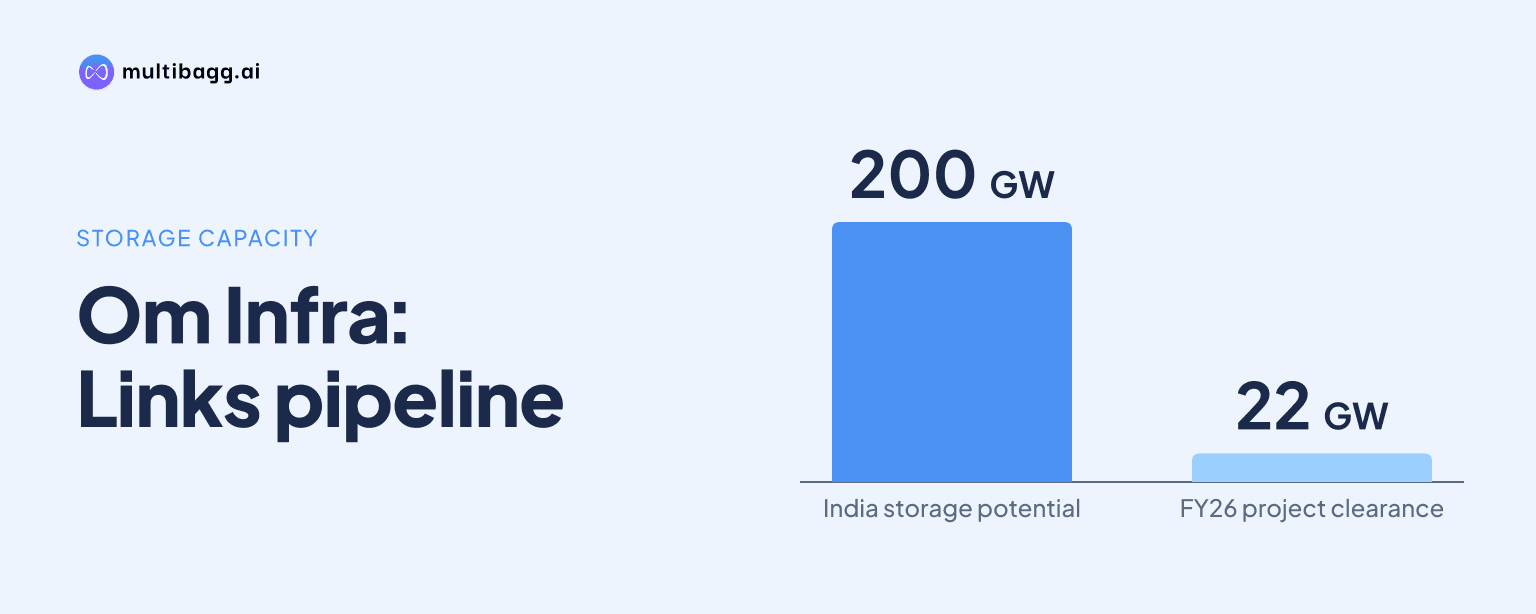
OM Infra Ltd has Rs 60 crore of unexecuted value on the 1,000-megawatt Kundah pumped-storage project as of 31 March 2025, while citing more than 200 gigawatts of identified pumped-storage potential in India. Om Infra is using Kundah as a reference assignment for hydro-mechanical work in a sector where approvals, state allocations and incentives could expand project activity.
Know Om Infra inside out
Results, valuation, peers and who's buying, in one view.
How does Om Infra position the Kundah assignment?
Om Infra positions Kundah as a reference project because its presentation describes the 1,000-megawatt project as India’s largest pumped-storage project. The company says it is executing Kundah and had Rs 60 crore of unexecuted project value on 31 March 2025. That figure is a remaining execution balance, not a forecast for new orders or a measure of the full contract value.
The company links Kundah to its hydro-mechanical turnkey offering, which includes gates, liners, trash racks and cranes. Om Infra says hydro-mechanical projects account for more than 30% of its order book and that it is executing hydro-mechanical contracts exceeding 2,900 megawatts. It also says it manufactures all hydro-mechanical equipment in house, which it presents as relevant to pumped-storage construction.
The presentation does not disclose Kundah’s original order value, the value already executed, a completion date or a revenue-recognition schedule. Its disclosed 1,000-megawatt capacity and Rs 60 crore balance therefore provide different measures: one describes the project’s generation scale and the other describes work yet to be executed.
What infrastructure does a pumped-storage project need?
A pumped-storage project needs upper and lower reservoirs, a pump house with a turbine and generator, tunnels and pipelines joining the reservoirs, and access to power substations. Om Infra identifies these as required infrastructure for a pumped-storage project. Its stated positioning centres on hydro-mechanical turnkey solutions rather than a claim that it undertakes every civil, electrical and grid-access component.
The system generates electricity when water is released downhill to the lower reservoir during periods of high energy demand. The water spins a turbine, with the generator adding power to the grid. This operating mechanism makes the reservoirs, turbine, generator and connecting tunnels central to the project configuration described in the presentation.
When demand is low, power is taken from the grid to pump water from the lower reservoir back to the upper reservoir. The water can then be released again when demand is higher. For Om Infra, the presentation connects this two-way water cycle with its products, including gates, liners, trash racks and cranes, rather than providing a separate pumped-storage order-book figure.
What pumped-storage approvals and commissioning plans are disclosed?
The presentation says the Central Electricity Authority, or CEA, fast-tracked approvals for 7.5 gigawatts of pumped-storage projects in FY25 and planned to clear 13 more projects totalling 22 gigawatts in FY26. The FY26 figure is a stated plan rather than a reported approval outcome. It is 14.5 gigawatts higher than the FY25 capacity cited in the presentation.
The presentation also says energy-storage systems are expected to reach 55 gigawatts by 2031-32. Separately, states have allocated 38 pumped-storage projects, or PSPs, with 50.7 gigawatts planned for commissioning by 2032. These sector figures do not specify Om Infra’s share of future contracts.
Private players lead more than 100 gigawatts of the 130 gigawatts of planned capacity cited in the presentation, while key states are pursuing projects through public-private partnerships. This indicates that the project pipeline includes both private-led and state-led routes. The source does not name projects beyond Kundah in which Om Infra has been awarded pumped-storage work.
Got a follow-up? Ask IRIS
How large is the pumped-storage opportunity cited by Om Infra?
Om Infra cites more than 200 gigawatts of identified PSP potential across India. It also says the pumped-hydro-storage market was valued at USD 12.2 billion in 2024 and is projected to reach USD 26.1 billion by 2033, implying an 8.34% compound annual growth rate from 2025 to 2033. These are market estimates in the presentation, not company guidance on revenue, margins or order inflow.
The pumped-storage opportunity sits alongside a broader hydropower outlook. India had 15 gigawatts of hydroelectric capacity under construction, and total hydro capacity is projected to rise from 42 gigawatts to 67 gigawatts by 2031-32. That is a projected increase of 25 gigawatts, or more than 50%, compared with the stated 42-gigawatt base.
The presentation identifies Arunachal Pradesh, Uttarakhand, Himachal Pradesh, and Jammu and Kashmir as holding more than 60% of untapped hydropower potential. Om Infra’s disclosed execution of more than 2,900 megawatts of hydro-mechanical contracts provides context for its positioning in that wider hydro pipeline. However, the presentation discloses only Rs 60 crore of unexecuted Kundah value and no separate total order book for PSPs.
What could turn the sector pipeline into Om Infra orders?
The sector pipeline could translate into orders as projects progress through approvals, state allocations, financing and construction stages. The presentation says upcoming viability-gap funding and financial incentives aim to boost investment and accelerate commissioning by 2030. It does not quantify the funding, provide an implementation date, or assign a financial benefit to Om Infra.
Om Infra’s stated role is most directly tied to hydro-mechanical equipment and turnkey execution. PSP construction also requires reservoirs, pump houses, tunnels, pipelines and substation access, but the presentation does not allocate these scopes between Om Infra and other contractors. The company’s in-house manufacturing and more than 30% hydro-mechanical share of order book are its disclosed operating links to this opportunity.
The difference between the Rs 60 crore Kundah balance and more than 200 gigawatts of national potential is material. The Kundah amount is identified unexecuted work as of 31 March 2025, whereas the national figure is sector potential that has not been identified as Om Infra’s contracted pipeline. Awards would depend on project-level tendering and execution requirements not disclosed in the presentation.
Conclusion
The presentation shows Om Infra using the 1,000-megawatt Kundah assignment to establish relevance in a larger pumped-storage market. Its disclosed Rs 60 crore unexecuted Kundah balance, hydro-mechanical product range and contracts exceeding 2,900 megawatts are the company-specific evidence behind that positioning, while the 200-gigawatt figure describes the broader national opportunity rather than awarded work.
The next items to watch are the CEA’s stated FY26 plan to clear 13 projects totalling 22 gigawatts, progress towards commissioning 50.7 gigawatts across 38 state-allocated PSPs by 2032, and the proposed viability-gap funding and other incentives intended to accelerate commissioning by 2030. The presentation does not disclose a Kundah completion date or additional pumped-storage awards for Om Infra.