










Remus Begins Rotigotine Production, Targets 75%-80% Margin
Key highlights
- Remus said its first Rotigotine patch shipment is under manufacturing.
- Management currently expects a 75%-80% Rotigotine margin including marketing expense.
- Rotigotine is Remus’s second transdermal patch after Rivastigmine.
- Ketotifen and Diclofenac patches remain in product, filing and commercial work.
powered by IRIS
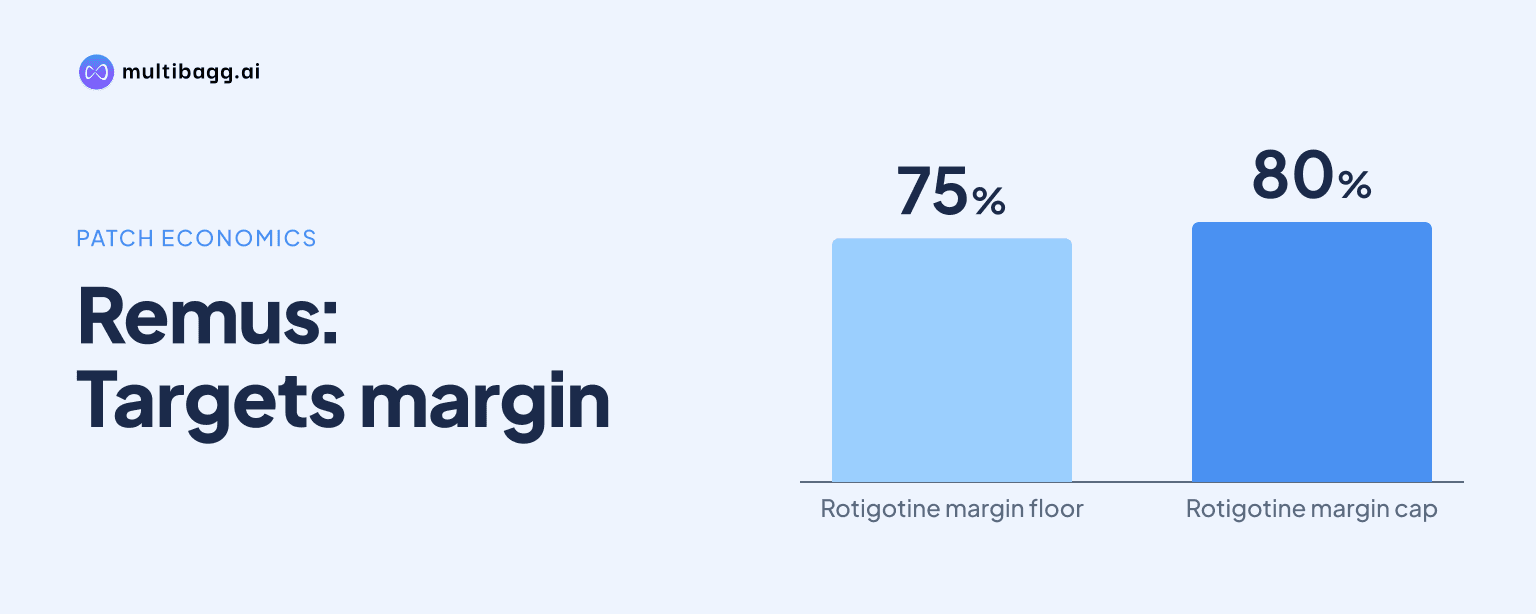
Remus Pharmaceuticals Limited has begun manufacturing its first Rotigotine transdermal-patch shipment, and management currently expects a 75%-80% margin, including marketing expense, for the niche product. Rotigotine is the company’s second patch after Rivastigmine, while Ketotifen and Diclofenac patches remain in product, filing and commercial work.
Know Remus Pharmaceuticals inside out
Results, valuation, peers and who's buying, in one view.
What is Remus doing with the Rotigotine patch?
Remus is manufacturing its first shipment of the Rotigotine patch, which management described as its second transdermal-patch product after Rivastigmine. Management did not disclose shipment volume, a launch-market list or a commercial-sales date during the call. The stated milestone is therefore the start of first-shipment manufacturing rather than reported sales or revenue contribution.
Rotigotine is part of Remus’s effort to develop differentiated drug-delivery products alongside conventional pill-based treatments. Management called the product niche and said it had worked extensively to secure it, adding that the company is pursuing patches across countries where it sees a market. The strategy also extends beyond transdermal patches to other therapeutic categories and alternative delivery formats.
The product sequence is significant because Rivastigmine provided the earlier patch precedent. Management said Rivastigmine had received “fantastic” market feedback from Venezuela and described it as a successful blockbuster, although it did not disclose sales, market share, patient volumes or a margin for that product. Rotigotine has now advanced to manufacturing, while the earlier patch is already generating market feedback.
What margin does Remus expect from Rotigotine?
Remus currently expects a 75%-80% margin from Rotigotine, according to management, and said this calculation includes marketing expense. Management initially referred to an 80% margin, then described the current expected range as approximately 75%-80%. The call did not define the measure as gross margin, operating margin or net margin.
A numerical comparison with conventional formulations cannot be made from the call because Remus provided no margin data for oral products. The 75%-80% range is management’s current expectation for Rotigotine after marketing costs, rather than a reported company-wide profitability figure. It also is not a disclosed margin for the entire transdermal-patch portfolio.
Management linked the margin expectation to differentiated positioning, not to disclosed manufacturing scale. It described Rotigotine as a niche product and said no other supplier had it, but did not quantify the addressable market, pricing, manufacturing cost, country registrations or expected annual revenue. Those undisclosed variables mean the eventual financial contribution cannot be calculated from the call.
Which patches are in Remus’s pipeline after Rotigotine?
Remus is working on Ketotifen and Diclofenac patches after Rotigotine, with management saying both are in the pipeline across product work, filing and commercial aspects. Neither candidate was described as approved, in first-shipment manufacturing or commercially launched. Management also gave no regulatory timetable, target geography or margin expectation for either patch.
The patch portfolio has products at different stages. Rotigotine is at first-shipment manufacturing, while Ketotifen and Diclofenac remain in development, filing and commercial preparation. Rivastigmine, by comparison, is already receiving market feedback in Venezuela, creating a progression from market experience to manufacturing and then pre-commercial pipeline work.
Management said patches require substantial clinical-trial work to assess whether the product works in people. It also noted that some people may prefer taking a pill instead of applying a patch, although management said acceptance of patches is developing in the markets it is targeting. The call did not provide clinical data, patient-adoption rates or comparative adherence results for any of the four patch products.
Got a follow-up? Ask IRIS
How is Remus assessing demand for its patch products?
Remus is using pharmacovigilance and direct patient feedback to assess patch performance, according to management. Pharmacovigilance is the monitoring of medicines and their effects during use. Management said it seeks feedback from patients even where a medicine is generic or not marketed under the Remus brand, with the stated aim of improving products.
For Rivastigmine, management cited positive feedback from Venezuela and said that experience helped create the opportunity to pursue Rotigotine. A company representative said he planned to visit Venezuela the following week for further market feedback and pharmacovigilance activity. The call did not disclose adverse-event data, patient numbers, repeat purchases or results from that planned visit.
Remus is also pursuing oral disintegrated film, or ODF, as a separate differentiated delivery format. Management described ODF as a film placed on the tongue that delivers medication and can provide flavour. This format is distinct from a transdermal patch, and Remus did not name an ODF product, state a development milestone or provide commercial timing.
What information is still missing on Rotigotine’s commercial potential?
Remus has not disclosed the countries for the first Rotigotine shipment, expected sales timing, shipment quantity, product pricing or revenue potential. These items would show whether the product’s first manufacturing run develops into a commercial contribution. The 75%-80% margin expectation alone does not indicate the absolute profit that could result without sales and cost volumes.
The call also did not provide a comparable margin for Rivastigmine or conventional formulations, despite the analyst’s question about the difference. That leaves the reported 75%-80% range as a product-specific management expectation rather than evidence of a measured margin advantage across formats. Any comparison with other Remus products would require future disclosures.
Management’s pipeline description also leaves timing unresolved for Ketotifen and Diclofenac. The two products are in work spanning product development, filings and commercial planning, but neither has a disclosed approval or launch date. The company’s next patch milestones could therefore include regulatory filings, registrations, manufacturing progress or commercial-market disclosures.
Conclusion
Remus has moved Rotigotine into first-shipment manufacturing with management expecting a 75%-80% margin that includes marketing expense. The progression from Rivastigmine feedback in Venezuela to Rotigotine production, alongside Ketotifen and Diclofenac in the pipeline, shows a portfolio approach to differentiated delivery formats rather than a single standalone patch.
The next disclosures to watch are a Rotigotine commercial-sale date, launch markets, shipment volumes and revenue or a defined profit metric. Management also planned further pharmacovigilance work in Venezuela and said Ketotifen and Diclofenac remained in product, filing and commercial work, but it set no launch dates for either candidate.